




2020 Ford Explorer
Ford made plenty of changes to its sixth-generation 2020 Explorer, including adding a hybrid variant, a suite of driver-assisting safety technology, and a host of engineering updates that significantly improve the driving dynamics on roads and trails.

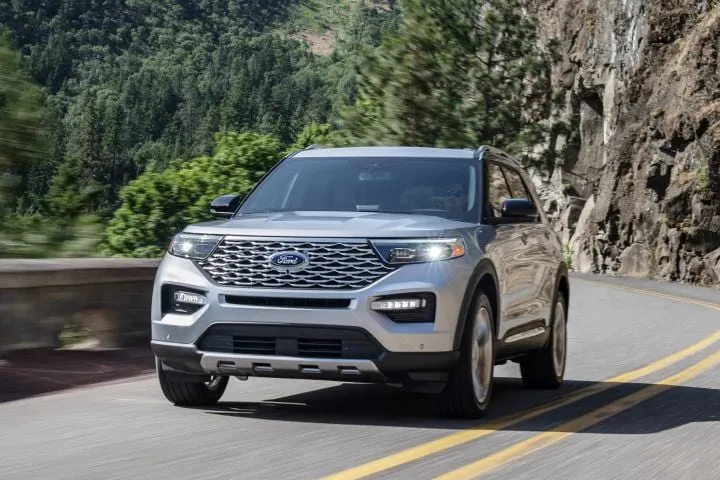
Ford's sixth-generation 2020 Explorer adds new powertrains, including a hybrid, and safety technology.
Photo courtesy of Ford.
Don't mess with success goes the old adage. There are times when success needs to be enhanced.
The Ford Explorer is one of America's top-selling SUVs, so you may not expect big changes in a redesign, but thankfully Ford made plenty of changes to its sixth-generation 2020 Explorer, including adding a hybrid variant, a suite of driver-assisting safety technology, and a host of engineering updates that significantly improve the driving dynamics on roads and trails.
The 2020 Explorer sits on a completely new unibody platform, and its drivetrain orientation has changed. Rather than relying on a transversely-mounted engine and front-wheel drivetrain, as it did with the fifth generation, the 2020 Explorer shifts to a longitudinal engine orientation and rear-wheel drivetrain.
The change improves the three-row SUV's weight balance, which immediately makes the SUV feel less top heavy. The vehicle feels more planted on the roadway, and more confidently takes corners and the twisty roads of the Columbia River Gorge, where Ford hosted a media drive.
New Powertrains, Including Hybrid
Ford is essentially offering four new powertrains in its six trim grades. Two new models enter the fray, including a gasoline-electric hybrid that has become standard issue for law enforcement agencies that order the Police Interceptor Utility and the 400-horsepower ST that replaces the Sport trim.
The base engine that's also available on XLT and Limited remains a 2.3-liter turbocharged inline-four-cylinder engine that now puts out 300 hp (an increase of 10 hp). The hybrid uses a 3.3-liter V-6 paired with a 44-hp electric motor. ST and Platinum are powered by a 3.0-liter turbocharged V-6 with different power ratings.
The hybrid kept pace with its gasoline counterpart during the road courses Ford set up along twisty roads, as well as an off-road course that required short passes through 14 inches of water, some mud, and a 25-degree slope. Unless you listened closely for the barely audible clicks from the electric motor, the performance between the vehicles was nearly identical. I easily achieved 23 miles per gallon with the hybrid on a longer pavement drive.
You can order the hybrid as its own trim model, or you can order the powertrain with the Explorer Limited.
All engines are paired with the 10-speed automatic transmission jointly developed by Ford and General Motors.
Technology Upgrade
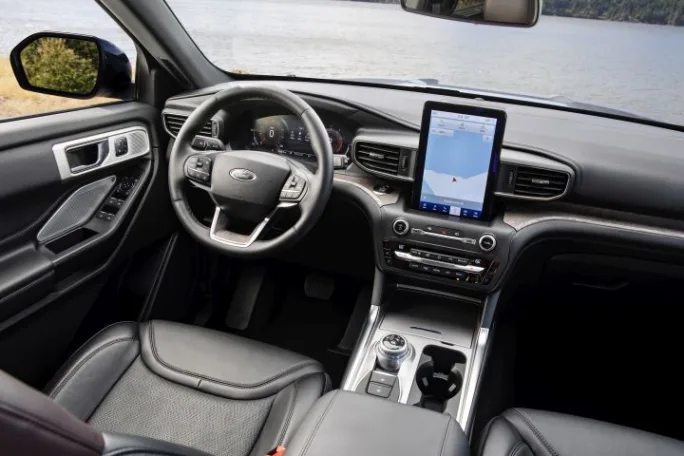
The Platinum trim includes a 10.1-inch portrait touchscreen mounted to the dash.
Photo courtesy of Ford.
As we detailed in our earlier article, "2020 Ford Explorer: 5 Fleet Features," fleet managers should embrace plenty of new safety and technology features. This Explorer is the first to get Ford's CoPilot 360 suite of advanced safety technologies that include forward collision warning with automatic emergency braking, blind-spot monitoring, lane-keep assist, and rear cross-traffic alert on all models. Higher trim models add traffic sign recognition, reverse brake assist, and a 360-degree camera.
One safety feature I particularly enjoyed helped alert me about vehicles on the road ahead based on following time. This following-time indicator shows a vehicle silhouette at less than 0.9 seconds ahead. A yellow road appears from 0.9 to 0.6 seconds, and the road turns red at less than 0.6 seconds. The radar-based system assumes 80 feet of following distance for 0.9 seconds at 60 mph.
I will acknowledge that the 10.1-inch portrait touchscreen took a bit of adjustment, but kudos to Ford for offering this as an option on ST and Platinum. It shows a larger map and more detailed turns for navigation, and looks like a tablet resting on the dashboard rather than an integrated screen.
For buyers who don't opt for the tablet-style screen, the base screen has been increased to 8 inches from 4 inches.
2020 Ford Explorer Specs
Engines: 2.3L turbo I-4 (300 hp, 310 lb.-ft.), 3.3L hybrid (319 hp, 322 lb.-ft.), or 3.0L turbo V-6 (400/365 hp, 415/380 lb.-ft.)
Transmission: 10-speed automatic
All-Wheel Drive: Optional on all trims, standard on ST
Cargo Space: 18.2 cu.-ft., 87.8 cu.-ft. with third seating row folded
More Blog Posts

Fleet Review: 2026 Outback Is More SUV, Still an Outback
The redesigned Outback trades its station-wagon profile for a roomier, more conventional SUV shape while retaining the comfort and safety technology that give it fleet appeal.
Read More →
Why Should Fleets Choose the 2026 Mercedes-Benz GLC 300 SUV?
The GLC 300 offers corporate fleets attainable luxury, comfort, and practicality that transitions seamlessly to family duty.
Read More →
Fleet Review: Volvo EX90 & the Software-Defined Vehicle
Volvo’s new three-row electric SUV is designed for the corporate (and family) class.
Read More →
Fleet Review: Mercedes-Benz EQB 250+
With a reasonable entry point and the refinement of a Mercedes, The EQB 250+ defines “practical luxury” for fleets.
Read More →
Fleet Review: Volvo XC60 & XC90 PHEVs
Volvo’s XC60 and XC90 plug-in hybrid models are stylish, safe, sustainable — and surprisingly fast.
Read More →
Fleet Review: Volvo XC40 Recharge
The Volvo XC40 Recharge offers fleets the familiar premium Volvo experience, electrified.
Read More →
The 2023 Ford Mustang Mach-E Offers a Smooth Ride for New EV Drivers
A look at the bells and whistles on the car, plus how it drives, from the perspective of someone who’s never driven an EV.
Read More →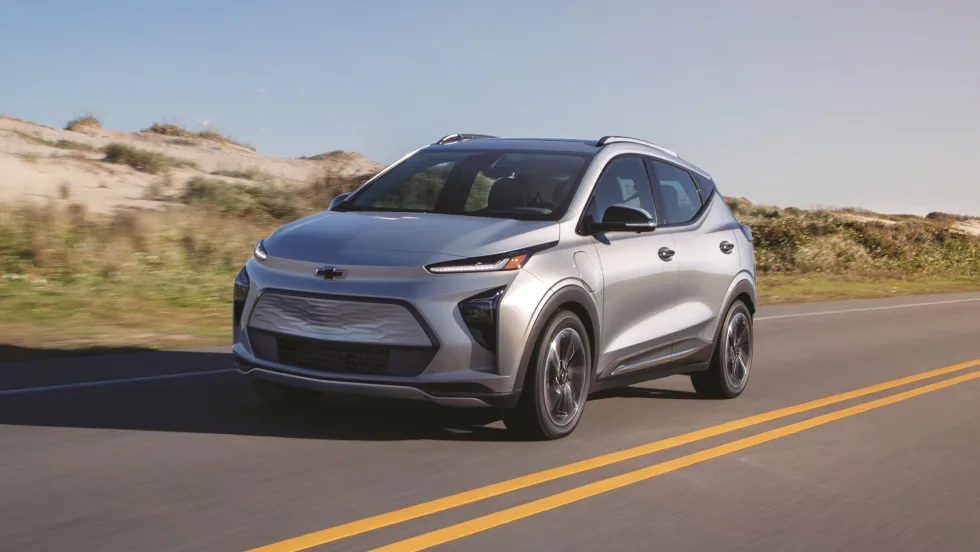
The 2022 Bolt EUV Lowers TCO While Meeting Sustainability Goals
The 2022 Bolt EUV expands Chevrolet’s EV lineup as a utility-type vehicle with a range of 250 miles on a full charge. It will be sold alongside the 2022 Bolt EV model. The Bolt EUV is approximately six inches longer than the Bolt EV.
Read More →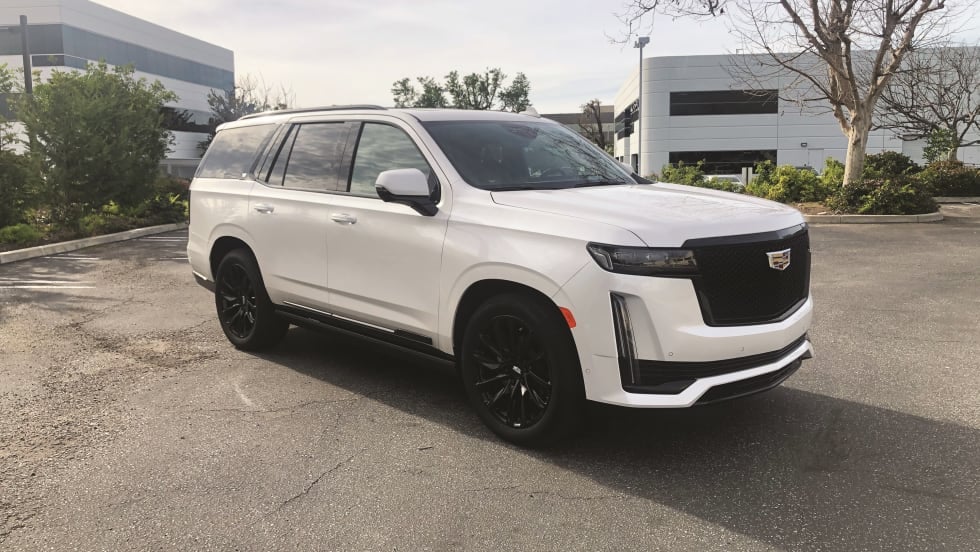
2021 Cadillac Escalade is C-Suite Material
The 2021 Cadillac Escalade 4WD Sport Platinum is the most expensive model sold by General Motors. But its brand cachet makes it the ideal pinnacle fleet vehicle to help retain high-value senior execs with a high-value luxury SUV.
Read More →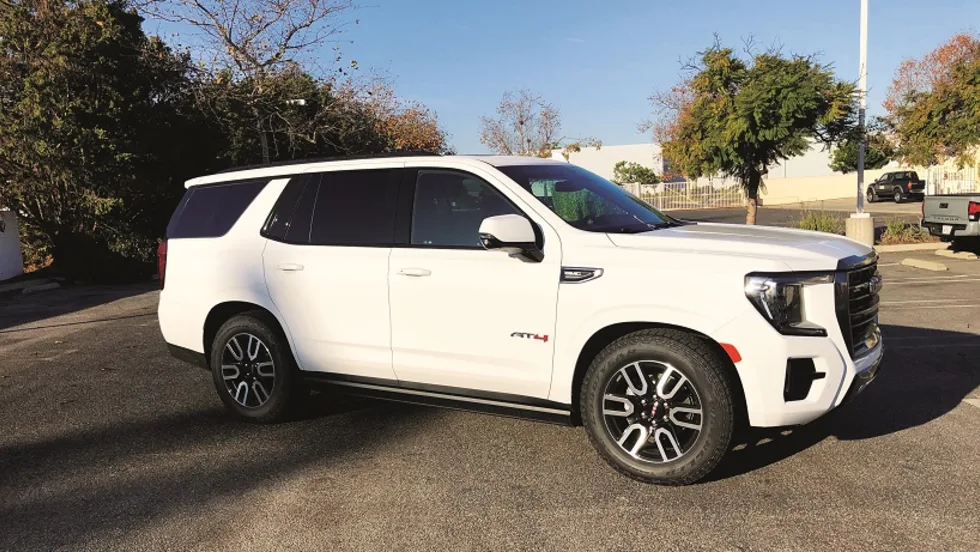
2021 GMC Yukon AT4 Excels as an Off-Road Crew Vehicle
Powered by a 5.3L V-8, generating 355 horsepower and 383 lb.-ft. of torque, the engine is paired to a10-speed automatic transmission. It is ideal for off-road work applications and can transport an eight-person work crew with tools and equipment.
Read More →