




You May Be Violating State Law By Deducting Driver Wages to Pay for Vehicle Damage
Some nationally dispersed fleets include a provision in their fleet policy stating that a driver is liable for wage deductions for damage to his or her company-provided vehicle if it was caused by negligence. However, many fleet managers are unaware that this practice, under certain circumstances, is illegal in some states.

Some nationally dispersed fleets include a provision in their fleet policy stating that a driver is liable for wage deductions for damage to his or her company-provided vehicle if it was caused by negligence. However, many fleet managers are unaware that this practice, under certain circumstances, is illegal in some states.
A case in point is the state of California, where employers, in general, are prohibited from making deductions from an employee's wages for damages caused by the employee's negligence. This rule is based on the idea that losses caused by an employee's negligence are a normal cost of doing business and should be borne by the employer. An opinion letter issued by the California Division of Labor Standards Enforcement (DLSE), the state agency that enforces wage orders, illustrates this point. In that case, an employee negligently drove a company vehicle into a stationary object, and the employer wanted to deduct from the employee's paycheck the costs of the damage.
The DLSE ruled that the employer could not make deductions to compensate for damage caused by an employee's negligence. Such deductions, the DLSE explained, could only be made if the damage was caused by a dishonest or willful act of the employee, or by an employee's "gross negligence." The term "gross negligence" was defined as negligence "which is aggravated, reckless, and flagrant" and refers to a state of mind "that exercise(s) so slight a degree of care as to exhibit a conscious indifference or 'I don't care attitude' concerning the ultimate consequences of (one's) actions." The DSLE stated further that "it is a very rare action which will be found to be grossly negligent" and indicated that the accident described by the employer did not equate to gross negligence. The DLSE also warned that an employer who makes a deduction based on gross negligence does so "at its own risk," and in the event the employee is not guilty of gross negligence, the employee would be entitled to recover not only the amount of wages withheld, but also penalties for the employer's failure to pay wages.
In New York, an employer may only make paycheck deductions "for the benefit of the employee." Aside from those required by law, deductions are limited to those that are expressly authorized in writing by the employee. Even with an authorization, permissible deductions are very limited and specifically defined, and these deductions can amount to no more than, in the aggregate, 10 percent of the gross wages due to the employee for a particular payroll period. Examples of specifically prohibited deductions under New York law include deductions for "spoilage or breakage" of company property.
In the state of Oregon, if an employee is negligent and damages company property, the employer cannot deduct the value of the property from the employee's paycheck. However, disciplinary action may be taken and the employer could pursue reimbursement for damages through the courts.
Wisconsin is another state that restricts employee wage deductions. Wisconsin Statute Section 103,455 states: "An employer generally may not make a deduction from wages for defective or faulty workmanship, lost or stolen property, or damage to property unless the employee authorizes the deduction in writing."
One fleet manager at a NAFA EMI workshop told of an experience with a company driver living in Wisconsin who allowed an unauthorized individual to drive her company vehicle that subsequently was involved in an at-fault accident. When the company attempted to collect for the cost to repair the vehicle, the employee hired an attorney who cited Wisconsin statute 103,455. The statute states that a deduction of wages could lawfully be clone in only three ways: the employee provides written authorization; the employee agrees that the damage was due to his or her negligence; or the employee is required to pay for damage as a result of adjudication by a court or judge. The company could not meet any of the three criteria.
Similarly, North Carolina's Wage and Hour Act states that an employer may withhold a portion of an employee's wages only when it is required to do so by law or if it has written authorization from the employee. All authorizations must be in writing, signed on or before the pay period for which the deduction is being made, show the date of signing, and state the reason for the deduction. However, the Act does not prohibit an employer from filing a lawsuit to recover money owed.
The message with this editorial is that it is prudent for all fleet managers to have their fleet policy guidelines reviewed by corporate counsel to determine if any provisions violate state laws governing wage deductions for damage to company-provided vehicles.
More Safety

Nexar-Nauto Merger Aims to Give Fleets Better Safety Intelligence Through Larger Driving Dataset
Stefan Heck tells Automotive Fleet that combining more than 10 billion miles of driving history with Nexar's AI models will give fleets deeper insights into driver risk and roadway conditions than either company could provide independently.
Read More →
Don't Wait for a Crisis: 5 Ways to Build Mental Health Into Your Fleet Safety Program
For Suicide Prevention Month, fleet and safety leaders have an opportunity to put mental health where it belongs: at the center of workplace safety.
Read More →
How Camera Data Can Strengthen a Fleet’s Insurance Renewal
Insights from a commercial insurance carrier and a broker show how fleets can turn video telematic data, driver coaching, and improved claims results into a stronger case at insurance renewal.
Read More →
The Safest Fleets Aren’t the Ones with the Most Technology
You’ve made the telematics investment. Here’s how to capture the other half of its value and build the safest fleet on the road.
Read More →
Hidden in Plain Sight: Fleet Compliance Risks
Fleet compliance isn't just about having policies — it's about consistently enforcing them. This practical guide reveals six hidden compliance risks common in public sector and shared fleet operations and outlines proven strategies to improve visibility, accountability, and audit readiness
Read More →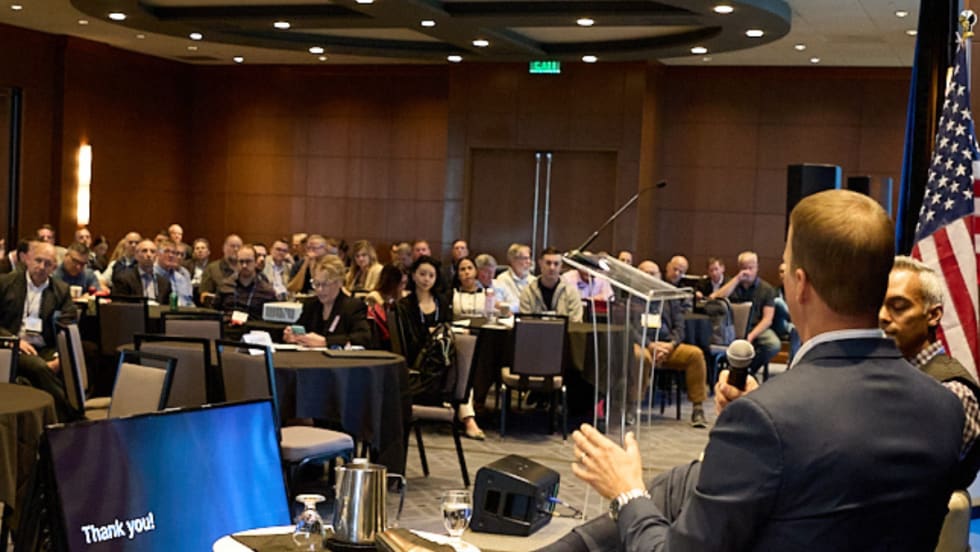
NETS Sets 2026 Fleet Safety Benchmark Conference for Indianapolis
The Sept. 15–17 program will feature fleet benchmarking data, case studies, emerging technologies, and implementation strategies while running alongside the NSC Safety Congress & Expo.
Read More →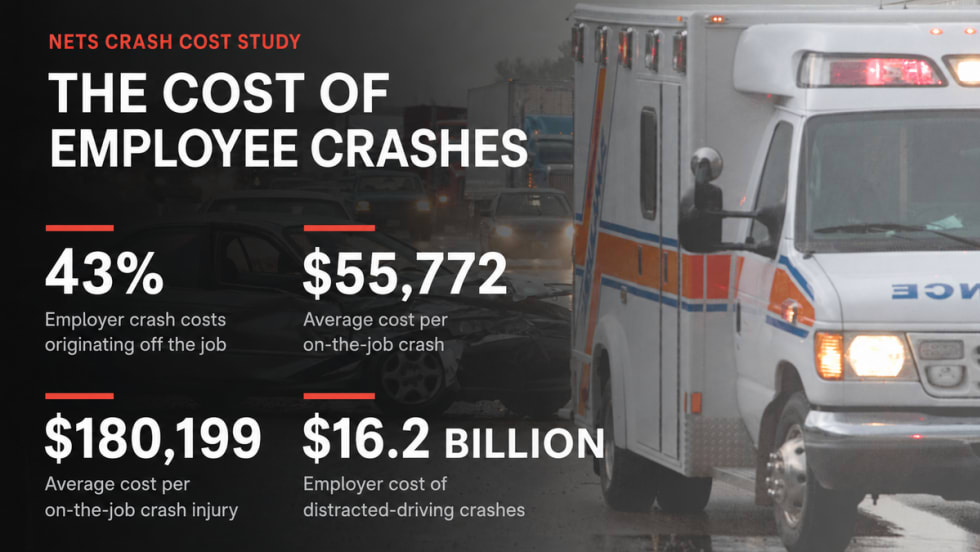
Off-the-Job Crashes Account for 43% of Employers’ $61.7 Billion Crash Burden
NETS quantifies costs dispersed across fleet, risk, HR, and other departments while providing new per-crash benchmarks for employers.
Read More →
Ram Recalls More Than 1.27 Million 1500 Pickups for Seat Belt Anchor Issue
The recall affects certain 2019-2026 Ram 1500 pickups that may have improperly attached second-row seat belt buckle anchors.
Read More →
How Better Visibility Cut Speeding Violations by 48%
Fleet leaders don't need more data, they need clearer visibility into what the data is saying. This case study explores how one utility replaced speeding-event counts with a single metric — miles driven in violation — to strengthen safety and significantly reduce speeding violations.
Read More →
Operation Safe Driver Week: Why the Industry's Oldest Safety Campaign Still Matters to Fleets
A look at how a 2007 enforcement initiative became one of the most consequential weeks on the fleet safety calendar, and what it means for your drivers in 2026.
Read More →