




You May Be Violating State Law By Deducting Driver Wages to Pay for Vehicle Damage
Many nationally dispersed fleets include a provision in their fleet policy guidelines stating that drivers are financially liable for damage to their company-provided vehicle if it was caused by negligence. However, many fleet managers are unaware that this practice is illegal in some states.


A case in point is the state of California, where employers, in general, are prohibited from making deductions from an employee’s wages for damages caused by the employee’s negligence. This rule is based on the idea that losses caused by an employee’s negligence are a normal cost of doing business and should be borne by the employer. An opinion letter issued by the California Division of Labor Standards Enforcement (DLSE), the state agency that enforces wage orders, illustrates this point. In that case, an employee negligently drove a company vehicle into a stationary object, and the employer wanted to deduct from the employee’s paycheck the costs of the damage. The DLSE ruled that the employer could not make deductions to compensate for damage caused by an employee’s negligence. Such deductions, the DLSE explained, could only be made if the damage was caused by a dishonest or willful act of the employee, or by an employee’s “gross negligence.” The term “gross negligence” was defined as negligence “which is aggravated, reckless, and flagrant” and refers to a state of mind “that exercise(s) so slight a degree of care as to exhibit a conscious indifference or ‘I don’t care attitude’ concerning the ultimate consequences of (one’s) actions.” The DSLE stated further that “it is a very rare action which will be found to be grossly negligent” and indicated that the accident described by the employer did not equate to gross negligence. The DLSE also warned that an employer who makes a deduction based on gross negligence does so “at its own risk,” and in the event the employee is not guilty of gross negligence, the employee would be entitled to recover not only the amount of wages withheld, but also penalties for the employer’s failure to pay wages. In New York, an employer may only make paycheck deductions “for the benefit of the employee.” Aside from those required by law, deductions are limited to those that are expressly authorized in writing by the employee. Even with an authorization, permissible deductions are very limited and specifically defined, and these deductions can amount to no more than, in the aggregate, 10 percent of the gross wages due to the employee for a particular payroll period. Examples of specifically prohibited deductions under New York law include deductions for “spoilage or breakage” of company property. In the state of Oregon, if an employee is negligent and damages company property, the employer cannot deduct the value of the property from the employee’s paycheck. However, disciplinary action may be taken and the employer could pursue reimbursement for damages through the courts. Wisconsin is another state that restricts employee wage deductions. Wisconsin Statute Section 103.455 states: “An employer generally may not make a deduction from wages for defective or faulty workmanship, lost or stolen property, or damage to property unless the employee authorizes the deduction in writing.” One fleet manager at a NAFA FMI workshop told of an experience with a company driver living in Wisconsin who allowed an unauthorized individual to drive her company vehicle that was involved in an at-fault accident. When the company attempted to collect for the cost to repair the vehicle, the employee hired an attorney who cited Wisconsin statute 103.455. The statute states that a deduction of wages could lawfully be done in only three ways: the employee provides written authorization; the employee agrees that the damage was due to his or her negligence; or the employee is required to pay for damage as a result of adjudication by a court or judge. The company could not meet any of the three criteria. Similarly, North Carolina’s Wage and Hour Act states that an employer may only withhold a portion of an employee’s wages only when it is required to do so by law or if it has written authorization from the employee. All authorizations must be in writing, signed on or before the pay period for which the deduction is being made, show the date of signing, and state the reason for the deduction. However, the Act does not prohibit an employer from filing a lawsuit to recover money owed. Typically, the lawsuit is filed in magistrate court, but, based on past cases, employees are often “judgment-proof.” The message with this editorial is that it is prudent for all fleet managers to have their fleet policy guidelines reviewed by corporate counsel to determine if any provisions violate state laws governing wage deductions for damage to company-provided vehicles. Let me know what you think. mike.antich@bobit.com
More Operations
What Fleet Managers Really Want From Vendors
From customer service frustrations and technology breakdowns to RFQs, change management, and the growing impact of turnover across the industry, this conversation pulls back the curtain on the real operational challenges fleet managers are navigating every day.
Read More →
Fleet Safety Masterclass: Industry Leaders on Storytelling, Strategy & Innovation
In this special masterclass episode, industry leaders break down what it really takes to build safer fleets in today’s increasingly distracted and data-driven world.
Read More →
Integrating Legacy Fleet Systems and Historical Data
In this episode, we bring together fleet and technology leaders to unpack the realities of data integration, system migrations, and the evolving role of AI in fleet management.
Read More →

From Resistance to Results: Change Management Strategies for Fleets
From new technologies and safety programs to evolving regulations, fleets are under constant pressure to adapt. But as Dr. Betz explains, success isn’t about the system you implement—it’s about whether your people actually use it.
Read More →
Where We're Headed: A Practical Look at AI in Fleet
Discover how AI is actually being deployed in fleets, not just marketed, including practical use cases and emerging risks.
Read More →
How Coca-Cola United Protects Its Fleet from Growing Legal Risk
Growing legal exposure can put fleets at risk. Here's one company's approach.
Read More →
Fleet Managers Think They Understand Their Costs. The Data Says Otherwise.
Most fleet managers say they have a strong handle on their costs, but new research from Bobit Business Media tells a different story. A 2026 survey of 190 fleet professionals reveals a widespread "confidence gap" where fragmented systems, disconnected data, and delayed reporting are leaving major blind spots hidden beneath the surface. Find out what the data actually shows.
Read More →
Cameras, Safety and Insurance: From Reactive Claims to Real-Time Prevention (Part 2 of 2)
Part Two: Commercial auto remains one of the most challenging and costly lines of coverage for fleet operators and insurers alike. Continue learning more about how to effectively address these issues from Onur Aksan, Enterprise Business Development Executive, Geotab
Read More →
New Trucks, AI & Summer Downtime | AF News Recap
From new truck updates to AI-powered driver coaching and summer maintenance tips, this week's fleet headlines are all about keeping things moving.
Read More →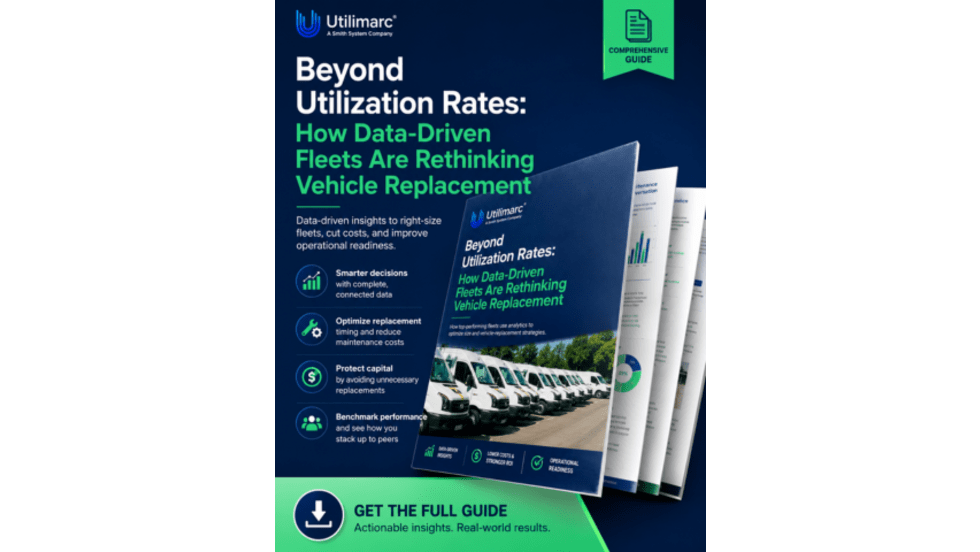
Beyond Utilization Rates: Smarter Fleet Replacement Decisions
Vehicle replacement decisions affect every aspect of fleet performance, from operating costs to asset availability. This guide explores how fleet leaders use integrated data, benchmarking, and lifecycle analytics to determine the right fleet size and optimize replacement timing with greater confidence.
Read More →