




Why Most Fleet Operations Are Not Ready for an EV Battery Fire
While the risks of an EV “thermal event” are far lower than gasoline tank fires, the rare occurrence can turn into an all-consuming catastrophe.


During an Aug. 23 presentation at a remarketing conference, Jeff Haltrecht, executive at Call2Recycle, Inc., detailed safety principles that can apply to any commercial or government fleet operation that runs electric vehicles.
Photo: Martin Romjue / Bobit
Electric vehicles are often touted for their low-maintenance efficiency and clean driving since they require fewer parts and repairs and avoid the mechanical frictions of their fossil-fueled ancestors.
So far, so good. But when the EV battery blows, the zero-emission motor turns into a high maintenance nightmare capable of burning as stubbornly as an old tire dump or oil tanker.
Attendees to a recent remarketing conference heard some sobering insights recently on electric vehicle battery fires from Jeff Haltrecht, executive at Call2Recycle, Inc., a Toronto-based non-profit that recycles all types of electronic batteries, including ones for EVs.
The session was held Aug. 23 during the annual conference of the International Automotive Remarketers Alliance in Chicago. While the presentation was pitched toward auctions, collision repair facilities, vehicle reconditioners, and used vehicle dealerships, the safety principles apply as much to any commercial or government fleet operation that runs electric vehicles.
Electric Vehicle Fires are Coming
Haltrecht captivated the audience with warnings about EV battery fire risks and the detailed procedures needed to deter them at automotive businesses and facilities.
“Most of the time a thermal event will not happen but you can expect it once over the lifetime of a business,” Haltrecht said. “It will happen to you.”
With EVs surging into the automotive market, industry education on battery storage, handling, and safety has still not caught up with demand and activity, he said. So far, there are no widely used case studies and resources based on real-life experience.
“The auto sector will transition to electric, but we’re not sure how far it will go,” Haltrecht said. “The reality is EVs are showing up at auction houses, dismantlers, and collision centers.”
Call2Recyle has led a project during the last six months to publish a 25-page guide that provides steps on how to safely handle and store EV batteries. Five automotive OEMs, including GM and Toyota, and 50 core vendors contributed knowledge to the guide.
Haltrecht relayed a few incidents where EV batteries damaged in accidents overheated, combusted, and burst into a long-burning fire that consumed nearby vehicles. Such fires can cause catastrophic losses for auctions, EV maintenance and repair facilities, dealerships, and vehicle collision centers.
In one example, an EV battery charging until damaged in left front fender-bender continued to send faulty signals to the EV battery in a car parked on a lot that caused it to overheat. Employees thought they had disabled the EV battery before closing for the day, but then discovered five crispy, ashen vehicle carcasses the next morning.
Compared to gasoline tank fires on damaged vehicles, EV fires are far less common but burn faster, hotter (at 2,732 degrees Fahrenheit), and wider, needing a heavy and prolonged firefighting response.
The good news is the eventual advent of solid-state batteries and improved battery technologies will lower the risk of EV battery fires, since lithium-ion batteries now commonly used in EVs are the most flammable in rare circumstances.
But those advances loom are at least another five years away.
Haltrecht said the first step is to set up processes for detecting off-gassing and overheating inside the battery, which is not visible at first. A battery can idly sit by as dangerous combustion brews inside.
Haltrecht displayed video clips from thermal imaging cameras at an EV battery burn laboratory showing how an EV battery could explode into a fire only 15 seconds after gases start to escape through cracks.
Preparing for EV Fire Emergencies
An emergency preparedness plan should include the following equipment and procedures:
Look for dents, punctures, or cracks in the battery, indicating signs of an accident or rough driving. Rocks and curb scrapes can damage an EV battery positioned in the undercarriage, as can slashes from road accidents.
Off-gassing is the most prevalent indicator of a “thermal incident” in an EV battery and can be detected through whisps of white or gray smoke escaping the chamber and a sweet bubble gum smell hinting of a fire within the battery compartment.
An EV that drives through a flooded intersection or high puddles can lead to short circuit triggers resulting from water combining with electricity. Submersion in floods also can cause EV fires.
A phenomenon known as arc flashing could easily fan an EV battery fire to other vehicles and/or burn up maintenance and repair buildings. An arc flash happens when electricity runs through the battery off-gases that generates a bursting, hissing, crackling penumbra spreading through the air. Those fiery emanations could ingnite any number of nearby objects.
Damaged EVs coming into an auction or facility can cause fires up to 2.5 months after the initial incident.
Auctions and remarketing operations need to train employees to contain fires and move vehicles to safer locations on a lot.
A thermal imaging meter and four gas meters applied to a damaged EV brought into an operation can immediately detect if an EV battery poses fire risks.
Employees inspecting and handing EV batteries should wear PPE jumpsuits and special fire-resistant gloves that can prevent electric shocks. They should only work in teams of two.
Fire suppression systems sized based on the volume of cars and size of facility and lot.
A fireman’s hook should be kept on hand to rescue a shocked worker from an electrocution source. Often, a person undergoing an electric shock stiffens from muscle contractions that prevent them from releasing their grip. The hook yanks the person away from the voltage source, so their muscles relax.
Because EV battery fires often require hours of extinguishing, remarketing operations may consider re-grading or sloping the area of their lots where EVs are stored so any toxic water runoff from a firefighting flood can flow to an environmentally safe outlet.
Damaged EVs should be parked in cement bays or “stalls with walls” to prevent flames from spreading to other nearby vehicles. Such EVs should at least be held in such bays for 14-30 days as a safety precaution.
EV batteries should be transported in coffin-link fire-retardant containers built with steel and insulation. Each container costs about $60,000.
If a fire breaks out, a vehicle “fire blanket” can delay a fire spread by 30-40 minutes. Workers should throw the blanket onto a fire which snuffs out enough oxygen to hold the flames underneath. That allows more time for first responders to arrive before serious damage can occur.
Three ways to end a fire: Let it burn, spray with large volumes of water, or use heavy equipment to lift and place the vehicle into a dunk tank.
Some insurance companies are reluctant to cover damaged EVs on commercial and business lots but may be more inclined to grant coverage if a remarketing operation has a complete fire safety and preparedness plan in place.
At the close of the presentation, Haltrecht assured his close listeners, “I don't want you to panic. [These fires are] absolutely the minority but it will happen to every one of us over our business lifespan. And these stories are designed as a way to bring it to reality so that you could go home this week and think about your emergency preparedness plan.”
Originally posted on Charged Fleet
More Green Fleet
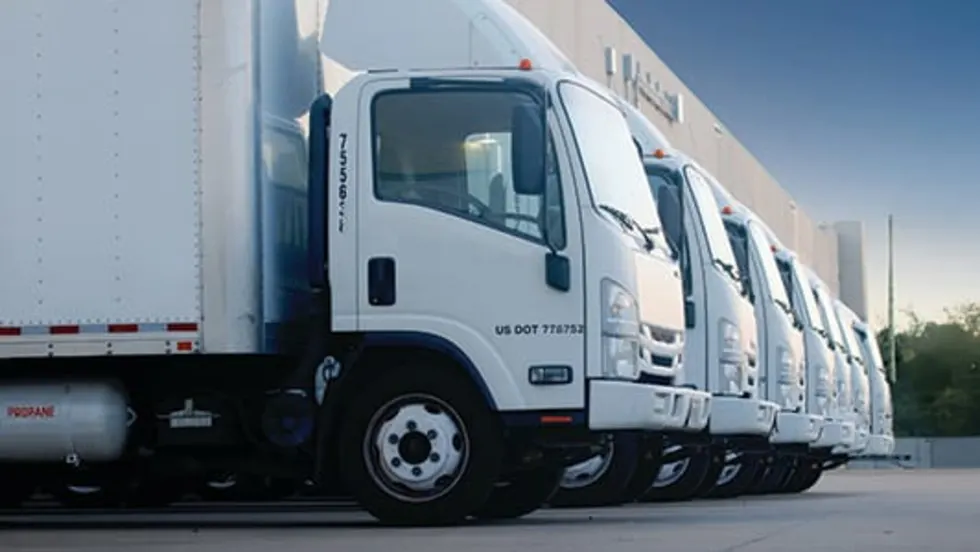
New Propane Autogas Program Offers Fleet Compensation
Qualified commercial fleets can receive $7,500 per eligible propane autogas vehicle and up to $10,000 for new refueling site prep. Learn how the program works and see whether your fleet qualifies.
Read More →
EV Charging Use Is Outpacing Infrastructure Growth
ChargePoint’s 2026 Charging Forward Report points to rising charger use, higher-powered charging, commercial vehicle electrification, and energy-management technology. Here’s what fleets should know.
Read More →
Merchants Fleet Reports 290M EV Miles as Fleets Navigate Changing Electrification Market
From millions in operating savings to hundreds of millions of EV miles, Merchants Fleet’s latest report reveals what’s working and what’s changing in fleet electrification.
Read More →
The EV Breakdown Nobody's Talking About: Why Most Electric Vehicle Roadside Calls Aren't Mechanical Failures
Here's why EV breakdowns are widely misunderstood.
Read More →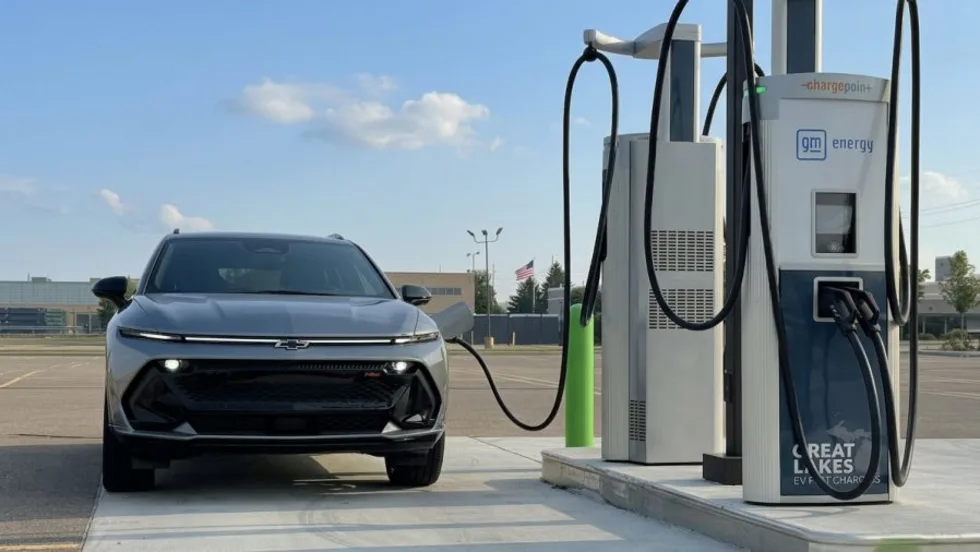
ChargePoint Now Available in Energy Pass
ChargePoint and additional planned charging network integrations were added to GM's Energy Pass.
Read More →

First Look: Slate Auto's Electric Fleet Pickup
Could an affordable, modular EV pickup make electrification more practical for fleets?
Read More →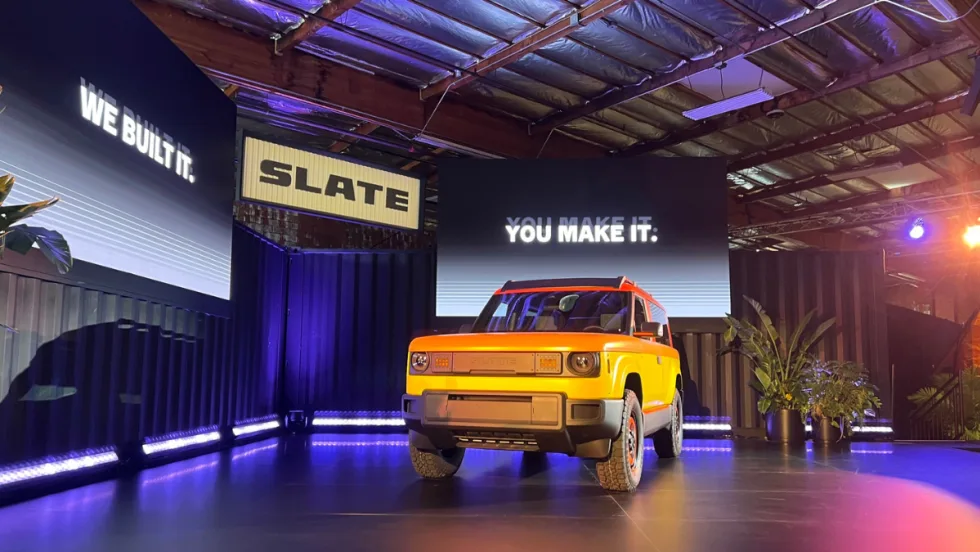
Slate Debuts Colorful, Unique EV Models
A recent media and client event, studded with electric vehicles dressed up on platforms, planted a new position for the manufacturer in the wider EV market. Fleets will find cost-saving advantages.
Read More →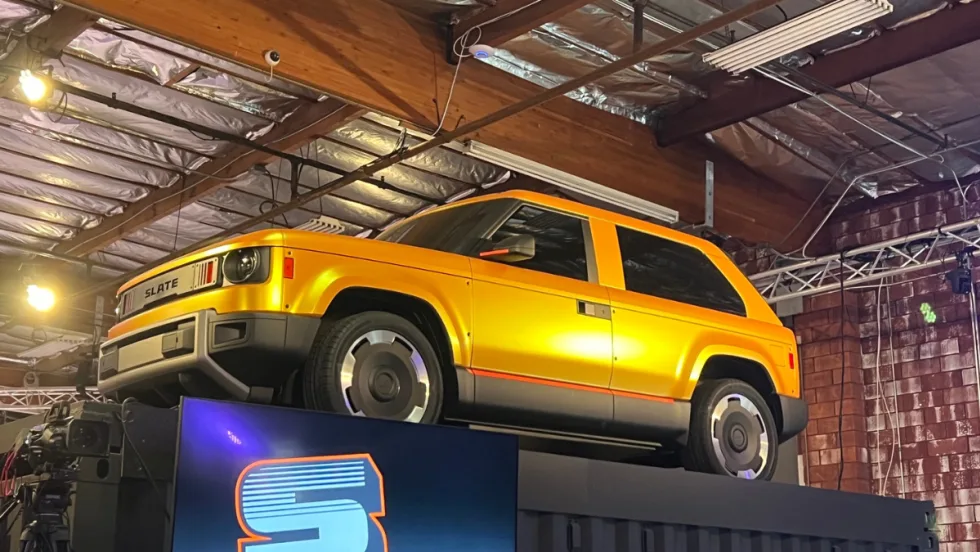
Slate Electric SUV, Pickup Switchable Model Aims For Light-Duty Fleets
Everything about this EV is counterintuitive and understated, making it stand out from the crowd.
Read More →
Inspiration Mobility Acquires Key Electrada Assets
Inspiration Mobility Group has acquired select assets of Electrada, adding the fleet electrification provider's team, technology, and charging infrastructure development capabilities to its energy management business.
Read More →