




Why CNG Station Performance Specifications Are Critical for Maintenance Technicians
Seven areas of specifications that CNG maintenance technicians must have access to effectively perform his or her job are highlighted.
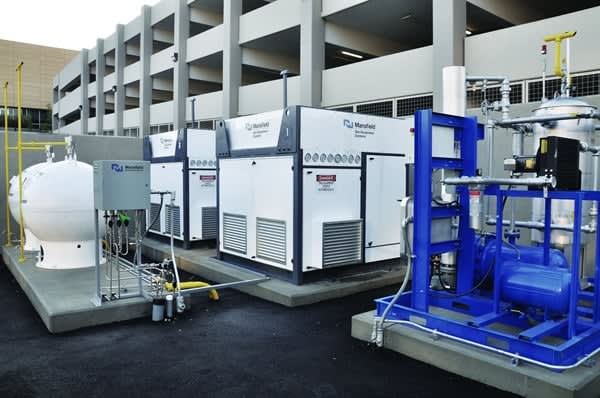
Performance specifications, which should have been established when the station was designed, are the basis of an effective operation and maintenance (O&M) program for any compressed natural gas (CNG) fueling station. CNG fueling station maintenance technicians must understand what performance levels are required of the equipment.
The CNG fueling station maintenance technician has a huge responsibility. He or she is, by default, in charge of safety for station users and the general public, ensuring the highest station reliability possible, maintaining environmental and regulatory compliance, managing operating costs, and protecting the long-term capital investment.
The station performance specifications are the basis of an effective operation and maintenance (O&M) program for any compressed natural gas (CNG) fueling station. So, it is essential that CNG fueling station maintenance technicians understand what performance levels are required of the equipment. These performance specifications should have been established when the station was designed.
While stations vary widely and not all of the following may apply, here are seven areas of specifications that an O&M technician must have access to effectively perform his or her job:
1 Fuel delivery. This specification is essential so the O&M technician can evaluate whether the station is performing as specified. Fuel delivery specifications are usually expressed as a volume of fuel over a particular time period — for example, in gasoline gallon equivalents (GGEs) per minute/per hose; or in vehicles per hour/per hose. In addition, specifications should ensure that vehicles are fueled to a nominal 3,600 psi at 70 degrees Fahrenheit.
2 Gas quality is critical to ensure that vehicles fueling at the station perform optimally and are not damaged by failure of the fuel to meet specifications. Gas quality specifications may include those for lubrication oil content, water content, and odorant level. A sample gas quality specification for these elements might look like this:
Lube oil content under 0.5 lbs. per million standard cubic foot (scf), or 10 ppm, at the compressor skid discharge.
Water content under 0.5 lbs. per million scf (10 degrees Fahrenheit at 3,600 lbs. psi gauge) at the dryer discharge.
Odorant level — gas detectable under 1/5 of the lower flammability limit.
3 Operations and maintenance. A general specification may be established for the amount of time a station must be operational and available to deliver fuel to customers. As an example:
Operational and available to deliver fuel to customers 99 percent of the time.
Maximum downtime 12-month period under 90 total hours.
No routine maintenance to be performed during peak fueling hours.
4 Overall operation and maintenance costs. Usually, fuel and electrical costs make up the major cost of CNG. A specification designed to measure these costs is very effective in helping determine whether the station is operating within the projected cost parameters.
For example, the specification might read:
“Operating costs less than 30 cents per GGE, including electrical or fuel gas costs.”
These factors are very volume and transaction dependent; this is merely an example.
5 Service requirements. Whether the CNG station is being maintained by in-house fleet operations personnel or a third party, a minimum specification for service expectations should be established and met. Some of the criteria might include:
Service representative onsite in less than two hours of emergency call.
All parts will have a 12-month warranty period.
Spare parts must be available in less than 24 hours.
This is particularly important during the start-up, warranty, and/or extended-service contract period.
6 Noise level. The noise emanating from a CNG fueling station can be a major issue within certain locations. For example, there are usually noise restrictions for stations near hospitals, schools and other similar public and private institutions. CNG stations need a minimum specification for noise level to be measured in dba scale (db stands for decibel; dba is an A-weighted decibel level measurement). For example, a station located near a hospital might have a noise level specification of less than 75 dba per compressor skid.
7 Liquid and vapor fugitive emissions. Properly working CNG stations should have no liquid (e.g., oil) or gas emissions except for the depressurization of the nozzle/receptacle combination when a vehicle is being fueled. In other words, nothing should be emitted into the environment from the station. The ideal specification would indicate that there are no liquid or vapor fugitive emissions coming from the station’s equipment.
While this is not an exhaustive list of CNG fueling station specifications, they are some of the most important items a CNG fueling station maintenance technician must have. More information about what CNG fueling station maintenance technicians must know is available at www.ngvi.com.
About the Author
Annalloyd Thomason is vice president/general manager of the Natural Gas Vehicle Institute (NGVi), a training provider and consultant on natural gas as a transportation fuel. She can be reached via e-mail at info@ngvi.com.
More Green Fleet

EV Charging Use Is Outpacing Infrastructure Growth
ChargePoint’s 2026 Charging Forward Report points to rising charger use, higher-powered charging, commercial vehicle electrification, and energy-management technology. Here’s what fleets should know.
Read More →
Merchants Fleet Reports 290M EV Miles as Fleets Navigate Changing Electrification Market
From millions in operating savings to hundreds of millions of EV miles, Merchants Fleet’s latest report reveals what’s working and what’s changing in fleet electrification.
Read More →
The EV Breakdown Nobody's Talking About: Why Most Electric Vehicle Roadside Calls Aren't Mechanical Failures
Here's why EV breakdowns are widely misunderstood.
Read More →
ChargePoint Now Available in Energy Pass
ChargePoint and additional planned charging network integrations were added to GM's Energy Pass.
Read More →

First Look: Slate Auto's Electric Fleet Pickup
Could an affordable, modular EV pickup make electrification more practical for fleets?
Read More →
Slate Debuts Colorful, Unique EV Models
A recent media and client event, studded with electric vehicles dressed up on platforms, planted a new position for the manufacturer in the wider EV market. Fleets will find cost-saving advantages.
Read More →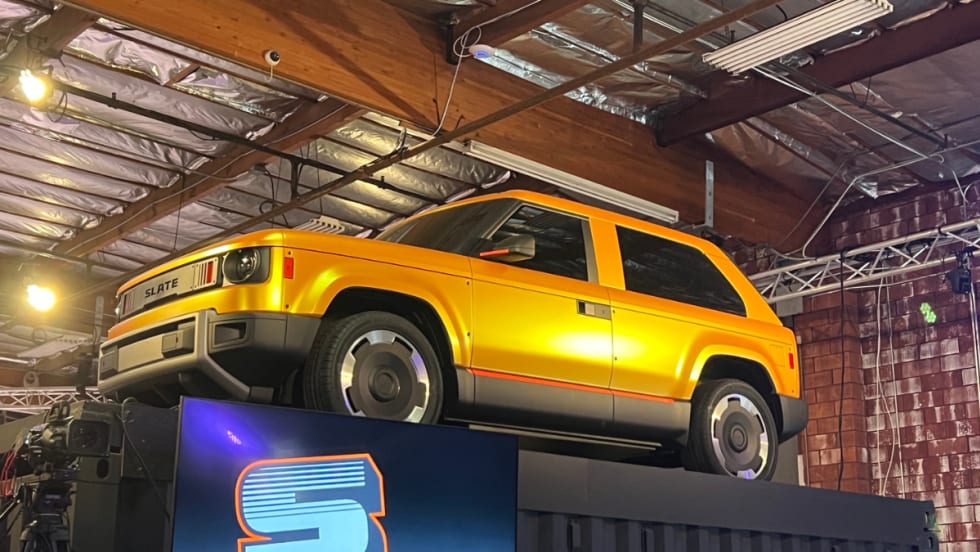
Slate Electric SUV, Pickup Switchable Model Aims For Light-Duty Fleets
Everything about this EV is counterintuitive and understated, making it stand out from the crowd.
Read More →
Inspiration Mobility Acquires Key Electrada Assets
Inspiration Mobility Group has acquired select assets of Electrada, adding the fleet electrification provider's team, technology, and charging infrastructure development capabilities to its energy management business.
Read More →
Turning Connected Vehicle Data Into Decisions That Matter
Fleet leaders have more data than ever, but turning that data into clear, actionable decisions remains a challenge. This white paper shows how leading organizations are using connected vehicle data to improve safety, reduce costs, and optimize fleet performance. Learn how to turn insight into action across your fleet.
Read More →