




Which EV Models Return Favorable Ownership Costs?
With reasonable duty cycles, electric vehicles can work for fleet — and they return favorable overall ownership costs.


SHIFT, Las Vegas-based developers of a "subscription-based mobility-on-demand car-sharing platform," implemented the Chevrolet Volt into its fleet.
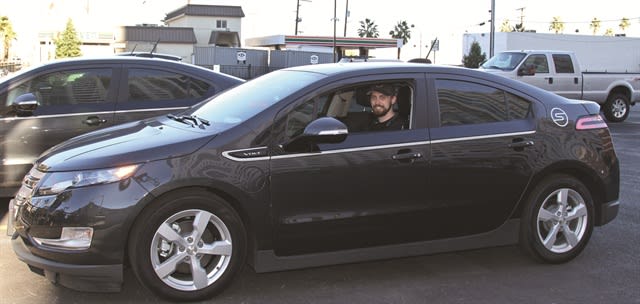
SHIFT, Las Vegas-based developers of a "subscription-based mobility-on-demand car-sharing platform," implemented the Chevrolet Volt into its fleet.
When it comes to electric vehicles (EVs), fleets are good guinea pigs. With defined usage patterns and available systems to measure data, fleets provide auto manufacturers with valuable feedback on how their EVs perform.
But these case scenarios are more dedicated to tests — usually in large fleets — so making the financial case for EVs is not part of the equation.
But with the growing number of EV models available, we decided to run some numbers. With data from the lifecycle cost experts at Vincentric, Business Fleet introduces its first analysis of electric vehicles for fleet.
Vehicles and Cost Factors
We chose 10 commonly available 2014 model-year EVs for the analysis, as well as the hybrid-electric Toyota Prius.
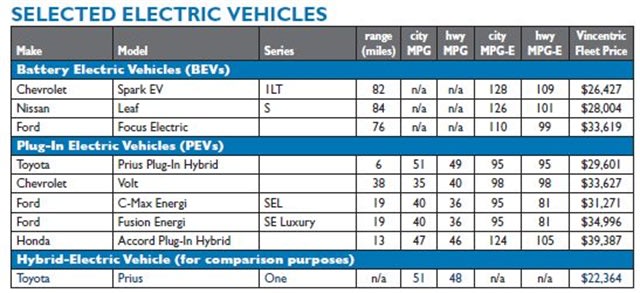
These vehicles don’t use electric power in the same way. The Nissan Leaf, Ford Focus Electric, Chevrolet Spark EV, Smart Fortwo Electric Drive and Mitsubishi i-MiEV — commonly known as battery electric vehicles (BEVs) — run purely on electric power. Their EPA-rated ranges run from 62 to 84 miles.
The other vehicles in our study also have electric motors to allow them to run purely using electricity, but they also utilize internal combustion engines (ICEs) that run on gas. Generally termed plug-in electric vehicles (PEVs), these models have overall mileage ranges that equal vehicles with conventional ICE engines. Yet their electric-only ranges vary greatly, from the Toyota Prius Plug-In Hybrid at 6 miles to the Chevrolet Volt at 38 miles.
Lastly, the Toyota Prius — a hybrid-electric vehicle running on a standard ICE — is included to compare electric vehicles to lifecycle costs of a more traditional vehicle.
In this lifecycle analysis, Vincentric included its usual eight cost elements: depreciation, financing, fees and taxes, fuel, insurance, maintenance, opportunity cost and repairs. However, fuel costs are delineated by both electric and gas for the PEVs. The analysis covers a three-year period in fleet.
The analysis assumes a 5-month weighted average for gasoline price per gallon of $3.32 and an average electricity cost of $.13 per kilowatt hour. Initial costs were calculated using Vincentric fleet pricing, which is manufacturers’ published invoice, minus published fleet incentives plus destination fees.
Available federal government rebates are taken into account as reductions in the first year’s taxes and fees. Note that the analysis is based on U.S. averages, so specific state incentives for electric vehicles were not included. In some states, this would substantially decrease lifecycle costs.
Duty Cycles
We created three duty cycles that, for most vehicles on our list, would necessitate only one charge per day. We created daily mileage ranges from 20 to 75 miles and varied them by day of the week.
Our research revealed that most electric vehicles purchased by fleet operators are used in urban areas. The shortest cycle (“Delivery Service, Local”) runs 12,250 annual miles, the second (“Sales Driver”) runs 16,680 miles, while the third (“Delivery Service, Longer Distance”) runs 22,175 annual miles.
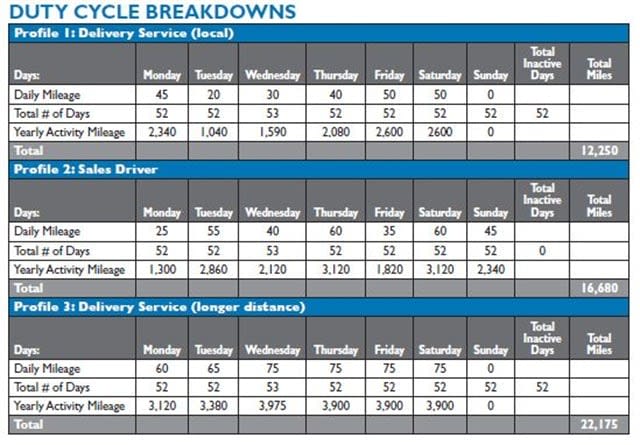
The BEV models fit into most ranges, with two exceptions. For duty cycle three, the BEV Mitsubishi i-MiEV and Smart Fortwo Electric were not included due to their range limitations. The PEV models, using battery power and gas, fit into all three duty cycles with varying degrees of electric usage. For this analysis, we assumed fleet drivers would use electric power over gasoline to the fullest extent of the PEVs’ capabilities.
BEVs Versus PEVs
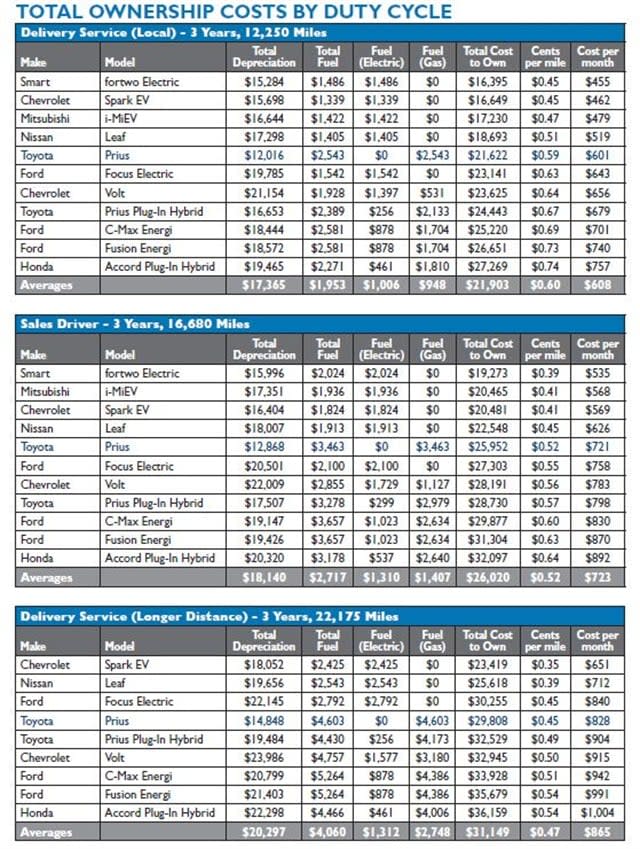
In analyzing the data, the lifecycle costs shake out between the two groups, the BEVs and PEVs.
For all three duty cycles, the BEV models returned the lowest lifecycle costs — noting again that the i-MiEV and Smart Fortwo Electric were not included in the duty cycle with the longest mileage. Why do the BEVs have better numbers? First, their initial costs on average are lower than their PEV counterparts, and they depreciate on average close to $2,000 less than the PEVs.
And, as expected, the “fuel” cost averages are substantially less for the BEVs, as they are confined to electric charging. In each of these cycles, the PEVs are forced to use some gasoline to varying degrees based on their ranges.
Of the PEVs, the Chevrolet Volt returns the lowest overall fuel costs in the first two duty cycles, owing to its 38 miles of electric-only range. (Moving forward, note that the 2015 Chevrolet Volt model has an increased range of 50 miles.) The Volt wins the total cost of ownership battle compared to other PEVs in two of the three duty cycles.
Interestingly, the Toyota Prius Plug-In Hybrid — with the smallest electric-only range of 6 miles per full charge — comes out on top of the PEV pile in one of the duty cycles and comes in second in the others. It also returns the lowest overall fuel cost in the duty cycle with the longest miles. The Prius Plug-In Hybrid has the lowest initial cost of the PEVs and also depreciates the least.
More Use, Better Numbers
The more you drive these electric vehicles, the more cost effective they become. In the duty cycle with the lowest (12,250) annual miles, the average three-year lifecycle cost for the BEVs is $18,422, while the total average cost for the PEVs is $25,442. For duty cycle three (22,175 miles), the average total cost for the BEVs is $26,431 and $34,248 for the PEVs. While you’re driving 45% more miles, your annual costs are only about 30% more.
"Our research revealed that most electric vehicles purchased by fleet operators are used in urban areas."
As an aside, Vincentric ran the numbers on the Toyota Prius, a hybrid-electric vehicle that can’t run solely on electric power. In each of the duty cycles, the Prius came in the middle of the pack in terms of lifecycle costs. The initial cost of the Prius, as well as its total depreciation, was the lowest of any in the group.
Interestingly, the total fuel cost for the Prius was not the highest of any in the group. In all three scenarios, the Ford C-Max Energi and Ford Fusion Energi returned higher fuel totals after three years.
Other Factors
Remember, this is strictly a cost analysis, and many other qualitative factors inform actual fleet use. So while some models return higher ownership costs, those models offer other attributes such as comfort, space and drivability. Whether your fleet drivers will feel more comfortable in a Mitsubishi i-MiEV compared to a Ford Fusion Energi is for you to decide.
As well, in some applications, a determining factor above and beyond cents per mile would be the ability to use the substantially increased range of a plug-in electric vehicle over an electric-only model.
Making the Case
This data shows that electric vehicles can work in fleets with duty cycles within reasonable mileage ranges. The data also shows that running on cheaper electric power really does positively affect lifecycle costs. Plug-in vehicles alleviate range anxiety and improve a fleet’s carbon footprint, though driver education and the proper charging infrastructure are essential to get the most out of electric power.
Nonetheless, EV use in fleets isn’t just about fuel savings. Many corporate fleets have mandates to lower their carbon footprints, while smaller companies utilize EVs because they align with their business models.
Pure-electric vehicles will have limited use in fleet until the “big battery breakthrough.” But even with today’s ranges, most models fit a surprisingly large percentage of fleet use.
Originally posted on Work Truck Online
More Vehicle Research
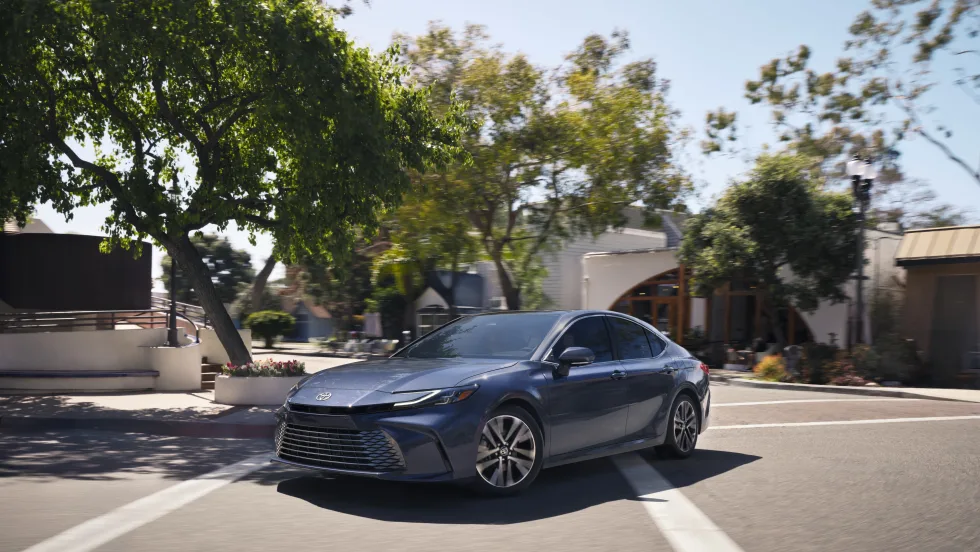
2027 Toyota Camry Offers Hybrid Powertrain Across Five Grades
The 2027 Toyota Camry is a carryover with new pricing.
Read More →
Chevrolet Updates 2027 Trax and Trailblazer with More Standard Safety Features
Chevrolet is updating two of its smallest SUVs with added driver-assistance technology, redesigned interiors, and revised trim options. The changes could add more safety equipment as standard for commercial fleets, while a new Trailblazer configuration adds another all-wheel-drive option.
Read More →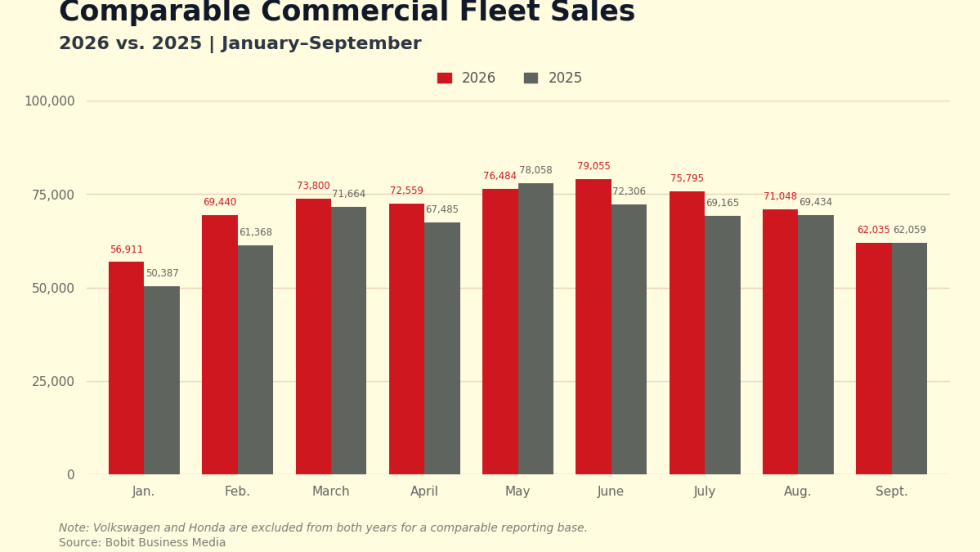
Commercial Fleet Sales Rise 5.8% Through September 2026
September commercial fleet sales were essentially unchanged from a year earlier, slowing year-to-date growth while keeping volume ahead of 2025.
Read More →
Hall of Fame Inductee: John Dmochowsky
The longtime Mondelēz International fleet executive joins the Automotive Fleet Hall of Fame.
Read More →
Hall of Fame Inductee: Lee Miller
After more than four decades at Boehringer Ingelheim, Lee Miller leaves a legacy built on fleet expertise.
Read More →
Hall of Fame Inductee: Mark F. Petersen
From managing fleets of thousands of vehicles to advancing safety and mentoring fellow professionals, Mark F. Petersen made his mark across both the corporate and supplier sides of fleet.
Read More →
When Charger Downtime Becomes a Fleet Availability Problem
As EV deployments move beyond pilot programs, charger reliability can directly affect vehicle readiness, driver productivity and route scheduling.
Read More →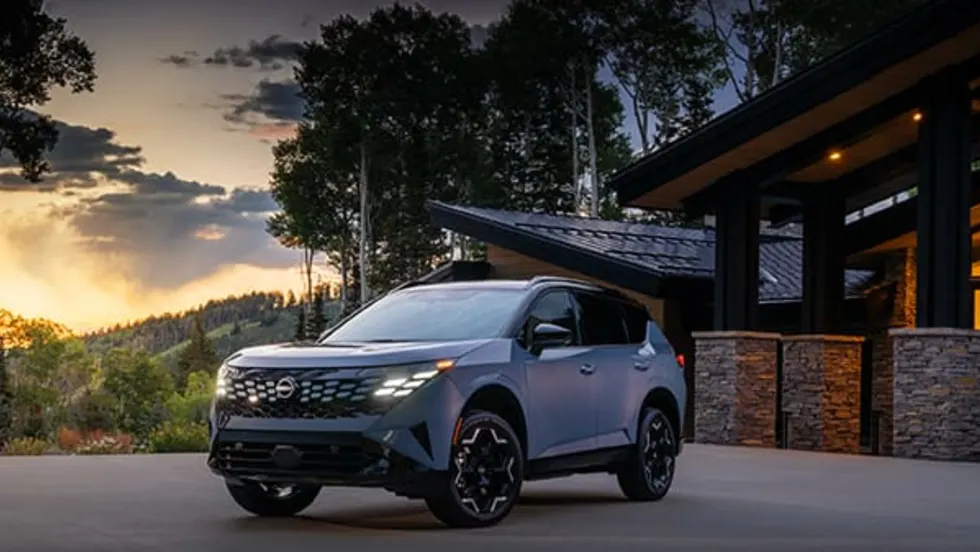
2027 Nissan Rogue Hybrid Adds e-POWER, Standard AWD
The new Rogue Hybrid uses Nissan’s e-POWER system with dual electric motors, offers an estimated 40 mpg and starts at $35,490.
Read More →
2027 Subaru Forester Adds First Wilderness Hybrid
The 2027 Forester lineup starts at $29,995 and adds a Wilderness Hybrid with 194 combined horsepower and 9.3 inches of ground clearance.
Read More →
EV Realty Names Henrik Holland President as Charging Platform Expands
The former Prologis Mobility and Shell executive will help expand EV Realty’s truck charging business and move its power-first infrastructure model into autonomous vehicle depots and other fleet sectors.
Read More →