




Related: Driverless Shuttle Services: The Near Future of Autonomy?
Where and How Are AV Shuttles Gaining Traction?
In planned communities such as Lake Nona, Fla. and in last-mile applications serving mixed-use campuses, autonomous shuttles require minimal new infrastructure and are cleaner and quieter than traditional buses.
by Anne Mellano
January 27, 2020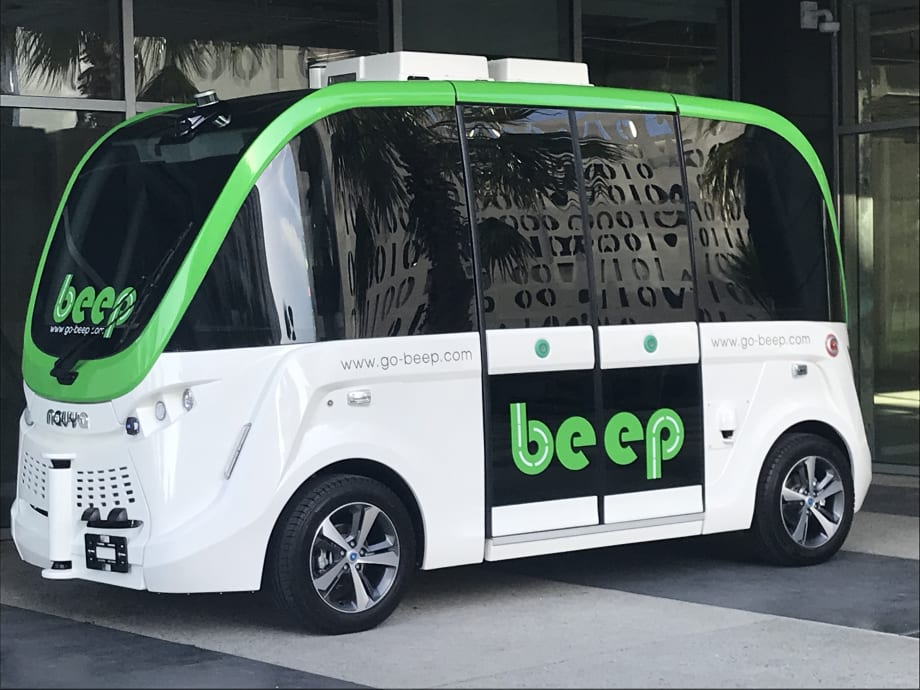
Owner Tavistock Group and autonomous mobility solution company Beep plan to expand the Lake Nona service, as well as offer services in other communities in Florida and beyond.
Photo courtesy of Beep
4 min to read
It is no secret that new mobility services have disrupted urban transit. Businesses like Uber and Lyft, and after them, Lime and Bird, stormed uninvited into cities with innovative, convenient services that customers loved.
Public transport operators were caught off guard, seeing reduced ridership and worsened congestion. Some agencies, though, are innovating themselves to better serve their customers and help move more people with fewer vehicles. One use case that has helped public and private providers alike is autonomous shuttle service for first-, last-mile solutions that have been good for transit agencies, businesses, and travelers.
Mobility to ‘Mixed-Use’ Center
In Fribourg, Switzerland, the public transit agency TPF launched last-mile services from a bus station to the mixed-use Marly Innovation Center (MIC), a 100-acre campus accessed by 500 employees with plans to develop housing in the future. The one-mile distance from the bus station was seen by MIC promoters as an obstacle to attracting businesses and, in the future, residents. TPF worked with the center and has delivered an autonomous shuttle service between the bus station and the MIC, and plans to tightly integrate the shuttles’ schedules with the public transport schedule, so that if a bus is late, the shuttle can wait for it before departing to avoid delaying passengers further.
Since its launch in late 2017, the service has transported 9,000 passengers.
Sustainable Neighborhoods
In Lyon, France, the French Agency for Environment and Energy and the French Ministry of Ecology, Sustainable Development, and Energy deployed an autonomous shuttle project to explore greener, cleaner ways to connect the city’s train station with the sustainably designed Confluence neighborhood. The former dockyards have been revitalized to be energy efficient, artsy, and walkable, but there wasn’t a convenient way to get in and out of the area.
To facilitate access to the many shops, restaurants, and museums in the neighborhood, the agencies placed attendants on the autonomous buses to answer questions and to make people more comfortable. An online web portal educates the public about the service and how to use it. Since its launch in 2016 some 40,000 travelers have used the shuttles.
Navigating Medieval Streets
Back in Switzerland, the PostBus has been running an autonomous shuttle service in the city of Sion since 2016. The goal was to facilitate transit of visitors through the city center’s narrow cobblestone streets and reduce the number of cars driving and parking on the streets, making the area more attractive and accessible to visitors.
This tested the shuttles’ navigation skills in tight spaces with both autos and pedestrians on the routes. The shuttles have carried 50,000 travelers and the service has since been expanded to connect with the train station for a first-, last-mile solution, making the medieval destination more reachable and less congested.
PostBus is looking to replicate the service in other cities.
Public-Private Partnerships
In Lake Nona, Fla., near Orlando, a planned community is using autonomous shuttles to ease the transit of residents and visitors. The 17-square-mile development features homes, shops, medical facilities, business parks, and schools. The first phase of the shuttle service takes people from an apartment complex to the city center.
Owner Tavistock Group and autonomous mobility solution company Beep plan to expand the Lake Nona service, as well as offer services in other communities in Florida and beyond. The group sees the service as a way to attract residents to enable car-free living. While private, Beep has the full support of city and county officials, and the county recently received a $20 million grant from the U.S. Department of Transportation to upgrade the region’s infrastructure to accommodate autonomous mobility services.
Why Autonomous Shuttles?
Why are autonomous shuttles catching on as a way to spur business, travel, tourism, and growth? For transit providers, the shuttles offer an innovative way to expand service areas and reach new destinations. The shuttles require minimal new infrastructure, can get up and running quickly, are quieter and cleaner than traditional buses, and move at speeds that are slower and safer than private autos.
Also, these services provide a way for mobility providers to better understand the public perception of autonomous services and their capabilities in public and private scenarios. As the capabilities of vehicles evolve, this insight will no doubt streamline the introduction of more complex services such as autonomous on-demand ride-sharing in the future.
Anne Mellano is co-founder of Bestmile, a mobility services platform provider.
This article was originally published on Metro Magazine.
Subscribe to Our Newsletter
More Fleet Forward

Erin Gilchrist Receives Mike Antich Spirit of Fleet Award
Last week at AFLA in Vegas, Erin Gilchrist received the inaugural, brand-new Spirit of Fleet Award.
Read More →
Dominika Leja Named the 2026 Fleet Manager of the Year
The AstraZeneca associate director of fleet was recognized for her leadership in fleet electrification, cost savings, and operational transformation.
Read More →
Jamie McKay Named the 2026 Fleet Visionary Award Winner
The Aptive Pest Control fleet manager was recognized for her approach to operations, data, lifecycle management, and driver needs.
Read More →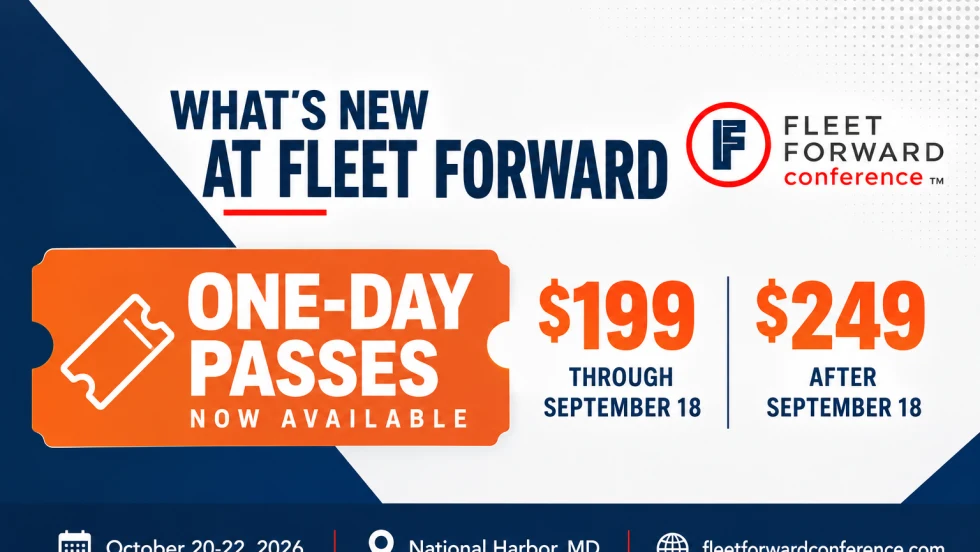
Fleet Forward Conference Introduces One-Day Passes for 2026
New one-day registration gives fleet professionals the flexibility to attend Tuesday, Wednesday, or Thursday, with passes available for $199 through Sept. 18.
Read More →
Vibe Coding: When Fleet Managers Become Software Builders
Five fleet professionals — none with programming skills — discuss how they’re using AI to build fleet solutions in-house and in a fraction of the time.
Read More →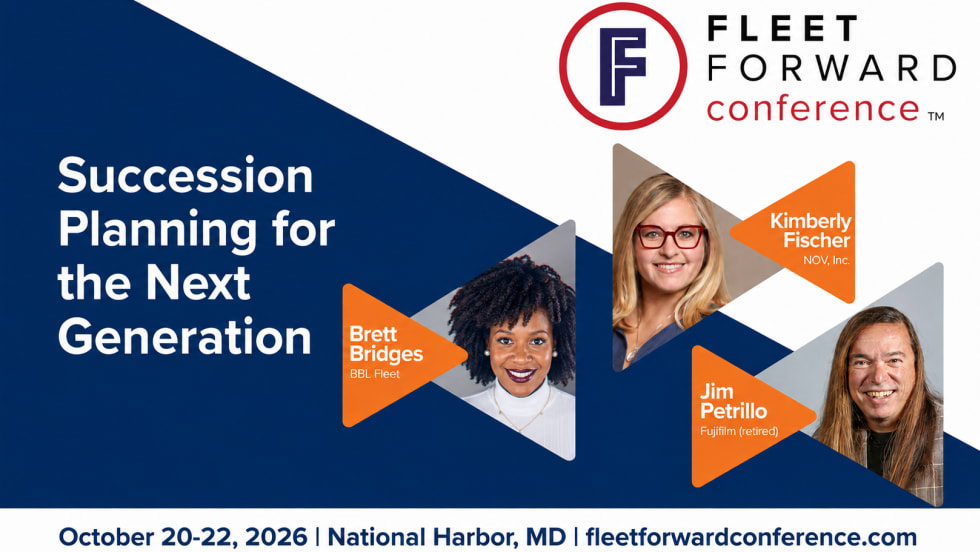
Fleet Forward Conference Tackles Fleet Industry’s Growing Leadership Gap
This session will examine succession planning, knowledge transfer, and the skills the next generation of fleet leaders will need as veteran professionals leave the industry.
Read More →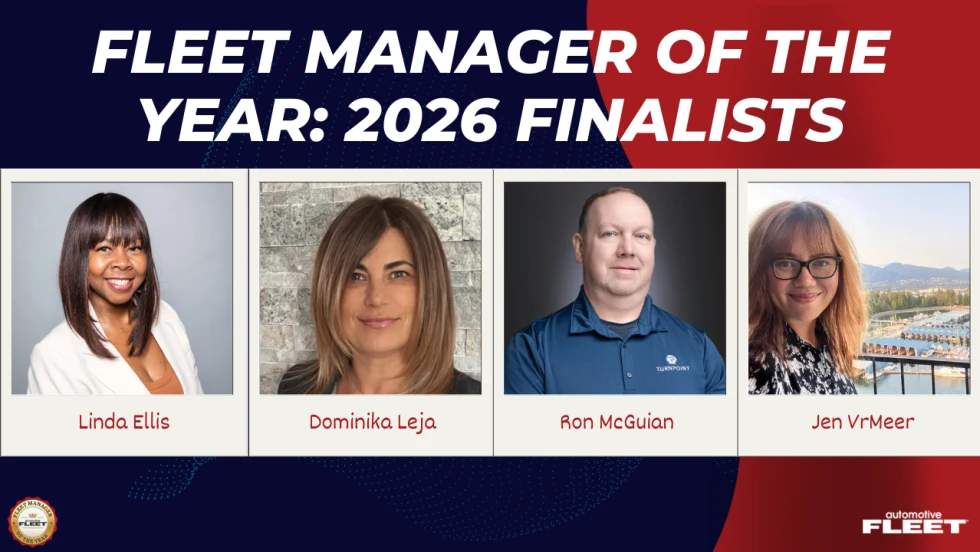
2026 Fleet Manager of the Year Finalists Announced
Who are the 2026 Fleet Manager of the Year finalists?
Read More →
John Rossant to Deliver Opening Keynote at 2026 Fleet Forward Conference
The CoMotion founder will draw on developments across Europe, China, the Middle East, and other international markets to identify trends that could influence how U.S. fleets plan for the coming decade.
Read More →
How to Build Custom Fleet Tools With AI and Vibe Coding [Webinar]
A new Automotive Fleet webinar explores how fleet managers are using AI and vibe coding to automate routine work and create simple operational tools without traditional programming skills.
Read More →