




What’s On the Minds of Fleet Managers
The summer months are a busy time in the fleet industry. There are many fleet meetings and new-model introductions, which provides me with an opportunity to talk “fleet” with a wide variety of fleet managers. Two issues on the minds of many fleet managers are the unbelievably long order-to-delivery (OTD) times for medium- and heavy-duty trucks and the encroachment of other corporate functions into traditional fleet management responsibili-ties.


The summer months are a busy time in the fleet industry. There are many fleet meetings and new-model introductions, which provides me with an opportunity to talk “fleet” with a wide variety of fleet managers. Two issues on the minds of many fleet managers are the unbelievably long order-to-delivery (OTD) times for medium- and heavy-duty trucks and the encroachment of other corporate functions into traditional fleet management responsibilities.
Strong Truck Demand Creates Long OTD
Demand for medium- and heavy-duty trucks is up 40 percent this year, according to Standard & Poor’s, which has prompted manufacturers to substantially boost output for the first time since the late 1990s. Ford plans to increase commercial truck production by 30 percent during the second half of the year. A second shift will begin producing TopKicks and Kodiaks in September at GM’s Flint Truck Assembly. Freightliner has added a third production shift at its Cleveland, N.C., assembly plant and another 100 jobs at a chassis and cab parts factory in Gastonia, N.C. One example of the strong fleet demand for work trucks is U-Haul International, which has added 5,000 10-foot GMC moving trucks to its fleet in the past year. According to U-Haul, it is witnessing an increase in moving activity all across the country, which it says is a strong indicator that the economy is improving. In addition, the average age of commercial trucks on the road is 5.9 years now — a 10-year high, which is triggering a strong replacement market. In other cases, some fleets are accelerating truck acquisition timetables so that they occur before the more stringent federal emission regulations covering diesel engines take effect in 2007. The drawback for fleets, especially those predominately com-prised of trucks, is that order-to-delivery times for medium-duty and heavy-duty trucks are starting to take 9-10 months. One fleet manager told me that he had cut a P.O. for his ordered trucks in November 2003 but was told he would not receive the trucks until mid-summer. Wow. Not only is there a shortage of medium-duty and heavy-duty trucks in the market, there is likewise a short supply of truck trailers. Plus, the cost of trailers is increasing due to the escalating cost of steel. The high cost of steel, like the high cost of fuel, is starting to make a financial impact on fleets, such as increased costs for truck bodies and liftgates. What has kept steel prices high so far this year has been the low inventory of steel. A June 2004 survey by Purchasing Magazine revealed that 72 percent of steel buyers polled expected steel prices to remain elevated through the third quarter. From the fleet perspective, some fleet managers complain that upfitters are increasing equipment costs to compensate for their higher cost of steel. On the other hand, some upfitters com-plain about being forced by fleet managers to stick to the prices quoted for upfits in late 2003, which do not reflect today’s in-creased price of steel.
Encroachment of Other Departments into Fleet
Corporate procurement departments are gaining a bigger say in fleet decisions at many corporations. Not only are they gaining a greater say in fleet procurement and supplier selection, but some fleet managers are reporting a growing involvement in establish-ing fleet policies and procedures. This is fueling the perception among some suppliers that some fleet managers are not the key decision-makers or are, at best, simply influencers. The perception is that procurement and strategic sourcing committees are dimin-ishing the value of corporate fleet managers, and although the fleet managers may sit on these committees, theirs is not the deciding voice. Similarly, human resources departments are starting to have more input in determining fleet policy, especially in regard to use of cell phones, BlackBerrys, navigation systems, and other telematic equipment, along with driver distraction issues. Likewise, risk management departments are exerting more influence on fleet as a result of the rising cost of liability insurance and the cost of at-fault accidents with uninsured drivers. As a result, more and more fleet managers are reporting increased pressure from senior management and risk management departments to re-examine their fleet safety programs and policies. These encroachments are prompting a recurring complaint by some fleet managers that there is a growing perception among corporate senior management that the fleet manager function is not as important as it once was.
Consolidation of Public Sector Fleet Functions
At public sector fleets, there is a trend toward consolidation of fleet manager functions. Whereas in the past you may have had a police department fleet manager, a fire department fleet manager, and a public works fleet manager, at some municipalities there is a consolidation of these functions to a single municipal fleet man-ager, who manages all fleet operations. In addition, as part of this effort by governments to flatten their organizations, some public sector fleet managers are assuming additional operational respon-sibilities. Examples of additional operational responsibilities that are being taken on by public sector fleet managers are capital improvement management, sanitary/sewer operations, and facili-ties management.
Until Next Week
If there is one truism about the fleet industry, at least from the perspective of a journalist, it is that there is never a shortage of subjects to write about. In next week’s editorial, I will share with you some of the many other issues on the minds of your fellow fleet managers.
Until next week, let me know what’s on your mind.
mike.antich@bobit.com
More Operations
How to Manage Conflict for Your Fleet Operations
Conflict management is becoming a core leadership skill. Here are five strategies fleet leaders should know.
Read More →
Turning Connected Vehicle Data Into Decisions That Matter
Fleet leaders have more data than ever, but turning that data into clear, actionable decisions remains a challenge. This white paper shows how leading organizations are using connected vehicle data to improve safety, reduce costs, and optimize fleet performance. Learn how to turn insight into action across your fleet.
Read More →
Cameras, Safety and Insurance: From Reactive Claims to Real-time Prevention
Commercial auto remains one of the most challenging and costly lines of coverage for fleet operators and insurers alike. Learn more about how to effectively address these issues from Onur Aksan, Enterprise Business Development Executive, Geotab.
Read More →

Are You Tracking Your Fleet's True Total Cost of Ownership?
Bobit Business Media surveyed 190 fleet professionals and found that while most fleets are tracking costs, fragmented systems and data gaps are keeping true TCO visibility out of reach. With rising pressure to control spend in an increasingly volatile environment, the gap between what fleets think they know and what the data actually shows is wider than you might expect. See how your peers are managing costs today and where the industry still has room to improve.
Read More →
Turn Fleet Data Into Smarter Decisions
Fleet leaders have access to more operational data than ever, but disconnected systems and unclear metrics often slow decision-making instead of improving it. This article outlines five practical steps fleets can take to transform fragmented data into actionable insights that improve planning, safety, utilization, and long-term performance.
Read More →
Hybrids: Electrification Without the Challenges
For fleet managers, fuel is one of the biggest line items in the budget — and it's one hybrids can shrink without changing how your people work. Download the eBook to see the numbers, understand the technology, and get a step-by-step guide to making the switch.
Read More →
How NOV Uses Telematics to Improve Fleet Safety Across 160 Locations
James Victory of NOV discusses how the company manages fleet safety, maintenance, and telematics across more than 150 locations supporting oilfield operations throughout the U.S.
Read More →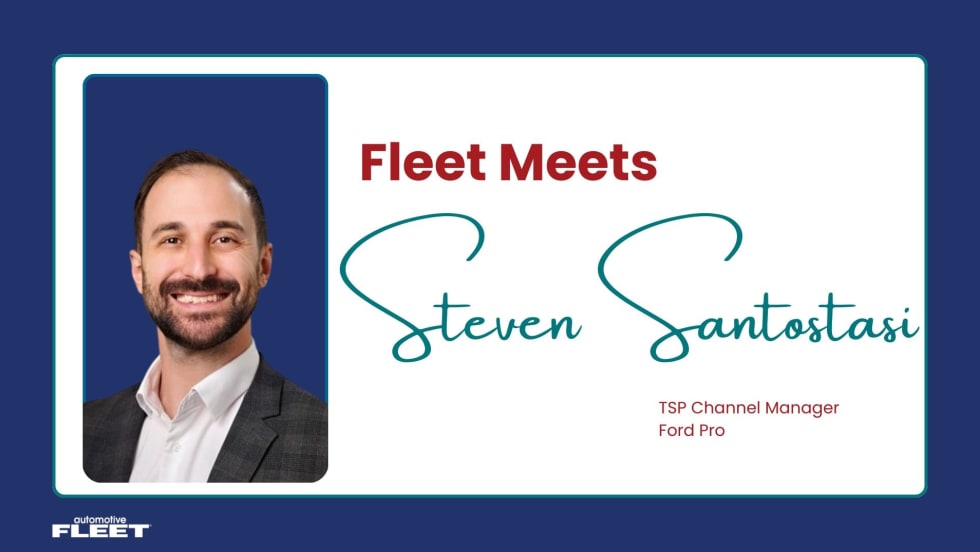
Fleet Meets: Steven Santostasi
This edition of the Fleet Meets series features Steven Santostasi, the current TSP channel manager for Ford Pro.
Read More →
Why Fleet Managers Are Replacing Departmental Vehicles with Shared Motor Pools
Departmentally assigned vehicles often create hidden costs through underutilization, poor visibility, and increased administrative burden. This white paper explores how shared motor pool strategies help fleets reduce costs, improve accountability, and optimize vehicle utilization.
Read More →
Soap Box Derby Challenge: Assembling the Crew
Meet Gabriel, Matthew, and Angel — the team helping bring this soap box derby build to life.
Read More →