




What to Do (And Not to Do) After a Highway Breakdown
Depending on the setting, there are different ways to handle the aftermath of a vehicle breakdown.
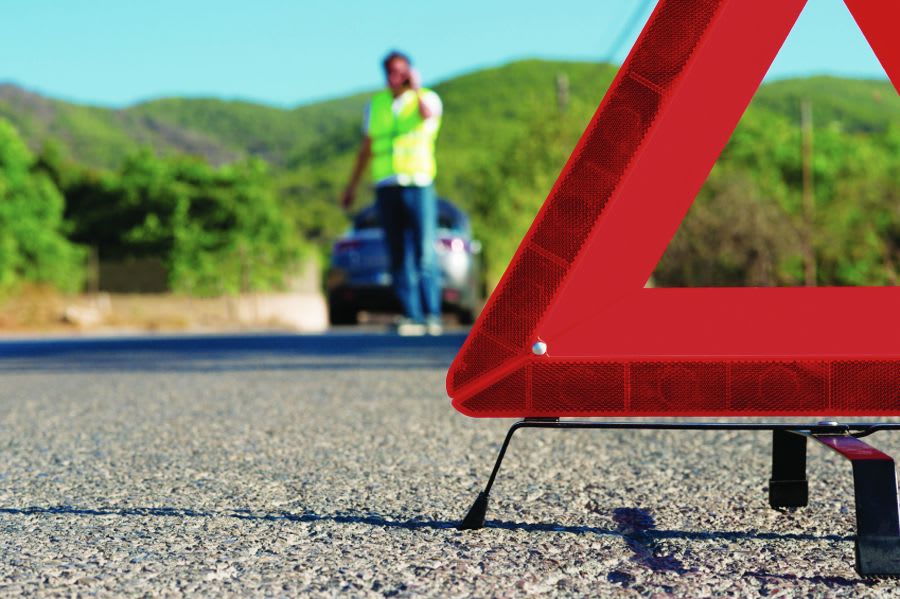
Fleets can pass along the safety tips in this article to their drivers so they are prepared in the event of a breakdown.
The procedure for what do in the event of a vehicle breakdown has a lot to do with where the vehicle is being driven at the time it sputters to a stop. Metropolitan-area freeways and rural highways each bring different problems and require markedly different solutions to a vehicle breakdown.
Fleets can pass along the safety tips in this article to their drivers so they are prepared in the event of a breakdown.
Regardless of the setting, however, it’s important to remember to use the vehicle’s hazard lights and pull onto the shoulder (if it can be done safely to avoid becoming a road hazard to other drivers) to get out of the way of other passing vehicles flying by at high speeds.
Once the driver has cleared the road and is safely on the shoulder, he or she can make the vehicle more visible by turning on the vehicle’s dome light and leaving the headlights on, in addition to the vehicle hazard lights. All vehicles should be equipped with an emergency kit. Put reflective triangles behind the vehicle if it can be done safely.
A copy of the fleet’s safety and accident policy should be stored in the glovebox and reviewed when an incident occurs. Once the policy has been quickly studied, several questions should be asked: Is it safe to exit the vehicle? Is the neighborhood/stretch of road safe or should caution be exercised? The answers to these questions, or the obvious nature of the breakdown, will determine what to do next.
It is recommended to only exit the vehicle if it’s a residential or rural/low traffic area. In high-trafficked metropolitan areas, stay in the car until assistance can be rendered by a tow truck driver or law enforcement personnel. Exiting or standing around a stranded vehicle greatly increases the risk of injury or death. Staying safe is much more important than staying on schedule.
Is It Safe to Exit a Vehicle After a Breakdown?
If the car is beyond repair, it’s best to wait for a professional. After calling a tow truck directly or the fleet manager or fleet management company (if required by policy), the driver should wait patiently for official help to arrive.
Never accept unofficial assistance in the wake of a breakdown.
The National Safety Council recommends the following:
Do not try to flag down other vehicles, i.e., don’t solicit the help of passing motorists.
Raise the vehicle’s hood and tie something white to the radio antenna or hang it out the window so police officers or tow truck operators will know help is needed.
Don’t stand behind or next to the vehicle.
5 Freeway Breakdown Tips
If a driver is stranded due to a vehicle breakdown on a freeway, here are five tips to be sure they remember:
Pull over and out of traffic if possible. Even if all of the emergency lights are activated, some highway drivers do not pay close attention and could rear-end the disabled fleet vehicle, causing further damage or injury.
The driver shouldn’t attempt to fix the vehicle, even if it appears it’s going to be a quick or easy fix. Wait for professional help to arrive.
Only exit the vehicle if it is necessary or safe to do so. If possible, raise the vehicle hood to alert passing authorities that the vehicle is disabled and help is needed.
Patience is a virtue in breakdown situations. Particularly in heavily trafficked metropolitan areas, highways are regularly patrolled by police and tow truck operators — help will arrive soon.
Lastly, make sure to keep a copy of the fleet’s roadside assistance or accident policy in the vehicle at all times.
More Safety

Fleet Manager’s Ultimate Playbook: Navigating the New Standard in OEM Connectivity
Rising operating costs, driver safety concerns, and unplanned downtime are putting unprecedented pressure on modern fleets. Discover how fleet managers use embedded OEM connectivity and real-time vehicle data to cut TCO, prevent downtime, and protect drivers without aftermarket telematics hardware.
Read More →
From Driver Well-Being to EV Charging | AF News Recap
Mental health belongs in the fleet safety conversation. This week, we’re looking at five ways fleets can support employee well-being before a crisis, plus Holman’s expansion in Mexico, new one-day Fleet Forward passes, and why EV charging demand is outpacing infrastructure growth.
Read More →
Nexar-Nauto Merger Aims to Give Fleets Better Safety Intelligence Through Larger Driving Dataset
Stefan Heck tells Automotive Fleet that combining more than 10 billion miles of driving history with Nexar's AI models will give fleets deeper insights into driver risk and roadway conditions than either company could provide independently.
Read More →
Don't Wait for a Crisis: 5 Ways to Build Mental Health Into Your Fleet Safety Program
For Suicide Prevention Month, fleet and safety leaders have an opportunity to put mental health where it belongs: at the center of workplace safety.
Read More →
How Camera Data Can Strengthen a Fleet’s Insurance Renewal
Insights from a commercial insurance carrier and a broker show how fleets can turn video telematic data, driver coaching, and improved claims results into a stronger case at insurance renewal.
Read More →
The Safest Fleets Aren’t the Ones with the Most Technology
You’ve made the telematics investment. Here’s how to capture the other half of its value and build the safest fleet on the road.
Read More →
Hidden in Plain Sight: Fleet Compliance Risks
Fleet compliance isn't just about having policies — it's about consistently enforcing them. This practical guide reveals six hidden compliance risks common in public sector and shared fleet operations and outlines proven strategies to improve visibility, accountability, and audit readiness
Read More →
NETS Sets 2026 Fleet Safety Benchmark Conference for Indianapolis
The Sept. 15–17 program will feature fleet benchmarking data, case studies, emerging technologies, and implementation strategies while running alongside the NSC Safety Congress & Expo.
Read More →
Off-the-Job Crashes Account for 43% of Employers’ $61.7 Billion Crash Burden
NETS quantifies costs dispersed across fleet, risk, HR, and other departments while providing new per-crash benchmarks for employers.
Read More →
Ram Recalls More Than 1.27 Million 1500 Pickups for Seat Belt Anchor Issue
The recall affects certain 2019-2026 Ram 1500 pickups that may have improperly attached second-row seat belt buckle anchors.
Read More →