





Watch: Top Fleet Management Trends in the Oil & Energy Industry
What Oil & Energy Industry Trends Signal for Fleet Management
AF Editor Mike Antich discusses managing such issues as acquisitions, extended lifecycles, and rising maintenance and labor costs with Kimberly Fisher, global fleet director for NOV, a major oil and gas services company.
April 25, 2023

Fleet trends in one industry -- such as oil and gas -- often can signal what’s happening in other business segments.
Photo: DrPepperScott230
7 min to read
Fleet trends in one industry often can signal what’s happening in other business segments. Automotive Fleet Editor Mike Antich talked with Kimberly Fisher, director of global fleet and travel for NOV, a major oil and gas services company, about managing issues such as acquisition, extended lifecyles, and rising maintenance and labor costs.
Headquartered in Houston, NOV employs more than 27,000 people and operates more than 550 facilities worldwide.
Check out a portion of the interview below.
Looking at Acquisition Trends
AF: It has been a really unusual time in the energy business. In terms of acquisition trends, would you provide the context and a description of NOV’s fleet acquisition trends pre-COVID, during COVID and now post-COVID?
Fisher: The oil and gas industry was in a bit of a downturn prior to COVID. We had defleeted once again. We had done that several times over the last seven or eight years, and we had stopped buying and began holding on to vehicles longer than we normally would. When COVID hit, the first year was probably not a bad year for us because nobody could go anywhere, and our vehicles weren’t being used as much.
In 2021, when business started to come back and our techs started driving more, going out to see and service customers more, we now had an aging fleet, and it was just really impossible to get vehicles.
Now we're post-COVID, and with the shortages that have occurred, our average mileage is well over 200,000 miles in the fleet, which makes it very challenging.
We are trying to replace as quickly as we can. But inventory is not quite back where it would be normally, where we could actively and very quickly replace vehicles when needed.
It's been a bit of a struggle. I'm sure that that's true of most industries. But for us, we had a double whammy of a downturn. We automatically weren’t purchasing new vehicles. Then COVID hitting and the subsequent new-vehicle shortages doubled down on a problem we were already experiencing.
Forced to Buy from Dealer Stock
AF: Your experiences are very similar to what the majority of fleets have been encountering. One result of this inability to order factory replacement vehicles is many fleets have been forced to buy out-of-stock at dealers. What's been your experience in that area?

NOV Director of global Fleet &Travel Kimberly Fisher: "The challenge is some dealerships, in my opinion, have taken advantage of fleets in charging just really ridiculous markups that...are very short-sighted."
Photo: Kimberly Fisher
Fisher: It’s been a disappointing because, of course, you're buying retail vehicles versus fleet-designated vehicles. You're also paying a markup, which we understand. Markups always exist.
The challenge is some dealerships, in my opinion, have taken advantage of fleets in charging just really ridiculous markups that, in my view, are very short-sighted. Fleet managers tend to have very long memories and will absolutely remember the dealers who did not take advantage of them and the dealers who did.
We have some dealers with whom we have seen markups of up to $15,000, which is just bizarre. It’s hard to justify buying a vehicle that's got that kind of markup.
Repair Costs Skyrocketing with Extended Lifecycles
In addition to the higher prices of buying dealer stock, there are still additional markups. And still, fleets like NOV can't get all the vehicles needed, requiring extending the service life of many units.
Some of the NOV units are now 250,000 miles on the odometer. You can look at that two ways: One is a great testament to the quality of vehicles these days that they can reach 250,000 miles and still be operational. However, the other is that things don't last forever, especially with an electromechanical device such as a car.
AF: Things break, leading to increased rates of unscheduled maintenance, which I'm sure you're experiencing. What have you observed with this trend?
Fisher: We just finalized our annual review with our fleet management company, and our cost per repair, year-over-year, has gone up 42%. We have a sizeable fleet. When you average that over the entire fleet, the math is pretty simple. It's a huge increase in cost to us.
The offset is many of our vehicles are fully depreciated, so we're not necessarily paying the lease cost any more.
However, with the increase in mileage and the mechanical issues we're having — that in a normal time we would never repair — we also are putting drivers at risk for being stranded out in the middle of nowhere.
We operate in some remote extreme-weather areas, whether extreme cold or extreme hot. It is a challenge: do you put X amount of money into a vehicle, and yet, you don't want that driver in that vehicle if it's unsafe?
Labor Rates Hike as Shortages Continue
Additionally, it's not only unscheduled maintenance that occurs.
AF: When vehicles are kept beyond normal replacement cycles, a new series of preventive maintenance measures begins, such as replacing tires and brakes, compounding the additional maintenance expense. And some part of that 40% increase has been as a result of rising labor rates.
Fisher: Absolutely. We've seen labor rates definitely go up over the last few years. I don't know if those will come back down.
As you know, there was a shortage of mechanics prior to COVID ever happening, and there was concern about an aging population in mechanics and what were we doing as an industry to pull in younger people.
I don't expect labor rates will go down, at least not in the near future. My hope is that parts will come down because I feel they've gotten more expensive as well, and the availability of parts and the lead times to have vehicles fixed will lessen.
I don't know that labor rates will come back down to pre-COVID levels. Those were on the rise prior to COVID, and COVID just helped push them up a bit more.
AF: You hit the root cause. It's really a labor shortage. There are not enough skilled technicians out there. Also, regular inflationary pressures within the economy are exerting upward pressure on hourly labor rates. This issue goes beyond just the maintenance and repair industries. How are you experiencing labor shortages and how is your company adapting to them?
Fisher: It's been interesting finding techs, specifically our service techs who work in the field. It has been a challenge for all of our divisions across the board because we're pulling from the same pool, especially, here in Texas, Oklahoma and Louisiana, which tend to be three of the largest states for energy-related oil and gas-related work.
All our competitors are also pulling from that same pool. Some of my business units and the field leaders, they've actually started doing some programs in which workers are scheduled 14 days on and 14 days off. And we actually hire from completely different states, for instance, from the state of Georgia.
We fly the individual in. He works a 14-day schedule. We supply housing and his transportation back home.
What we have found is we’re getting a whole new group of people who are skilled but would not necessarily have worked in our industry to begin with because they were in a state that was not historically an energy, oil or gas state. If that makes sense.
AF: It makes all the sense in the world and is similar to firefighters who have similar types of work hours. It's advantageous to the individual, and it's a very innovative program that I'm sure has been well received.
Fisher: It has been. And it's been really fun to see our business groups, along with our HR people, find an innovative way to help replace the labor shortages we have.
Our industry is on the rise right now, which is always a positive. But that means we also are hiring a lot more.
And just as many industries experienced exits from their industry completely during COVID, some people in our industry prior to COVID are not coming back — whether they were nearing retirement or whether they were just up for a change. It was an opportunity to do that.
It's been rewarding to watch our company get innovative on how we respond to the labor shortage.
Subscribe to Our Newsletter
More Operations

How Fleets Can Recruit and Train Veterans for Technician Roles
Here's how the technician shortage has affected uptime for fleets, and what to do about it.
Read More →
Avis Budget Group Deploys Neology Toll Management Technology Across Major Brands
Neology’s neoFleet platform will manage toll transactions and toll-authority operations for vehicles across Avis, Budget, Payless, Budget Truck and Zipcar.
Read More →
Fleet Personal-Use Charges Edge Higher in 2026
Nearly eight in 10 surveyed fleets allow personal use of company vehicles, while just over half of respondents report charging employees for the privilege.
Read More →
The Future of Fleet + What’s Changing Right Now | AF News Recap
Could developments overseas offer a preview of what’s coming for U.S. fleets? This week, we’re looking at the future of AI, autonomy, and electrification, plus Ford Pro’s new certified pre-owned program, smarter vehicle offboarding, and a new way for fleets to manage toll expenses.
Read More →
How to Handle Vehicle Offboarding
What do fleet managers need to do when a driver leaves?
Read More →
Sponsored•October 1, 2026
Fleet Manager’s Ultimate Playbook: Navigating the New Standard in OEM Connectivity
Rising operating costs, driver safety concerns, and unplanned downtime are putting unprecedented pressure on modern fleets. Discover how fleet managers use embedded OEM connectivity and real-time vehicle data to cut TCO, prevent downtime, and protect drivers without aftermarket telematics hardware.
Read More →
U.S. Bank Adds Verra Mobility Toll Management to Voyager Fleet Platform
The integration allows U.S. Bank Voyager fleet customers to manage toll payments and violations alongside fuel, EV charging and maintenance expenses.
Read More →
ADAS Prevents Crashes. But Repairs Cost More | AF News Recap
ADAS-equipped vehicles may crash less often, but they can cost more when they do. This week, we’re breaking down what that tradeoff means for fleets, plus Subaru’s first Forester Wilderness Hybrid, Nissan’s new e-POWER Rogue, and why Calstart has become Catalyst Mobility.
Read More →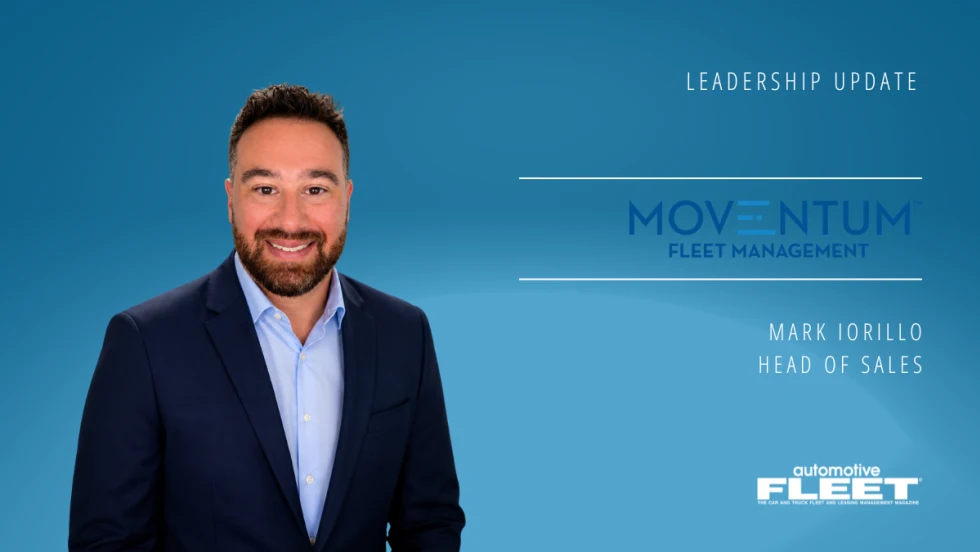
Moventum Fleet Management Names Mark Iorillo Head of Sales
Iorillo brings nearly 20 years of fleet management and sales experience to the role, including previous positions at Element Fleet Management, CEI, Donlen and Ryder.
Read More →
Fleet Has a Talent Pipeline Problem. What Comes Next? | AF News Recap
Where will fleet’s next generation of leaders come from? This week, we’re looking at the industry’s talent pipeline, what certification can add to a fleet career, how to build an award-worthy track record, and the return of Automotive Fleet’s Personal Use Survey.
Read More →