




What are the Pitfalls of Making Vehicle Condition a Part of an Employee's Annual Job Review?
If an employee threw trash all over the office floor, scratched the paint off the walls, broke the light bulbs, left holes and dents in the wallboard, and skipped routine maintenance on the copier until it overheated and broke, no manager would tolerate this abuse, points out Chris Amos, fleet manager for the city of St. Louis.


If an employee threw trash all over the office floor, scratched the paint off the walls, broke the light bulbs, left holes and dents in the wallboard, and skipped routine maintenance on the copier until it overheated and broke, no manager would tolerate this abuse, points out Chris Amos, fleet manager for the city of St. Louis.
Yet, that is exactly what some fleet managers do tolerate when drivers abuse their company-provided vehicles. Not only does this abuse involve dollars-and-cents issues, but it can also result in life-and-death consequences. One fleet manager, wishing to remain anonymous, said: "I've investigated three accidents in the past 10 years where I suspect the reason for the 'brake malfunction' was a soda bottle rolling under the brake pedal because the inside of the cab was full of trash. We were not able to find a mechanical problem with the brakes."
Confronting the Problem
One approach to resolving vehicle abuse is to make condition of a vehicle part of an employee's annual job review. Anecdotal evidence suggests this approach does result in better-maintained vehicles, as was the case with FM Global, a newly formed company created by the merger of four insurance companies.
"When we merged two years ago, one of the companies required the managers to do an annual vehicle condition report with each driver. The other three companies did not," said Richard Corsetti, fleet manager for FM Global. "I found the vehicles with the condition report to be in a little better shape than some of the others, on average." However, the new company, FM Global, decided not to adopt the policy of making vehicle condition part of the employee's review. "One reason is that managers disliked doing the inspections, making the process an administrative nightmare. Also, many of our empolyees are field workers who may live hundreds of miles from the office locations and their managers. The drivers would have to drive the cars in for inspection and log more travel time then if they flew in for appraisal," said Corsetti. "The legacy company not only paid for the automobile reconditioning expense, but also the salary expense for the inspection. We opted instead for a full maintenance program and an attractive selector to entice drivers to buy the vehicle at the end of the lease. We found that this resulted in better care of the cars."
However, if your company decides to add vehicle condition to an employee's job review, there are several issues that you need to discuss with your human resources department:
Consistency in Vehicle Evaluations: "If cars are transferred to other drivers, it's hard to pinpoint who failed to maintain the vehicle," said Henry Paetzel, fleet manager for General Mills. "Another issue is consistency in car evaluations between reviewers. Some will be knowledgeable, looking at the car carefully, while others will simply say that it is normal wear-and-tear for the type of business we're in, which, from a driver's perspective, might not be fair."
Regular Issuance of Condition Reports: Managers may not issue condition reports on a regular basis and not be consistent in evaluations for all employees, said Scott Mayo, fleet manager of Wendy's.
Possible Violation of a State Law: Some state labor laws may prohibit this practice, points out Charles Bowen of Rollins Inc. "Then you run in to the possible problem that if you can't apply it to everyone, then you can't apply it to some." Amos agrees: "As with all disciplinary action, you need to be prepared to impose it for everyone from the CEO on down."
Employee Circumventiion of Policy: Employees will attempt to circumvent accident reporting procedures and obtain out-of-network repairs to avoid having it appear in an employment review, said Joe LaRosa, fleet manager for Bristol-Myers Squibb.
Need for Agreed-Upon Standards and Exceptions: For instance, the company must address procedures such as how the employee is expected to wash the car. "Will it be on company time and will the company reimburse them?" said Cathy Crewson, fleet manager for Tyco.
Increased Administrative Workload: This would be true if drivers and managers are required to complete a vehicle condition report each time a vehicle is transferred to another employee, said Paetzel. Likewise, it will require more administrative involvement by the fleet department in resolving disputes between employees and managers over vehicle condition, said LaRosa.
Possibility of Management Abuse: Some managers could possibly abuse the system by using it as a tool to terminate employees, said LaRosa.
Let me know what you think.
More Operations
What Fleet Managers Really Want From Vendors
From customer service frustrations and technology breakdowns to RFQs, change management, and the growing impact of turnover across the industry, this conversation pulls back the curtain on the real operational challenges fleet managers are navigating every day.
Read More →
Fleet Safety Masterclass: Industry Leaders on Storytelling, Strategy & Innovation
In this special masterclass episode, industry leaders break down what it really takes to build safer fleets in today’s increasingly distracted and data-driven world.
Read More →
Integrating Legacy Fleet Systems and Historical Data
In this episode, we bring together fleet and technology leaders to unpack the realities of data integration, system migrations, and the evolving role of AI in fleet management.
Read More →

From Resistance to Results: Change Management Strategies for Fleets
From new technologies and safety programs to evolving regulations, fleets are under constant pressure to adapt. But as Dr. Betz explains, success isn’t about the system you implement—it’s about whether your people actually use it.
Read More →
Where We're Headed: A Practical Look at AI in Fleet
Discover how AI is actually being deployed in fleets, not just marketed, including practical use cases and emerging risks.
Read More →
How Coca-Cola United Protects Its Fleet from Growing Legal Risk
Growing legal exposure can put fleets at risk. Here's one company's approach.
Read More →
Fleet Managers Think They Understand Their Costs. The Data Says Otherwise.
Most fleet managers say they have a strong handle on their costs, but new research from Bobit Business Media tells a different story. A 2026 survey of 190 fleet professionals reveals a widespread "confidence gap" where fragmented systems, disconnected data, and delayed reporting are leaving major blind spots hidden beneath the surface. Find out what the data actually shows.
Read More →
Cameras, Safety and Insurance: From Reactive Claims to Real-Time Prevention (Part 2 of 2)
Part Two: Commercial auto remains one of the most challenging and costly lines of coverage for fleet operators and insurers alike. Continue learning more about how to effectively address these issues from Onur Aksan, Enterprise Business Development Executive, Geotab
Read More →
New Trucks, AI & Summer Downtime | AF News Recap
From new truck updates to AI-powered driver coaching and summer maintenance tips, this week's fleet headlines are all about keeping things moving.
Read More →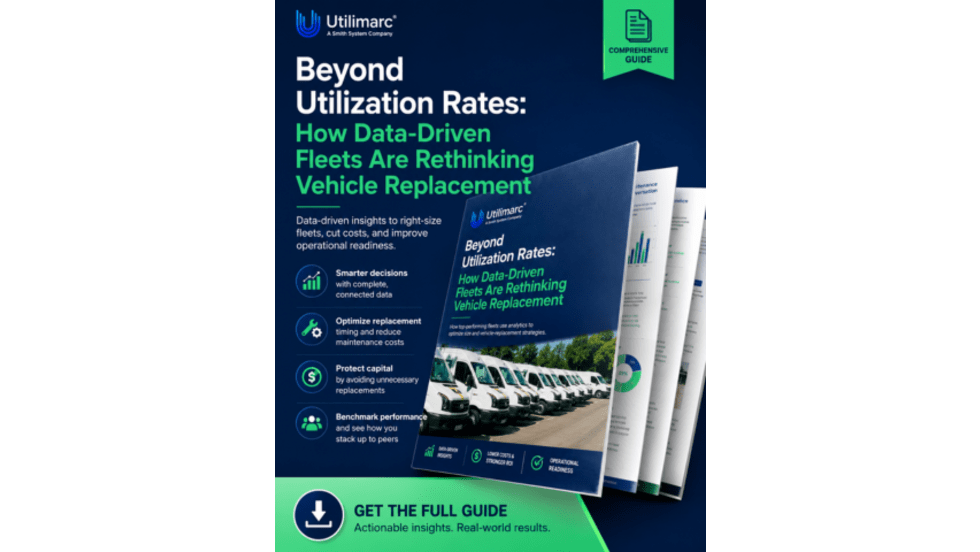
Beyond Utilization Rates: Smarter Fleet Replacement Decisions
Vehicle replacement decisions affect every aspect of fleet performance, from operating costs to asset availability. This guide explores how fleet leaders use integrated data, benchmarking, and lifecycle analytics to determine the right fleet size and optimize replacement timing with greater confidence.
Read More →