




Weichman Strives to Build Upon NAFA's Success
Through increased partnerships, NAFA is working to grow membership, expand its industry alliances, and continue to promote and elevate the fleet management profession.


Doug Weichman, CAFM, director of fleet management for Palm Beach County, Fla., is currently senior vice president of the NAFA Fleet Management Association.
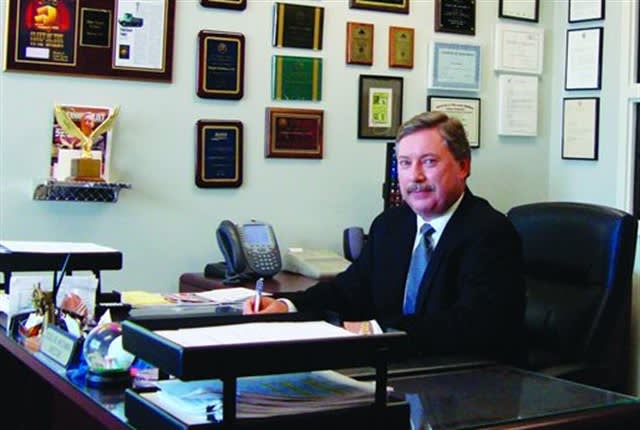
Doug Weichman, CAFM, director of fleet management for Palm Beach County, Fla., is currently senior vice president of the NAFA Fleet Management Association.
Doug Weichman, CAFM, director of fleet management for Palm Beach County, Fla., and NAFA Fleet Management Association (NAFA) senior vice president, recently discussed with Automotive Fleet his goals, challenges, and vision to unify and elevate the fleet management profession.
AF: As one of NAFA's leaders and presumptive next president, what initiatives will you implement to strengthen and build upon the organization's existing relationships with all sectors of the fleet management industry?
Weichman: First, although I am currently the senior vice president of the Association, I make no assumptions. If I am privileged to be nominated and elected next year, I will strive to follow in the footsteps of previous NAFA leaders.
To answer the question, I look at the success the certification program had with partnerships and building alliances. This can work with (and is working for) the Association, too. Our strategic plan outlines goals of becoming the indispensable resource at all levels for fleet management education - whether for the membership, industry partners, the government, or the media - and to be a powerful policy advocate to influence the fleet community's interests. Our certification partnerships with Rocky Mountain Fleet Management Association (RMFMA) and the Florida Association of Governmental Fleet Administrators (FLAGFA) have not only strengthened the program, but added "glue" to the profession. Now, fleet managers involved with other associations recognize the same elements and standards of excellence. The program acts to unify and elevate the profession.
The idea of partnership for NAFA has already begun at the chapter levels, too. Many chapters work together with regional associations to provide the best education on fleet management. The NAFA Sunshine State Chapter, partnering with FLAGFA to hold joint conferences for the past few years, is just one example. The Association itself has numerous partnership success stories, including the National Truck Equipment Association (NTEA), Network of Employers for Traffic Safety (NETS), National Institute for Automotive Service Excellence (ASE), and the International Automotive Remarketers Alliance (IARA).
I see the use of partnerships elevated to a high priority within NAFA's plan and to use workshops to help develop these strategies at Board of Governor meetings. Partnerships create "win-win-win" scenarios; so in the end, the result will be the elevation and respect of the profession within and outside our industry, as well as showing sincerity, openness, and cooperation when building these relationships.
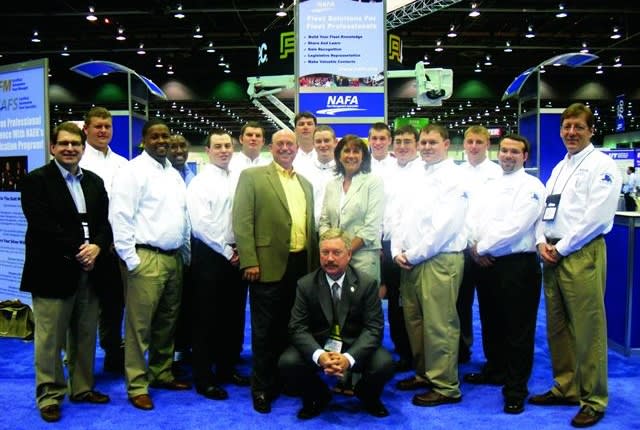
Weichman (crouching) poses with a group of Ferris State University (FSU) automotive students; Steve Pederson, VPSI; Christy Coyte, Johnson Controls (center); and FSU automotive professors, Mike Ropele (far left) and Gary Maike (far right), at the NAFA I&E in Detroit in April.
AF: What are your plans to "grow" NAFA membership?
Weichman: Many plans are in place. One includes growing membership by fostering the next generation of fleet managers. NAFA has long been the premier educational source for the fleet industry through our Certified Automotive Fleet Manager (CAFM) program, educational seminars, and annual Institute & Expo (I&E). We expanded our footprint last year with the creation of the Certified Automotive Fleet Specialist (CAFS) program, which opened the doors of fleet education to anyone who works within a fleet department.
Our membership numbers will grow as we educate the next generation of fleet managers through programs such as the CAFS and partnerships with the U.S. Department of Veterans Affairs (VA), Ferris State University, and fellow associations such as RMFMA and FLAGFA that endorse and offer the CAFM/CAFS programs to their members as well.
NAFA wants to help recruit new fleet managers into the profession and provide them the necessary skills required to be successful. We are actively expanding our student membership by creating new college student groups and encouraging them to attend local chapter meetings and NAFA events. We had 13 students from the Student Chapter of Ferris State University attend the I&E in Detroit this year thanks to a sponsorship by the NAFA Michigan Chapter. Our goal is to have NAFA chapters work closely with student chapters in their areas to help make the transition to fleet management careers easier for students.
AF: How will you maximize the advantages of being a NAFA Member and Affiliate during your presidency?
Weichman: The biggest thing we can do is to listen to our membership. We're doing this by creating new Advisory Boards to get input from a greater number of fleet managers throughout all of the various segments of the industry. NAFA is constantly changing and evolving, but the goal is to provide the highest value for every segment of fleet - this includes both Members and Affiliates. In fact, NAFA is currently working with the membership to evaluate the role of Affiliates to see if they can be more engaged in governing the Association.
Networking is one of the greatest advantages of NAFA membership, and we are actively pursuing opportunities to improve and offer new and varied methods for our members to network with each other. There is so much talent within NAFA; I personally would like to make it easier to establish these professional relationships. I think we need to look at all media avenues - maybe strengthen some conventional approaches and explore new technology or out-of-the-box avenues - to accomplish this.
In the end, the more resources we offer members, the better. We view our services as a tremendous return on investment for membership. Between fleet education, legislative strength in numbers, and networking opportunities, there is no better place for a fleet professional to be than in NAFA.
AF: What are your plans for the 2011 I&E in Charlotte, N.C.?
Weichman: I will continue to build on the changes and improvements implemented for the 2010 I&E in Detroit, which concentrated on being a better value and reducing cost for attendees without reducing content. This means continuing to allow the entire conference program to be developed and presented by industry experts who have their fingers on the pulse of the industry and know what issues need to be discussed.
It also means continuing to have major-draw, industry-related keynote speakers. This year, we invited the Detroit 3 to provide the keynote speakers. Next year, we will invite the next top fleet OEMs to speak. We will also look at ways to enhance networking opportunities, since that is such a valuable part of the I&E experience.
There was a lot of work and review of the I&E process this year, and we will take that same hard look at 2010 when it is over and do whatever we need to keep it fresh, relevant, and, as you said, the premier fleet event of the year.
More Operations

How Fleets Can Recruit and Train Veterans for Technician Roles
Here's how the technician shortage has affected uptime for fleets, and what to do about it.
Read More →
Avis Budget Group Deploys Neology Toll Management Technology Across Major Brands
Neology’s neoFleet platform will manage toll transactions and toll-authority operations for vehicles across Avis, Budget, Payless, Budget Truck and Zipcar.
Read More →
Fleet Personal-Use Charges Edge Higher in 2026
Nearly eight in 10 surveyed fleets allow personal use of company vehicles, while just over half of respondents report charging employees for the privilege.
Read More →
The Future of Fleet + What’s Changing Right Now | AF News Recap
Could developments overseas offer a preview of what’s coming for U.S. fleets? This week, we’re looking at the future of AI, autonomy, and electrification, plus Ford Pro’s new certified pre-owned program, smarter vehicle offboarding, and a new way for fleets to manage toll expenses.
Read More →
How to Handle Vehicle Offboarding
What do fleet managers need to do when a driver leaves?
Read More →
Fleet Manager’s Ultimate Playbook: Navigating the New Standard in OEM Connectivity
Rising operating costs, driver safety concerns, and unplanned downtime are putting unprecedented pressure on modern fleets. Discover how fleet managers use embedded OEM connectivity and real-time vehicle data to cut TCO, prevent downtime, and protect drivers without aftermarket telematics hardware.
Read More →
U.S. Bank Adds Verra Mobility Toll Management to Voyager Fleet Platform
The integration allows U.S. Bank Voyager fleet customers to manage toll payments and violations alongside fuel, EV charging and maintenance expenses.
Read More →
ADAS Prevents Crashes. But Repairs Cost More | AF News Recap
ADAS-equipped vehicles may crash less often, but they can cost more when they do. This week, we’re breaking down what that tradeoff means for fleets, plus Subaru’s first Forester Wilderness Hybrid, Nissan’s new e-POWER Rogue, and why Calstart has become Catalyst Mobility.
Read More →
Moventum Fleet Management Names Mark Iorillo Head of Sales
Iorillo brings nearly 20 years of fleet management and sales experience to the role, including previous positions at Element Fleet Management, CEI, Donlen and Ryder.
Read More →
Fleet Has a Talent Pipeline Problem. What Comes Next? | AF News Recap
Where will fleet’s next generation of leaders come from? This week, we’re looking at the industry’s talent pipeline, what certification can add to a fleet career, how to build an award-worthy track record, and the return of Automotive Fleet’s Personal Use Survey.
Read More →