




Washington Gas Achieves Tier 5 Clean Fleet Certification
The company plans to prevent the emission of more than 670,000 equivalent metric tons of carbon dioxide into the atmosphere by 2020, equal to the emissions generated by 130,000 passenger vehicles in one year.

Washington Gas, headquartered in Washington, D.C., recently reached the highest level of achievement in the CLEANFleet Certification (CFC) program, a national program developed by the Coalition for Green Fleet Management (CGFM) to certify private and public fleet operations as energy efficient and environmentally responsible.

Melissa Reidy, specialist – fleet administration of Washington Gas, accepted the first CLEANFleet certification award for its Tier 5 certification.
Melissa Reidy, specialist – fleet administration of Washington Gas, accepted an award for the CGFM CLEANFleet certification’s top level, Tier 5 at the 2012 Green Fleet Conference & Expo held in Schaumburg, Ill., Oct. 2-3. Washington Gas is the first organization to achieve Tier 5 status.
“We are honored to receive this award,” said Adrian Chapman, president and chief operating Officer for WGL Holdings, Inc. and Washington Gas. “We are proud of the advancements we have made in recent years to increase the number of natural gas vehicles (NGVs) in our fleet. We remain steadfast in our commitment to reducing our carbon footprint across all of our operations, including our fleet.”
The CFC program is the industry-recognized method to measure and reward high standards in clean fleet management. (See the “Certification Details” sidebar for additional information.)
“It’s not an easy task to accomplish,” said James Schwab, CAFM, senior consultant at Fleet Counselor Services, the company conducting the certification. “Out of the 30 companies currently in the certification program, Washington Gas is the only one to have received the top-level achievement. We were very impressed with its overall performance.”
New Operations Center Targets LEED Gold Certification
WGL Holdings, Inc. has four operating segments, one of which is the regulated utility segment, and primarily consists of Washington Gas Light Company, a natural gas utility that serves more than 1 million customers throughout metropolitan Washington, D.C., and the surrounding region.
Other segments include the retail energy-marketing segment, which consists of Washington Gas Energy Services, Inc., a third-party marketer that competitively sells natural gas and electricity; the commercial energy systems segment, which consists of Washington Gas Energy Systems, Inc., a provider of energy efficiency solutions to government and commercial clients; and the wholesale energy solutions segment, which consists of Capitol Energy Ventures Corp., a non-utility asset optimization business.
Washington Gas’ new Springfield Operations Center is targeting Leadership in Energy and Environmental Design (LEED) Gold Certification. This rating system was created by the U.S. Green Building Council (USGBC) to distinguish high-performing buildings. LEED Gold is the second-highest certification level awarded by the USGBC — the four certification levels are Certified, Silver, Gold, and Platinum.
The new complex will use a Bloom Energy Server, a fuel cell that converts natural gas to electricity with few to no emissions compared to conventional grid technology. The Bloom Energy Server will run 24 hours a day, 365 days a year, and provide a clean, efficient, and stable source of energy for the buildings. The server is set to provide up to 35 percent of the electricity demand of the new complex.
According to Melissa Adams, division head for sustainability and business development, the actions planned to support these goals will prevent the emission of more than 670,000 equivalent metric tons of carbon dioxide into the atmosphere by 2020 — equivalent to the amount of emissions generated by combusting more than 75 million gallons of gasoline or by 130,000 passenger vehicles in one year, according to the U.S. Environmental Protection Agency (EPA).
Other features of the new Operations Center include the following:
● Eighty-nine percent of construction waste was diverted from landfills.
● Washington Gas will be purchasing green power to offset at least 70 percent of electricity purchased from the grid.
● More than 21 percent of the building’s materials are harvested and manufactured regionally.
● More than 31 percent of the total building materials used are recycled content.
The new building complex uses a drip irrigation system, which will reduce landscaping water use by more than 50 percent.
The roofs at the new buildings have a high Solar Reflectance Index, which reduces the heat island effect. According to the EPA, heat islands can increase “summertime peak energy demand, air conditioning costs, air pollution and greenhouse gas emissions, heat-related illness” and affects “water quality.”
Continuing to Identify Clean Energy Solutions
Washington Gas is targeting a 70-percent reduction in greenhouse gas (GHG) emissions from its fleet and facilities by 2020 compared to its 2008 GHG baseline — with an objective of doubling its fleet of clean-burning NGVs to more than 200. This conversion is expected to lower the company’s carbon footprint by 25 percent, compared to gasoline-powered vehicles.
Washington Gas plans to continue identifying clean and efficient energy solutions that produce value for customers, investors, and communities.
“Our commitment is reflected in our operating practices,” Chapman concluded. “We are also targeting a significant reduction in GHG emissions from our gas delivery system.”
By upgrading and replacing infrastructure, Washington Gas’ objective is to realize at least a 12-percent reduction in greenhouse gas emissions for each therm of natural gas delivered in 2015, and at least an 18-percent reduction by 2020, while simultaneously improving safety and reliability.
CFC Certification Details
The CLEANFleet certification (CFC) is a national program developed by Coalition for Green Fleet Management (CGFM) to certify both private and public fleet operations as energy efficient and environmentally responsible. This program is the industry-recognized method to measure and reward high standards in clean fleet management. The CFC’s comprehensive, strict standards require everyone involved in the operation, including senior management and/or elected officials, to support best practices and the responsible use of the funds needed to attain high standards.
The program is structured in five progressive steps, known as tiers, allowing fleet operations to be recognized for their accomplishments. Each tier has progressively more involved standards required for certification. The top tier, Tier 5, is designed for those highly advanced fleet operations. All tiers are valid for one year before requiring a re-certification.
Certification categories include:
● Hazardous waste generator identification.
● General waste management requirements/waste storage.
● Recycled oil products and used-oil management program.
● Vehicle and equipment washing facilities.
● Facility air quality.
● Freon management.
● Contract repair work (outside services).
● Product storage.
● Facility management.
● Administration and general management,
including purchasing policies.
● Vehicle replacement and carbon footprint.
● Facility utilities.
● Carbon footprint.
The certification program recognizes current accomplishments, as well as clearly identifies a pathway for those operations looking to improve their current processes. The program is priced to allow all fleet operations to actively participate, regardless of fleet size, capabilities, or funding restrictions. Detailed online demos are available. For more information, visit www.greenfleetcoalition.com.
More Green Fleet
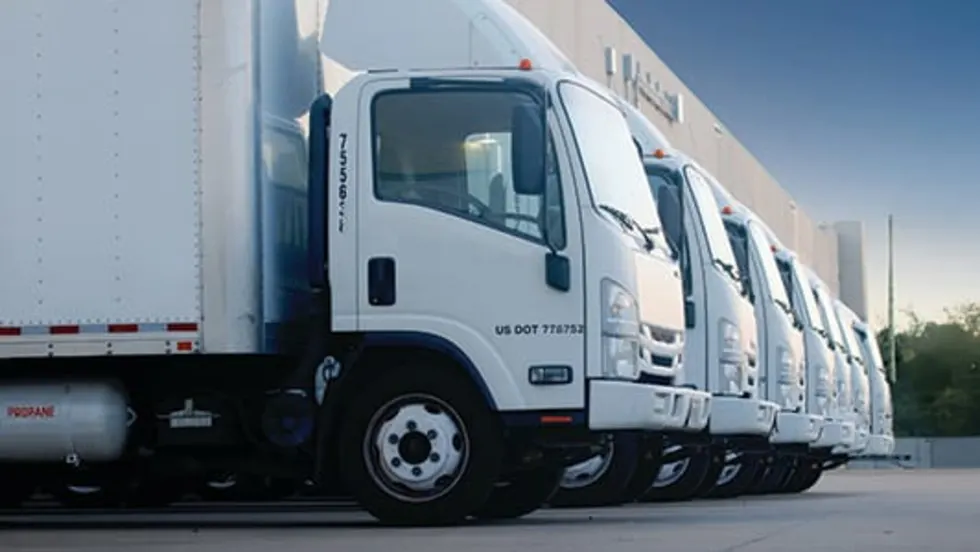
New Propane Autogas Program Offers Fleet Compensation
Qualified commercial fleets can receive $7,500 per eligible propane autogas vehicle and up to $10,000 for new refueling site prep. Learn how the program works and see whether your fleet qualifies.
Read More →
EV Charging Use Is Outpacing Infrastructure Growth
ChargePoint’s 2026 Charging Forward Report points to rising charger use, higher-powered charging, commercial vehicle electrification, and energy-management technology. Here’s what fleets should know.
Read More →
Merchants Fleet Reports 290M EV Miles as Fleets Navigate Changing Electrification Market
From millions in operating savings to hundreds of millions of EV miles, Merchants Fleet’s latest report reveals what’s working and what’s changing in fleet electrification.
Read More →

The EV Breakdown Nobody's Talking About: Why Most Electric Vehicle Roadside Calls Aren't Mechanical Failures
Here's why EV breakdowns are widely misunderstood.
Read More →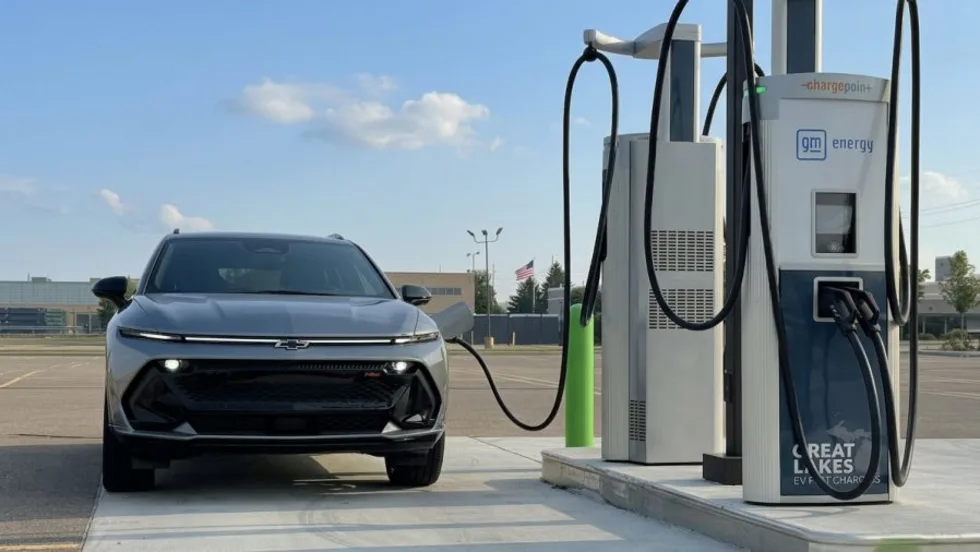
ChargePoint Now Available in Energy Pass
ChargePoint and additional planned charging network integrations were added to GM's Energy Pass.
Read More →

First Look: Slate Auto's Electric Fleet Pickup
Could an affordable, modular EV pickup make electrification more practical for fleets?
Read More →
Slate Debuts Colorful, Unique EV Models
A recent media and client event, studded with electric vehicles dressed up on platforms, planted a new position for the manufacturer in the wider EV market. Fleets will find cost-saving advantages.
Read More →
Slate Electric SUV, Pickup Switchable Model Aims For Light-Duty Fleets
Everything about this EV is counterintuitive and understated, making it stand out from the crowd.
Read More →
Inspiration Mobility Acquires Key Electrada Assets
Inspiration Mobility Group has acquired select assets of Electrada, adding the fleet electrification provider's team, technology, and charging infrastructure development capabilities to its energy management business.
Read More →