




Vehicle Trends in Last-Mile Delivery
Check out the latest trends in the last-mile delivery market, the impact of technology, and spec’ing tips to consider when purchasing a vehicle.

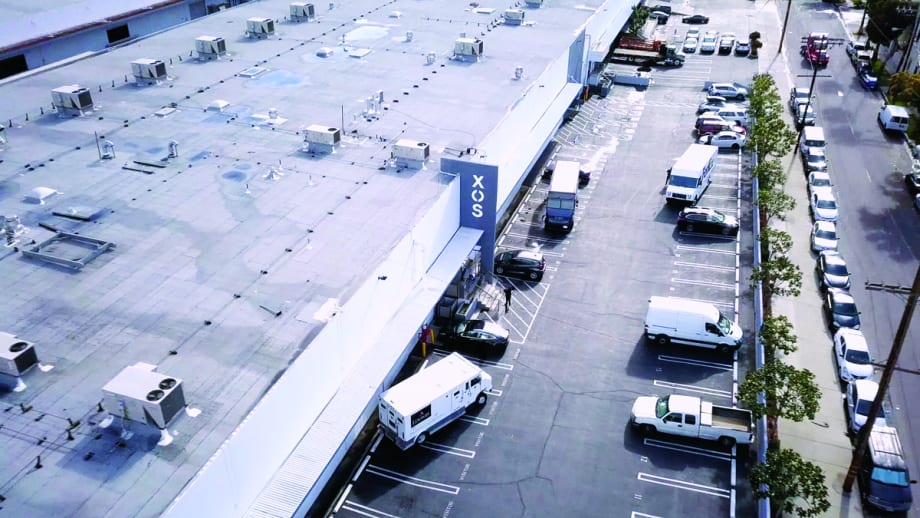
Part of the growth in the market is fleet owners and operators looking to reduce costs while maintaining efficiency in their fleet operations, according to Xos.
Photo: Xos Trucks
It can be tough to keep up with the latest in the last-mile delivery market.
From maintaining the core values of commercial vans to the rise of e-commerce, fleets are constantly adjusting to the trends in the market. Fleet companies shared the trends they are seeing, how the market is growing, and their insight when purchasing a vehicle for last-mile delivery.
Last-Mile Trends
Trends in the last-mile market are ever-changing in the sector, and companies have noticed several shifts.
The focus on the last-mile market started before the COVID-19 pandemic, according to Daryl Adams, president and CEO of Shyft Group.
“We don’t anticipate a decrease in demand anytime soon,” Adams said. “Coupled with the eventual easing of supply chain woes and general uptick in online shopping adoption, the need for two-day, same-day, and instant deliveries will only increase, especially since consumers are willing to pay a premium for same-day or instant delivery.”
The Shyft Group is a design company that offers networked brands and products that provide vehicle, upfit, assembly, and distribution solutions.
The core of commercial vans have not gone away either, according to Dave Sowers, head of Ram Commercial Marketing.
“From a trends perspective, commercial customers still value the core aspects of commercial vans in terms of capability to haul cargo, efficiency in low cost of ownership, and reliability,” Sowers said.
However, safety and solutions cannot be lost in the last-mile delivery market.
“More last-mile fleets are looking for advanced safety features and customized solutions to meet their last-mile needs,” Sowers said.
Freightliner has noticed another side to vehicles in last-mile delivery, according to a company spokesperson.
“With the rapid rise in e-commerce, the walk-in van (WIV) market has grown rapidly,” a Freightliner spokesperson said. “This significant increase in cargo volume has made the walk-in van the vehicle of choice. The higher cubic cargo capacity, along with the ergonomics of the WIV, especially when trucks are making 200-plus stops per day, greatly assist with last-mile deliveries.”
The e-commerce industry trend has resulted in Daimler Truck, Daimler Truck NA, Thomas Built Bus, Freightliner, and FCCC to invest in the development of battery electric vehicles.
Giordano Sordoni, COO/co-founder of Xos, Inc., recognizes the electrification trend in the last-mile market.
“Fleet businesses are opting for electric vehicles for multiple reasons, such as the potential for reduced maintenance costs and superior power conservation in stop-and-go traffic compared to internal combustion engine vehicles,” Sordoni said.
Xos designs and develops electric battery mobility systems for commercial fleets. The company focuses on medium- and heavy-duty commercial vehicles that travel on last-mile routes.
Growth in Last-Mile
While some may have expected the last-mile sector to slow down since the COVID-19 pandemic, the market has only grown over the last two years, according to Adams of The Shyft Group.
Adams said many commercial vehicles today have advanced camera technology to keep up with the growing demands in the market.
“Fleet managers are, rightfully so, prioritizing driver safety, given they’re asking team members to work longer hours to meet increasing delivery demand,” Adams said. “The goals of any business or fleet manager in the last-mile space are to make deliveries safer, more efficient, and more sustainable. These goals, paired with increasing societal and legislative pressure to replace aging fleets with more fuel-efficient options, have set a high bar for delivery vehicle manufacturers and upfitters.”
In addition to safety, Freightliner has seen growth in advanced powertrains.
“Home delivery over the past three years has boomed, resulting in more last-mile delivery vehicles on the road than ever before,” a Freightliner spokesperson said. “More packages equals more trucks. More trucks equals more opportunities for accidents. Thus, it has never been more important to have safety features on walk-in vans than now.”
Freightliner mentioned 360-degree cameras, back-up cameras, and proximity sensors all play an important role in alerting the driver of their surroundings.
Part of the growth in the market is fleet owners and operators looking to reduce costs while maintaining efficiency in their fleet operations, according to Sordoni of Xos.
“As more jurisdictions increase their focus on environmental regulations and policy, the question is not if fleets will go electric, but when. Durability, reliability, and total cost of ownership (TCO) are all critical considerations for fleet businesses during the vehicle purchasing process.”
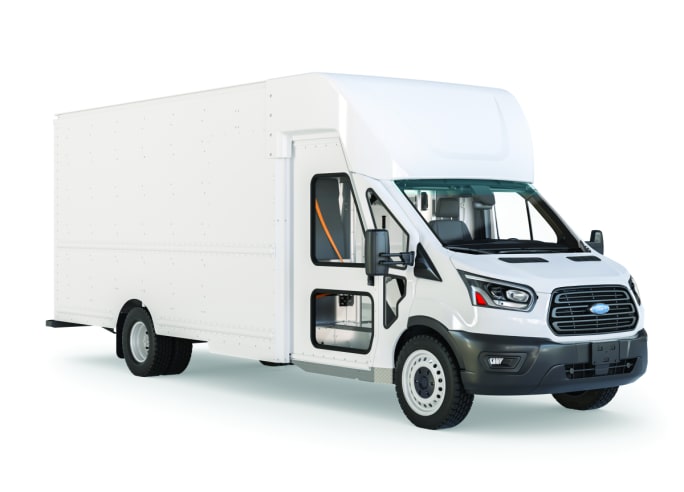
The Shyft Group’s Utilimaster R2 is is available in a 12-foot body with 610 cubic feet of storage and 2,500 pounds of payload.
Photo: The Shyft Group
Spec’ing Tips When Purchasing Vehicle for Last Mile
There can be a lot to consider when purchasing a vehicle for last-mile delivery.
Freightliner offered three spec’ing tips for all fleets to follow:
Optimize your vehicle size for the expected service routes to minimize the number of vehicles needed in the fleet.
Look at the overall “real cost of ownership” over the useful fleet life of the vehicle, as purchase price does not equate to operating cost.
Invest extra money on premium brakes.
“Brakes are one of the highest maintenance costs of a last-mile-delivery P&D fleet,” a Freightliner spokesperson said. “Last-mile delivery places a high demand on brakes, so investing in premium brakes is almost always worth it.”
Sowers of Ram said to look at features that improve overall safety, uptime, and total cost of ownership for a last-mile fleet.
“The cost of acquisition vs. larger trucks (Class 5 and 6) with less safety features should also be considered,” said Sowers.
Sowers also said to consider using a Class 2 vehicle.
Ultimately, fleets are looking for efficient, productive, and cost-effective vehicles that will handle up to 200 stops (or more) per day, according to Freightliner.
“Beyond that, they want vehicles with high quality that are reliable, backed by a robust service network, and integrate easily into their existing fleets,” according to Freightliner.
Adams of Shyft said fleet managers need to think about their driver’s safety and comfort because they are their biggest asset.
He highlighted how important route efficiency is and recommended fleets ensure the correct vehicle is being utilized for the correct route.
“I would also suggest a plan that maximizes road-worthiness once their vehicles are deployed with well thought out service and aftermarket resources ready to deploy quickly should the need arise,” Adams concluded.
Originally posted on Work Truck Online
More Operations

How Fleets Can Recruit and Train Veterans for Technician Roles
Here's how the technician shortage has affected uptime for fleets, and what to do about it.
Read More →
Avis Budget Group Deploys Neology Toll Management Technology Across Major Brands
Neology’s neoFleet platform will manage toll transactions and toll-authority operations for vehicles across Avis, Budget, Payless, Budget Truck and Zipcar.
Read More →
Fleet Personal-Use Charges Edge Higher in 2026
Nearly eight in 10 surveyed fleets allow personal use of company vehicles, while just over half of respondents report charging employees for the privilege.
Read More →
The Future of Fleet + What’s Changing Right Now | AF News Recap
Could developments overseas offer a preview of what’s coming for U.S. fleets? This week, we’re looking at the future of AI, autonomy, and electrification, plus Ford Pro’s new certified pre-owned program, smarter vehicle offboarding, and a new way for fleets to manage toll expenses.
Read More →
How to Handle Vehicle Offboarding
What do fleet managers need to do when a driver leaves?
Read More →
Fleet Manager’s Ultimate Playbook: Navigating the New Standard in OEM Connectivity
Rising operating costs, driver safety concerns, and unplanned downtime are putting unprecedented pressure on modern fleets. Discover how fleet managers use embedded OEM connectivity and real-time vehicle data to cut TCO, prevent downtime, and protect drivers without aftermarket telematics hardware.
Read More →
U.S. Bank Adds Verra Mobility Toll Management to Voyager Fleet Platform
The integration allows U.S. Bank Voyager fleet customers to manage toll payments and violations alongside fuel, EV charging and maintenance expenses.
Read More →
ADAS Prevents Crashes. But Repairs Cost More | AF News Recap
ADAS-equipped vehicles may crash less often, but they can cost more when they do. This week, we’re breaking down what that tradeoff means for fleets, plus Subaru’s first Forester Wilderness Hybrid, Nissan’s new e-POWER Rogue, and why Calstart has become Catalyst Mobility.
Read More →
Moventum Fleet Management Names Mark Iorillo Head of Sales
Iorillo brings nearly 20 years of fleet management and sales experience to the role, including previous positions at Element Fleet Management, CEI, Donlen and Ryder.
Read More →
Fleet Has a Talent Pipeline Problem. What Comes Next? | AF News Recap
Where will fleet’s next generation of leaders come from? This week, we’re looking at the industry’s talent pipeline, what certification can add to a fleet career, how to build an award-worthy track record, and the return of Automotive Fleet’s Personal Use Survey.
Read More →