




VasoHealthcare Chooses PartnerPlan Over Reimbursement
The diagnostic imaging equipment company found leasing provided numerous benefits over reimbursement, and shares its decision-making process.
Operating a fleet is inherently risky. Why expose your fleet to unnecessary risk if you don't have to? That's exactly what Brian Scott, director of financial services for VasoHealthcare Sales Professionals, was thinking when he decided to look into leasing through a fleet management program and abandon the company's existing reimbursement strategy.
He did so in the hopes that it would simplify things and provide the stability and structure the company desired.
Evaluating the Current Strategy
VasoHealthcare operates a fleet of 73 vehicles for its sales staff, who sell diagnostic imaging equipment.
"When the company was started in 2010, we knew that reimbursement was the wrong model for our company. Not only is reimbursement more expensive (and harder to audit), but it also lacks the employee benefits that a fleet program provides," Scott said.
However, VasoHealthcare didn't understand the drawbacks of reimbursement. The company looked to LeasePlan USA for the necessary information about the benefits of leasing - both in soft-cost savings and true cost cutting.
Benefits of Leasing
Through the education process, VasoHealthcare realized the advantages of leasing over reimbursement for its company were substantial. The biggest potential soft-cost benefits for VasoHealthcare were those involving corporate image and employee relations.
Company-provided vehicles offer greater control over how the company is perceived in the marketplace.
"We didn't want our employees' choice of vehicle and maintenance of that vehicle to reflect poorly on the company, especially since they visit our customers frequently," Scott said.
A company-provided vehicle could also give the company a "competitive edge" in hiring and retaining top-caliber employees, according to Charles Hughes, vice president of sales for VasoHealthcare.
In fact, industry surveys reveal that employees view a company vehicle as a benefit equivalent to healthcare coverage and pension benefits.
VasoHealthcare also understood that in this very competitive market, trying to hire prospective employees who already have a company vehicle by offering a reimbursement program could put it at a serious hiring disadvantage. While a reimbursement allowance may have the initial appeal of enabling employees to drive the vehicle of their choice, according to the company, frequently, employees ultimately realize it is not the best economic choice for them.
[PAGEBREAK]
Potential Cost Savings
Along with the soft-cost benefits of leasing, significant bottom-line cost savings were compelling as well. VasoHealthcare found that through reimbursement, it could significantly reduce overall expenses, which ultimately helps the company's bottom line.
"As an organization, we were pleasantly surprised at the level of savings that leasing provided to our income statement. The improvement in cash flow is significant to our growing company," Scott said.
LeasePlan presented VasoHealthcare with a lifecycle cost analysis of its 73 vehicles comparing reimbursement and leasing and provided modeling on cash flow. The result was a potential savings of 44 percent per year, or almost $400,000.
Forming a Solid Partnership
VasoHealthcare was also looking for a fleet management partner that would take on the administrative burden of managing its fleet - titling the vehicles, managing driver calls, etc.
"More importantly, we needed someone who could assume the back-end risk and insurance risk as well. We are not in the used-car business and are not going to put effort into making money on remarketing sales," Scott said.
PartnerPlan is a lease product that reduces risk and administrative costs with a fixed lease and maintenance payment, according to LeasePlan. Through the product, an end-of-lease settlement process is used to determine each vehicle's gain or loss. This allows the fleet management company and its client partners to effectively manage vehicle expenses. Collective surpluses are shared with the client, while any aggregate losses are absorbed by LeasePlan.
"It is very difficult to accurately create cash-flow models with three- to five-year projections when you are guessing what a vehicle will be worth at the end of term. With PartnerPlan, we can," Scott said.
The Decision to Lease
Once it realized the benefits of leasing over reimbursement for its company, VasoHealthcare decided to transition its fleet to leasing through LeasePlan's PartnerPlan product.
Compared to a traditional TRAC lease, PartnerPlan offered lower monthly payments at $50 less per vehicle. Using figures for one model type, the total lifecycle cost of the fleet is estimated to be reduced by more than $100,000 with PartnerPlan.
Overall, the PartnerPlan program resulted in an initial annual savings over reimbursement of 40 percent with the potential for additional savings as the entire fleet is transitioned to the program. Making the move also created efficiency and process improvements for the company, according to Scott. FF
More Operations
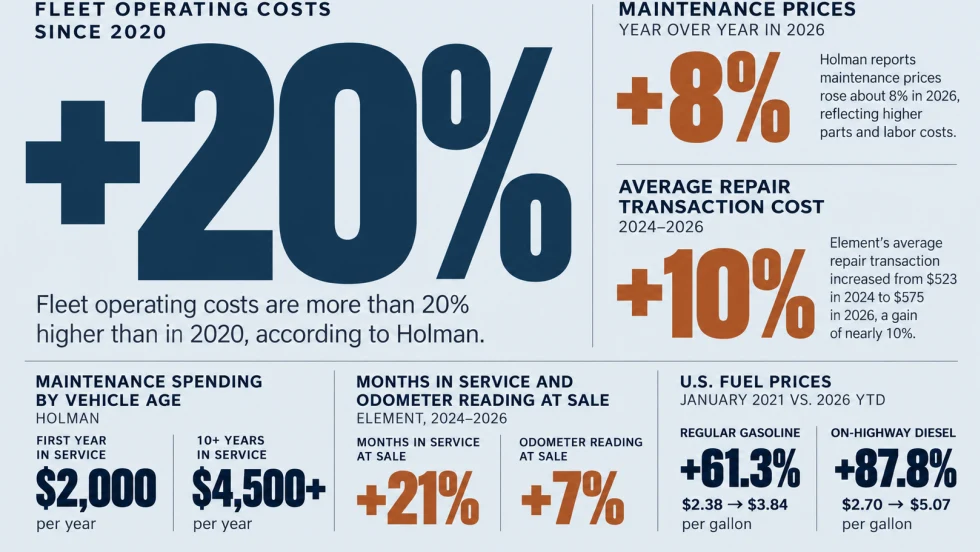
Managing Fleet Costs in an Era of Permanent Volatility
Fleet operating costs have risen more than 20% since 2020, raising a key question: When does extending a vehicle's service life stop making financial sense?
Read More →
The Next Evolution of Fleet Management: Autonomous Operations
This opening keynote session at the Fleet Forward Conference highlights the future of autonomous driving for fleets.
Read More →
How to Reduce the Total Cost of Risk From Catalytic Converter Theft
A stolen catalytic converter can cost fleets far more in downtime and lost productivity than in repairs. A total-cost-of-risk approach can help fleet managers quantify their exposure and prioritize theft prevention.
Read More →

Personal-Use Charges Rise as Vehicle Values Fall | AF News Recap
Personal-use charges are climbing, wholesale used-vehicle values are declining, and commercial fleet sales growth is slowing. This week, we're breaking down the latest fleet data, plus how Element Fleet Management is helping Waymo prepare for its first Canadian robotaxi market.
Read More →
Here's When You Should Make an Exception to Fleet Policy
Fleet policies are designed to create consistency, but not every driver or situation fits neatly within standard rules.
Read More →
AI-Native or AI-Acquired: What Should Fleet Managers Look for in an AI Platform?
Six questions can help fleet managers look beyond AI marketing claims to evaluate integration, data access, and real-world operational performance.
Read More →
A buyer's guide to fleet management software in 2027
Buying fleet management software in 2027 means looking beyond features and price. As fleet operations, technology and expectations evolve, this guide explores what today’s fleet professionals should consider when choosing a system that can deliver value now and adapt to what comes next.
Read More →
What Will Shape the Next Era of Fleet Management?
EVs, AI, and autonomous vehicles are reshaping fleet management. Discover what’s ahead—and how fleet leaders can prepare for the next era.
Read More →
How Fleets Can Recruit and Train Veterans for Technician Roles
Here's how the technician shortage has affected uptime for fleets, and what to do about it.
Read More →
Avis Budget Group Deploys Neology Toll Management Technology Across Major Brands
Neology’s neoFleet platform will manage toll transactions and toll-authority operations for vehicles across Avis, Budget, Payless, Budget Truck and Zipcar.
Read More →