




Using 4x4 Vans As an Alternative
When trucks and sport/utility vehicles don't offer enough payload space for bigger hauling jobs, the all-terrain ability of 4x4 vans are used by fleets such as Apria Healthcare and Universal Well Services.
Four-wheel-drive vans, once unheard of in the fleet industry, are increasingly being used by companies that face the necessity of delivering large payloads through rough terrain to inaccessible areas.
Although 4x4 vans aren't available directly from Ford or GM factories, vehicle converters such as Quigley Motor Co. of Manchester, PA, are making this option available to fleet managers.
Quigley is the oldest and largest manufacturer of four-wheel-drive conversions for full-sized vans, having sold about 7,000 of the units in the past quarter century. Quigley has been "making the impassable possible" for a generation of customers.
Initially, most of the Quigley's conversion business was with the non-commercial buyers: the outdoor sportsman, the boater, and the weekend car racer. But it didn't take long for the virtues of 4x4 vans to become known to another market: commercial and government fleets.
"Fleet mangers decide a 4x4 van is their best option based upon the application they intend for the vehicle," said Brian Geller, marketing director at Quigley Motor Co. "When a vehicle is needed to transport a large amount of cargo or people through treacherous climates and terrain, a four-wheel-drive van or truck is the best solution. If this analysis is coupled with the benefit of low maintenance costs, unsurpassed loading/towing capacity and secure cargo, a four-wheel-drive van is the likely outcome."
Quigley-converted 4x4 vans are used for many purposes in a wide range of industries, according to Geller. "Our single largest customer base uses 4x4 vans in the parcel delivery service," he said. "Major utility companies rely upon our 4x4 vans to repair off-road equipment, such as gas lines and power lines. Government agencies purchase our 4x4 vans for military and law enforcement applications."
Many of Quigley's customers are businesses that operate their 4x4 vans to carry employees or equipment to construction sites and remote work sites. "For instance, a surveying company will use the 4x4 van to navigate unimproved roads to lay out a new building project," Geller said. Quigley has sold vehicles to fleets such as DHL, Federal Express, AT&T, and Haliburton Service Corp., as well as the Bureau of Alcohol, Tobacco and Firearms and the Secret Service.
Why 4x4 Vans?
Fleet managers say that 4x4 full-size vans offer benefits they cannot get anywhere else.
"We predominantly use these vans for delivery of instrumentation to oil and gas wells," said Fred Kistner, vice-president of finance and administration at Universal Well Services in Meadville, PA.
Kistner said the nature of work performed by Universal necessitates frequent off-road travel through environments such as open fields and cow pastures. Kistner said that sport/utility vehicles (SUVs) just don't offer enough payload space for the equipment Universal must get onsite. "We have no way of getting back there without our 4x4 vans," Kistner said.
Fleet Specialist Anna Haberkorn of Apria Healthcare in Costa Mesa, CA, agrees. "In various remote areas nationwide, we have to deal with snow, mountains, and rough terrain, often all three in combination," Haberkorn said.
In making deliveries of hospital equipment to home patients, Apria needs the payload space and versatility offered by 4x4 vans. "We have to be able to get there through rough terrain, and with the type of equipment we deliver - tubing, hospital beds, wheelchairs, and liquid oxygen - we can't sue SUVs."
Government agencies also have found that the combination of all-terrain mobility and large payload capacity of 4x4 converted vans fits their needs.
Mel Globerman, chief of engineering and commodities, management branch of the automotive division, office of vehicle acquisition and leasing systems for the General Services Administration (GSA) in Washington, DC, said Quigley-converted 4x4s meet both on-the-job requirements and federal vehicle standards.
"Our standards require that converted vehicles be authorized and shipped through the chassis manufacturer," Globerman said. "We have high standards of quality and workmanship that must be met." Globerman said that the converted vans are used by both federal civilian agencies and for non-tactical military uses. "We need all-wheel-drive vehicles, but we also need vans for our mission requirements." Globerman said.
According to Globerman, government agencies use 4x4 vans for their carrying capacity, their all-terrain capabilities, and their loading access (wide doors in the rear).
Geller has a succinct answer when asked why fleet mangers choose 4x4 vans over SUVs. "Size does matter!" he said. "A full-size van has greater cargo capacity - more than 300 cubic feet. They offer more towing capacity - 10,000 pounds on a one-ton van. They offer more passenger capacity - up to 15 adults," he said. According to Geller, 4x4 vans can access areas, regardless of climate, condition or ground terrain, just as SUVs can.
A byproduct of the Quigley Quadra-Version 4x4 conversion process is that, as opposed to many pickups and SUVs, while the vehicle ride height has been raised (3 inches front, 3 inches rear), the center of gravity has been raised only slightly by the addition of the four-wheel-drive components. According to Quigley officials, the placement of the front springs on the wide moonbeam axle ensures stability and road holding superior to not only the typical SUV, but also to the standard two-wheel-drive full-sized van as well.
Since its first 4x4 conversion in 1975, when it developed the Quadra Version four-wheel-drive system, Quigley has used its "duo-strut" torque rod system to locate the front axle. One of the characteristic features of this system is that it retains the coil spring suspension within the OEM frame structure. This design is a standard feature on all Quigley-converted full sized Ford vans.
Mileage and Wear
Quigley-converted 4x4 vans are definitely put through their paces by many fleet users. According to Universal's Fred Kistner, his firm keeps the vehicles in service for about four years/200,000 miles," and I would not say the maintenance is excessive. We're quite happy with them," Kistner said.
"The body starts to fall apart after about four years, due to exposure to mud, salt, and chemicals," Kistner said.
Haberkorn said Apria Healthcare's vans typically have service lifetimes of 140,000 to 175,000 miles or five years, whichever comes first. "Customer feedback suggests that it is common to put well over 100,000 low-maintenance miles on 4x4 vans," said Quigley's Geller.
All Quadra-Version components are covered by Quigley's 36 month/36,000 mile limited warranty. This limited warranty includes both parts and labor during the first 12 months or 12,000 miles, whichever comes first, and covers parts only through 36 months or 36,000 miles. Warranty work can be performed at any Ford dealer (for Ford-based vehicles) or Chevrolet/GMC dealer (for GMC/Chevrolet based vehicles).
The original factory warranty is retained on all unaltered portions of the vehicle.
More Operations

Fleet Managers Think They Understand Their Costs. The Data Says Otherwise.
Most fleet managers say they have a strong handle on their costs, but new research from Bobit Business Media tells a different story. A 2026 survey of 190 fleet professionals reveals a widespread "confidence gap" where fragmented systems, disconnected data, and delayed reporting are leaving major blind spots hidden beneath the surface. Find out what the data actually shows.
Read More →
Cameras, Safety and Insurance: From Reactive Claims to Real-Time Prevention (Part 2 of 2)
Part Two: Commercial auto remains one of the most challenging and costly lines of coverage for fleet operators and insurers alike. Continue learning more about how to effectively address these issues from Onur Aksan, Enterprise Business Development Executive, Geotab
Read More →
New Trucks, AI & Summer Downtime | AF News Recap
From new truck updates to AI-powered driver coaching and summer maintenance tips, this week's fleet headlines are all about keeping things moving.
Read More →

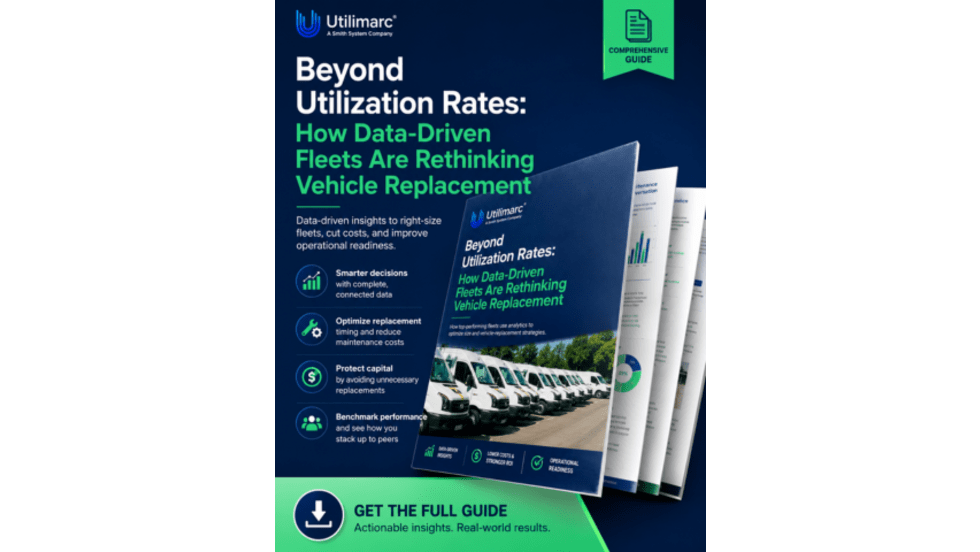
Beyond Utilization Rates: Smarter Fleet Replacement Decisions
Vehicle replacement decisions affect every aspect of fleet performance, from operating costs to asset availability. This guide explores how fleet leaders use integrated data, benchmarking, and lifecycle analytics to determine the right fleet size and optimize replacement timing with greater confidence.
Read More →
Slate Debuts Colorful, Unique EV Models
A recent media and client event, studded with electric vehicles dressed up on platforms, planted a new position for the manufacturer in the wider EV market. Fleets will find cost-saving advantages.
Read More →
Element, Waymo Partner on Autonomous Fleet Operations
The multi-year agreement will support fleet management services for Waymo's autonomous ride-hailing operations, beginning in San Diego.
Read More →
Slate Electric SUV, Pickup Switchable Model Aims For Light-Duty Fleets
Everything about this EV is counterintuitive and understated, making it stand out from the crowd.
Read More →
How to Manage Conflict for Your Fleet Operations
Conflict management is becoming a core leadership skill. Here are five strategies fleet leaders should know.
Read More →
Turning Connected Vehicle Data Into Decisions That Matter
Fleet leaders have more data than ever, but turning that data into clear, actionable decisions remains a challenge. This white paper shows how leading organizations are using connected vehicle data to improve safety, reduce costs, and optimize fleet performance. Learn how to turn insight into action across your fleet.
Read More →
Cameras, Safety and Insurance: From Reactive Claims to Real-time Prevention
Commercial auto remains one of the most challenging and costly lines of coverage for fleet operators and insurers alike. Learn more about how to effectively address these issues from Onur Aksan, Enterprise Business Development Executive, Geotab.
Read More →