




Upfitting: Fleet Management’s First Specialty
From its very beginning, the upfitting industry has been helping vocational truck fleets get the job done — their way.

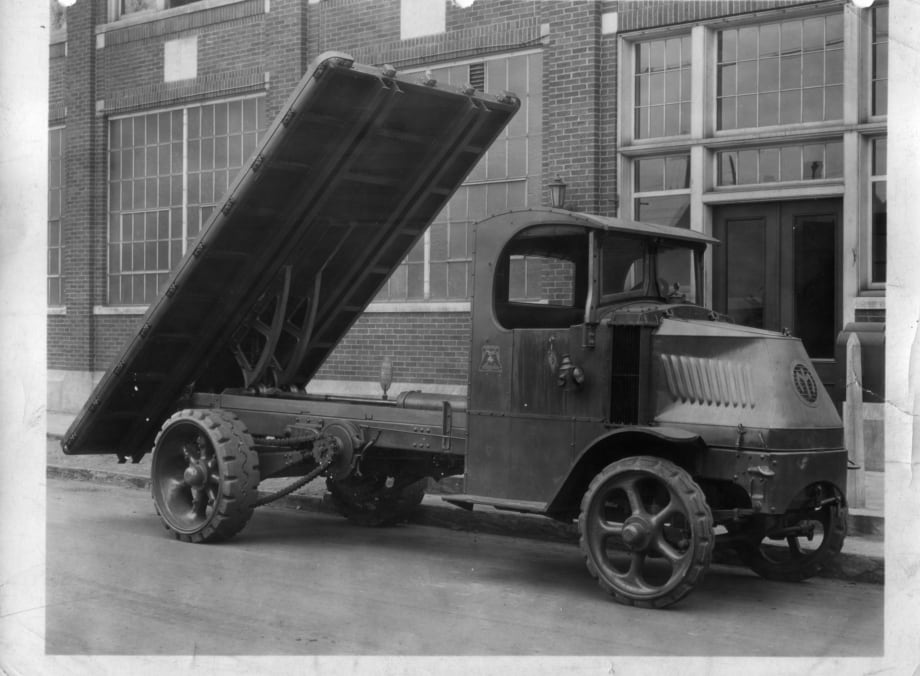
Prior to the development of hydraulics in the 1930s, upfitted trucks, such as the one above, used chain-driven mechanisms to get the job done.
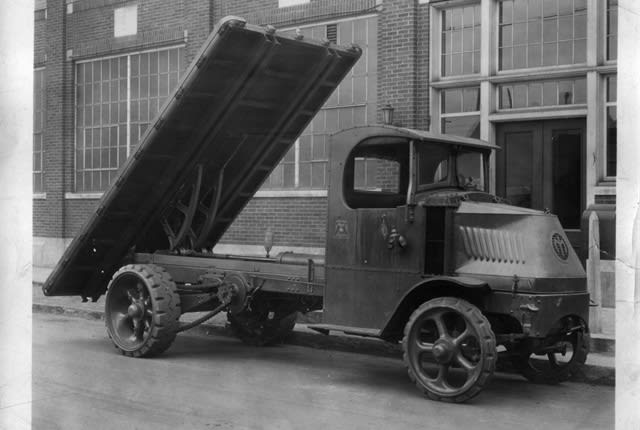
Prior to the development of hydraulics in the 1930s, upfitted trucks, such as the one above, used chain-driven mechanisms to get the job done.
In assigning “firsts” in the history of fleet management — truck equipment upfitting undoubtedly belongs at the forefront of fleet management specializations. “Beginning with the Model A era, vehicles were modified to be more than passenger-carrying vehicles,” said Dennis Jones, VP sales and marketing for Auto Truck Group.
Horsepower to Engine Power
With the introduction of trucks in the first quarter of the 20th century, the birth of specialized truck upfitters followed shortly by such companies as Chicago’s Auto Truck Group, which started in 1918.
Jones said that, while the chain driven vehicles of this early era are different from the efficient vehicles of today, the process that fleet managers of this bygone era used to spec vehicles was remarkably similar to today. “A customer would come to a builder, such as Auto Truck Group, back in the 1920s and 1930s and say, ‘I need to haul this,’” Jones said.
The first big revolution for upfitting was the development of hydraulic power, according to Jones, which was developed in the 1930s and saw accelerated use through WWII.
“Once we had this incredible power source called hydraulic power, we were able to do work differently than we could with chain-drive systems that would have a big sprocket system,” Jones observed. “We were able to upfit trucks in completely new ways once hydraulics came along, such as design cranes to lift greater capacity or install winches that could pull more. We could lift the bed of the truck. We were able to design aerial devices that could accomplish more tasks.”
New Challenges Arise
But, it wasn’t just the outside of the truck that was undergoing changes; the inside was being upfitted as well. Beginning in the 1960s, Masterack, a division of Leggett & Platt Commercial Vehicle Products, was branching out from the bed spring business into the truck business, supplying welded wire shelving for local telephone companies to install in their service vans.
In the early 1960s, vans came on the scene, and such companies as Adrian Steel emerged to upfit these vehicles to fit service needs.
Throughout the 1960s and into the late 1990s, electrical systems posed a major challenge for upfitters.
By the 1970s, ship-thru facilities for vans had emerged as had the use of advanced, corrosion-proof materials such as galvannealed steel and polyurethane paints.
With the late 1970s and the first energy crisis, vans fell out of favor, according to Todd Goldmeyer, marketing manager at Adrian Steel. “As with today, there was a real interest in more fuel-efficient vehicles,” Goldmeyer said.
Fleets then turned to the pickup truck until the early 1980s and the emergence of the now-ubiquitous minivan.
Rightsizing Now
While the upfitting industry hasn’t fundamentally changed over the last 75-plus years, Jones did note that it does operate under a set of standards — the Federal Motor Vehicle Safety Standards (FMVSS). The reason for these standards is to ensure equipment is built for safe use by the end user. And, the NTEA – The Association for the Work Truck Industry can assist with engineering and other questions.
Since the turn of the 21st century, efficiency has become the byword of the industry, according to Goldmeyer at Adrian Steel. “Today, it’s all about the right product and the right vehicle,” he said.
Reducing weight with materials such as aluminum, composite, and even magnesium are becoming a common way to achieve efficiency, according to Leggett and Platt CVP. The growing popularity of alternative-fuel systems are also changing the upfitting industry by presenting challenges of finding room for the larger, auxiliary alternative-fuel tanks. The growing popularity of alt-fuel systems are changing the upfit industry with the addition of dedicated installation facilities and new regulations.
Computerization is also changing the way upfitters do business, allowing them to design cranes and other pieces of equipment with CAD programs that could have never been designed before. It has also allowed for the development of finite analysis, which assists in predicting material failure. There is also a trend toward less hard wiring and more wireless systems, according to Jones.
But, as the adage goes, the more things change, the more they stay the same. Today’s market looks much as it did more than 75 years ago.
“We’ve gone full circle. A lot of the people running fleets today wear many hats, and spec’ing truck equipment is not one of their top priorities. They rely on truck equipment distributors to do the spec’ing,” Jones said.
Prior to the development of hydraulics in the 1930s, upfitted trucks, such as the one above, used chain-driven mechanisms to get the job done.
More Telematics
GM Launches OnStar Fleet Intelligence Platform With AI Assistant
The new platform brings vehicle data, order tracking, connected services and fleet analytics into one system, with an AI assistant that can answer fleet questions using natural-language prompts.
Read More →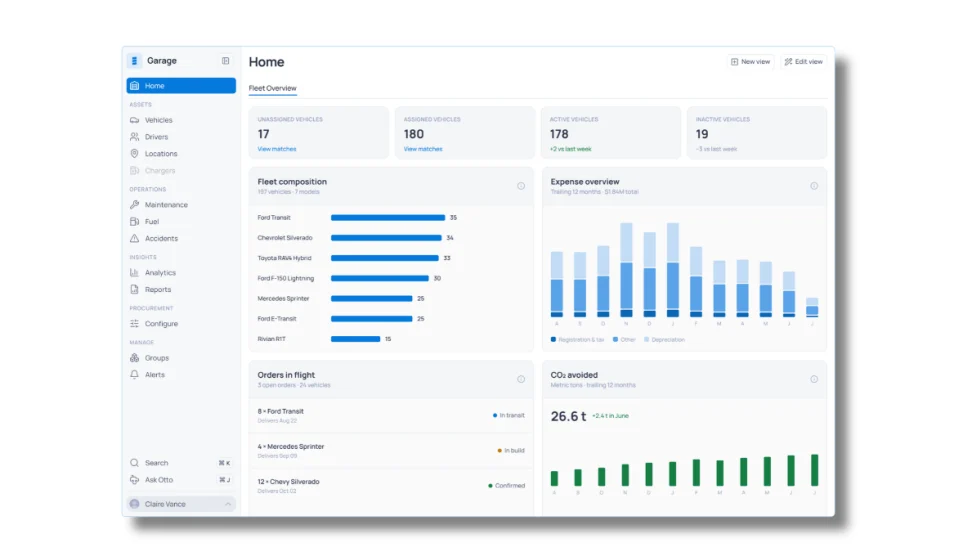
Inspiration Fleet Introduces Garage 2.0 Fleet Intelligence Platform
Fleet managers increasingly have access to data from vehicles, telematics, fuel, charging, and other systems, but those sources don't always communicate with one another. Inspiration Fleet's Garage 2.0 platform brings that information together while letting fleets keep working with different technology and service providers.
Read More →
Inside Inspiration Fleet’s New Platform for Connecting Fleet Data
Inspiration Fleet CTO Chris Getner explains how the new Garage 2.0 platform is designed to connect disparate fleet data and what that could mean for fleet managers in practice.
Read More →
Fleet Manager’s Ultimate Playbook: Navigating the New Standard in OEM Connectivity
Rising operating costs, driver safety concerns, and unplanned downtime are putting unprecedented pressure on modern fleets. Discover how fleet managers use embedded OEM connectivity and real-time vehicle data to cut TCO, prevent downtime, and protect drivers without aftermarket telematics hardware.
Read More →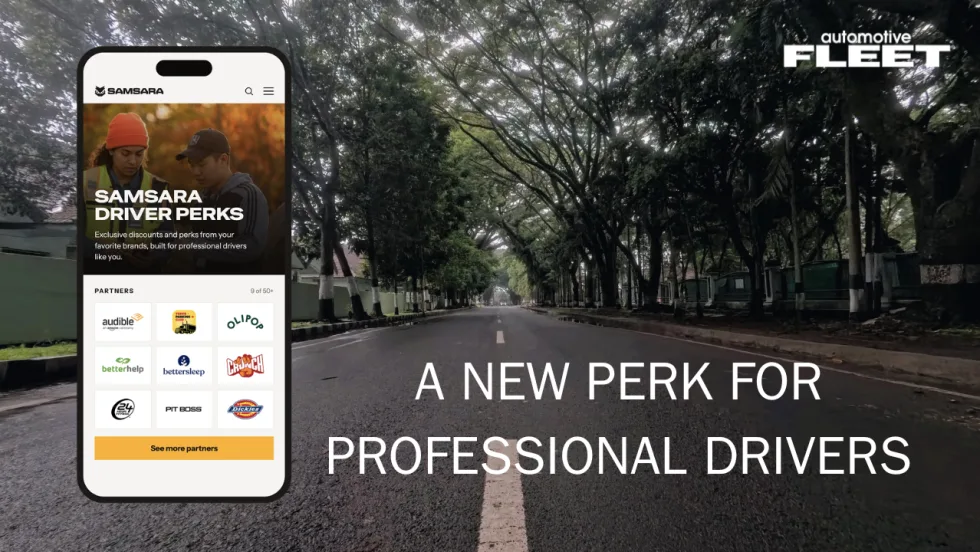
Samsara Driver Perks Adds New Benefit for Corporate Fleet Drivers
The rewards program gives eligible professional drivers access to discounts from more than 50 brands while giving fleets another way to support recruitment, retention, and the driver experience.
Read More →
Inside the Church of Jesus Christ of Latter-day Saints’ Two-Track Telematics Strategy
With 20,000 vehicles and two fundamentally different driver populations, the Church faced a fleet management problem that a single telematics program couldn't solve. How it responded offers a replicable framework for any fleet where one size doesn't fit every driver.
Read More →
How Conversational AI Can Make Fleet Tasks Easier for Drivers
While most generative AI tools help fleet managers interpret data at their desks, Connex2X is applying voice interaction to tasks behind the wheel.
Read More →
Why Fleets Are Creating Dedicated Fleet Analyst Positions
Are fleet analyst positions the new norm? Listen here to find out.
Read More →
Teletrac Navman Begins Next Chapter as Standalone Private Company
What's new with Teletrac Navman and its new owner?
Read More →
Why Fleets Are Creating Dedicated Fleet Analyst Positions
Telematics, AI, EVs, and connected technologies are generating more fleet data than traditional teams can effectively manage. Reed Jackson explains why dedicated fleet analytics roles are emerging to turn that information into better operational decisions.
Read More →