Automotive Fleet
MenuMENU
SearchSEARCH

Understanding the Difference Between Light-, Heavy-Duty Towing

Whether you’ll need light-duty or heavy-duty towing will depend on factors such as distance, size and condition of your vehicle, or services required.

by Jeremy Keller, Elite Towing
December 20, 2021
Understanding the Difference Between Light-, Heavy-Duty Towing

Whether you’ll need light-duty or heavy-duty towing will depend on factors such as distance, size and condition of your vehicle, or services required.

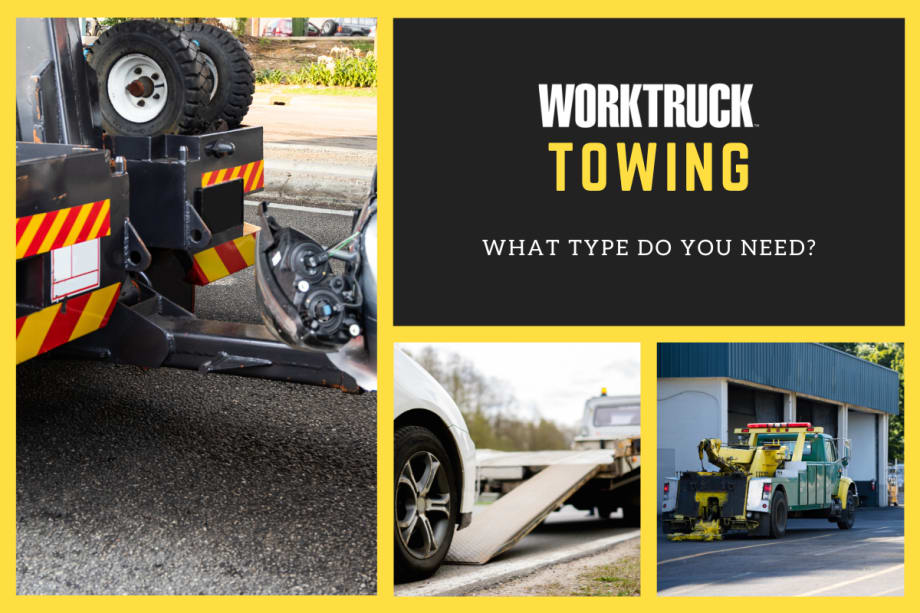
Photo: Work Truck

4 min to read


When in need of a tow, most people would just simply phone a nearby tow truck business. What a lot of drivers don’t know is there are different types of towing services and the towing company has to know what kind of truck to send to your location.

Tow trucks are generally classified as “light-duty” and “heavy-duty,” depending on how much weight they can carry. Whether you’ll need light-duty or heavy-duty towing will depend on factors such as distance, size and condition of your vehicle, or services required.

Ad Loading...

What Does Light-Duty Towing Handle? 

Light-duty towing covers most conventional towing routines that require standard tow trucks and operators. Light-duty tow trucks typically weigh between 8,500 and 10,000 lbs. GVWR, and are capable of handling small-to-medium-sized towing jobs such as private vehicle towing, accident recovery, traffic collisions, and towing abandoned vehicles.

The majority of light-duty tow trucks are equipped with a cable system and a winch for efficient towing. Some also use the dolly towing technique, which entails adding an additional dolly that serves as an extension of the truck. Compared to heavy-duty tow trucks, however, light-duty tow trucks have far less complex tools and equipment and are much easier to operate.

When Do You Need Heavy-Duty Towing?

Commercial vehicles like construction equipment, trailer trucks, garbage trucks, and dump trucks are best towed by a truck with a heavy-duty towing capacity. Heavy-duty tow trucks weigh at least 26,000 lbs. and should be capable of towing/carrying huge vehicles with relative ease.

Out of the towing vehicle classifications, heavy-duty tow trucks are equipped with the most advanced equipment (such as a 25-ton boom, 6-ton wheel lift, and a winch), which enables them to handle the biggest towing jobs. These trucks are also expected to pack a lot of torque and horsepower.

Due to the more complex nature of heavy-duty tow trucks, they require operators with extensive understanding of heavy engines and specific tactics for towing huge vehicles.

Ad Loading...

The Importance of Weight in Towing

The weight of your vehicle is essential to determining whether you need a light-, medium-, or heavy-duty tow truck.

Light-duty tow trucks are not ideal for long-distance towing and incapable of moving vehicles or items that clearly call for a heavy-duty tow. In contrast, using a heavy-duty truck to transport a small vehicle would be inefficient and more expensive. Also, hiring the wrong type of tow truck may damage your vehicle’s transmission and other parts.

Preparing Your Vehicle for Towing

Everyone who owns or operates a vehicle will, at some point, need a professional towing service. It could be because of a road accident, an unexpected breakdown, or relocation across the country. Regardless of your reason for getting your vehicle towed, you need to get it ready before the towing company arrives.

Here some important things to remember:

  • Remove anything that’s important. Take your valuable and personal belongings out of the car to make sure nothing gets lost or broken during transport. Most towing businesses make it clear that they won’t be responsible for any damaged or missing items.

  • Close all windows. Closing the windows of your vehicle prevents any opportunities for theft while it is being towed. It is also critical to protecting the interiors of your car from dirt and debris during transport.

  • Disengage the emergency brakes. You need to disengage your emergency brakes before loading your vehicle into a tow truck. If you don’t, it could get damaged. Any reliable towing service will check if your emergency brakes are engaged before towing the vehicle, but it’s better if you personally make sure it’s done.

  • Take a picture of your vehicle. Take some photos of your vehicle before the towing service arrives. While most companies are excellent at ensuring your vehicle is in good shape, unexpected damage can occur. These photos will come in handy in the event something goes wrong.

  • Find a reputable towing service. Choose to work with an experienced and trusted towing company. It can be tempting to go for the cheapest available option, but there could be a reason why their prices are lower than everybody else’s. Do your research before hiring a tow truck service. You don’t want to take any chances with your vehicle’s safety on the line.


About the Author: Jeremy Keller leads the Content Marketing team for Elite Towing, a locally-owned, family-run business in Casa Grande, Arizona, that provides high quality towing services to both residential and commercial customers. He enjoys photography and doing drone videographies in his spare time.

This article was authored and edited according to WT editorial standards and style to provide useful information to our readers. Opinions expressed may not reflect that of WT.

Originally posted on Work Truck Online

Subscribe to Our Newsletter

More Operations

A blue Automotive Fleet graphic representing the weekly AF News Recap series.
Operationsby Faith HowellMay 4, 2026

From Waffle House to AI: Fleet Trends You Need to Know

In this AF news recap, host Faith Howell covers how Waffle House stepped up during disaster response and new AI tech on the market.

Read More →
OperationsApril 30, 2026

Fleet Operations in the Age of AI: Navigating Ethical and Legal Challenges

AI is no longer a future concept for fleets—it’s already embedded in the tools, data, and decisions that operators rely on every day. In this episode of the Fleet Forward Podcast, recorded live at Fleet Forward, industry leaders take the conversation beyond hype to examine what responsible AI adoption really looks like in fleet operations.

Read More →
OperationsApril 30, 2026

Factory Installed vs. Aftermarket: Choosing the Right Telematics Path & Managing the Data

As fleets rethink how they capture, manage, and act on vehicle data, telematics is at a major inflection point. In this episode of the Fleet Forward Podcast, we dive deep into one of the most pressing questions facing fleet leaders today: Should you rely on OEM factory-installed connectivity, aftermarket devices, or a hybrid of both?

Read More →
Ad Loading...
OperationsApril 30, 2026

What Real-Time Data Reveals About EV Cost, Performance, and Scalability

Experts from telematics analytics, fleet-as-a-service operations, and national EV benchmarking share how real-time data is reshaping fleet strategy—dispelling assumptions, validating best practices, and exposing costly missteps.

Read More →
OperationsApril 30, 2026

Planning Through Policy Shifts: What Fleets Must Track in 2026

A powerhouse panel featuring experts from the American Automotive Leasing Association, CalSTART, and municipal fleet leadership dives into the realities of navigating shifting emissions rules, regulatory waivers, federal agency actions, the future of the EPA’s endangerment finding, and the push for unified standards. They also examine the impacts of tariffs, autonomous vehicle policy, battery innovation, and the accelerating global EV market.

Read More →
OperationsApril 30, 2026

Managing Market Turbulence with Strategic Fleet Insights

This episode kicks off with a deep dive into the technologies and market forces reshaping today’s fleet landscape. Host Chris Brown is joined by Laolu Adeola (Leke Services), Tyson Jomini (J.D. Power), and Richard Hall (ZappiRide) to break down real-world data, shifting incentives, and practical strategies fleet leaders can use right now.

Read More →
Ad Loading...
Clipboards with flooded cars in background.
Disaster Responseby Chris BrownApril 30, 2026

Adapting Fleet Policy When Disasters Strike

In the middle of natural disasters fleet managers must shift priorities to protect people and assets. What policy items should be loosened, and when should the line be held?

Read More →
OperationsApril 24, 2026

EV Reality Check: How Fleets Are Managing Policy Shifts, Safety, and Scaling Challenges

In this episode, fleet leaders from municipal, university, and private-sector organizations share a candid EV reality check. From infrastructure setbacks and policy whiplash to grant funding, total cost of ownership, and charging resiliency, this conversation dives into what it actually takes to scale electrification in the real world.

Read More →
2019 Automotive Fleet Hall of Fame inductees Joe LaRosa Bob Miesen Bud Morrison Theresa Ragozine portraits
Operationsby StaffApril 21, 2026

Fleet Hall of Fame Honorees Through the Years

A running list of the fleet industry’s most influential leaders, recognized for their lasting impact on commercial fleet management.

Read More →
Ad Loading...
Operationsby Chris BrownApril 20, 2026

2026 Salary Survey: Six-Figure Fleet Manager Salaries Become the Norm

After a decade of lagging compensation, fleet manager pay is climbing. But expanding responsibilities, larger fleets, and growing complexity continue to redefine the role.

Read More →