




Understanding Leases: What are the Options?
Despite changes over the past three decades, leasing remains the number one option for most mid-size and large fleets. What leasing options are available to your company and how do they work?
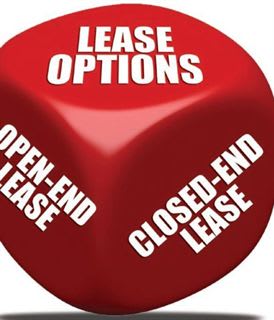
Company-provided vehicles remain the safest, most cost-efficient method of providing transportation to employees who must travel, meet and greet customers, and deliver and service products. A company can provide such vehicles in two ways: through ownership or a lease arrangement. For more than 30 years, leasing has been the method of choice for most large fleets and remains so today.
Companies lease for a number of reasons including administrative ease, balance sheet considerations, or conservation of capital. Several lease options are available for fleet vehicles; however, two methods have dominated the industry: the closed-end or net lease, and the open-end TRAC lease. Here are the basics of each, how they work, their respective advantages and disadvantages, and what might be a sea change in how one option is treated.
Companies choose to lease vehicles rather than buy them outright for a number of reasons:
Conservation of capital. Rather than using capital to acquire depreciating assets such as vehicles, leasing frees a company to invest that capital for a return.
Accounting treatment. Purchasing not only uses valuable resources, but burdens the balance sheet unnecessarily with assets and offsetting liabilities. Leasing, when properly structured, allows a company to expense lease payments.
Administrative ease. Owning vehicles requires administration of titles, registrations, and all other tasks associated with ownership of titled assets. When vehicles are leased, these tasks remain with the owner — the lessor — simplifying the process substantially.
Ancillary programs. In addition to ownership's administrative burdens, a fleet leasing program can be bundled with other important fleet management services, such as maintenance, accident management, and fleet administration, into a single, overall program. One source, one bill, one payment.
[PAGEBREAK]
Leasing allows a company to obtain the use of an asset only for its "useful life," without paying for it in full. The only difference between leasing a car and renting is time. Renting is for vehicles needed only for a short period of time; leasing, for a longer timeframe. The foundational principle of both arrangements, however, is the same. The lessor or rental agency retains ownership of the vehicle, and the lessee or rental customer pays for its use.
Leasing, as a financial transaction, can be applied to nearly any asset from real estate and vehicles to office equipment, including computer hardware and software. Leasing allows the timely replacement of assets a company needs before an asset becomes obsolete or its operation ceases to be cost-effective.
Fleet leasing is a particularly important transaction, as a company with hundreds, often thousands, of vehicles needs the flexibility to acquire them quickly, and replace them at some regular interval. The transaction is usually accomplished via a master lease agreement, under which vehicles are brought in and out of service based upon the terms and conditions of the agreement.
Leasing, vis-a-vis fleet vehicles, is offered in two basic forms: the closed-end or net lease, or the open-end TRAC lease. The essential difference in these methods lies in who is responsible for the vehicle's residual value. Under a closed-end lease, the lessor assumes residual risk. Under an open-end TRAC lease, the lessee is responsible for at least the majority of the risk; the lessor does accept some minor level of residual risk. Each leasing option carries its own benefits, risk, and disadvantages, from a practical as well as financial standpoint.
The second of the two most popularly used lease products in the fleet industry is the open-end lease. Open-end leases are just that: rather than having a fixed term, they permit the lessee (after a minimum required term, usually 12 months) to terminate the lease at any time without specific contractual penalty. For most large fleets, the open-end lease is by far the most popular form of vehicle leasing.
[PAGEBREAK]
Open-end fleet leases contain a condition unique to the fleet business — a terminal rental adjustment clause or TRAC. This clause makes the open-end fleet lease attractive to larger fleets. Here is how a TRAC works.
There exists between lessee and lessor a master lease agreement that outlines the general terms and conditions that apply to any vehicles leased under the agreement.
The lessee selects a vehicle to be leased and works with the lessor to determine the length of vehicle service based upon the lessee's replacement criteria. These criteria are usually a combination of mileage and time, i.e., 36 months or 65,000 miles, whichever occurs first.
When the driver is projected to accumulate 3,000 miles per month, the 65,000 limit is reached after roughly 22 months in service. The residual value of that vehicle is then projected and the capitalized cost of the vehicle reduced, via the monthly payment, in equal amounts, until the unamortized value at 22 months reflects the resale value originally projected.
At this point, the TRAC arrangement is applied. The vehicle is taken out of service and sold by the lessor to a third party. If the resale proceeds exceed the unamortized "book" value, the excess accrues to the lessee; if proceeds are less than book value, the lessee is charged the difference. The TRAC lease provides the kind of flexibility larger, or geographically spread, fleets need.
Not all TRAC leases are open-end leases. It is not uncommon to find a TRAC in a retail or consumer lease, the difference being a fixed term.
To reiterate, the basic difference between a closed-end (or net) lease and the open-end TRAC lease lies in the vehicle's residual. In closed-end leases, the residual risk lies with the lessor; in an open-end TRAC lease, with the lessee.
[PAGEBREAK]
Fleets use other types of leases. In an unbundled lease, financing is obtained from one source and vehicles from another. A financial source, such as a bank, provides funding to acquire the vehicles in the form of a lease line of credit. The company establishes direct purchasing arrangements with a dealership to acquire vehicles. When a vehicle is needed, the company places the order with the dealer, and when the unit is delivered, the funding source makes the purchase, and the company pays the source.
Such unbundled programs can be structured as true and/or operating leases. However, many are finance leases.
Regarding accounting treatment aspects of leasing, the test for off-balance sheet treatment is known as FAS 13. Originally released in 1976 by the Financial Accounting Standards Board, FAS 13 governs how leases must be treated by both lessor and lessee in their financial statements.
Leases are defined as either capital leases or operating leases. Operating leases qualify for off-balance sheet expense treatment; capital leases do not. If a transaction meets any one of the following four tests, it is considered a capital lease:
The lease conveys ownership to the lessee at the end of the lease term.
The lessee has an option to purchase the asset at a bargain price at the end of the lease term.
The term of the lease is 75 percent or more of the estimated economic life of the asset.
The present value of the minimum lease payments, using the lessee's incremental borrowing rate, is 90 percent or more of the fair market value of the asset at the inception of the lease.
[PAGEBREAK]
For companies that lease to keep fleet vehicle holding costs off the balance sheet, FAS 13 compliance is critical. Closed-end leases generally do not have any problem qualifying; when the lessor accepts full residual risk, tests 1 and 2 are met. Provided the lease is of normal "fleet" length — usually three to five years — tests 3 and 4 are not at issue either.
Qualifying for operating lease treatment under an open-end TRAC lease is a bit trickier. Since in essence, the TRAC places residual risk on the lessee, the master agreement must contain carefully worded language regarding the minimum term and whether the lessor accepts any part of residual risk. Such wording usually includes a minimum term of 12 months, which can be specified the term to which the tests are applied. Further, some agreements have language in which the lessor "guarantees" some percentage of the residual value, in theory, eliminating that portion from the test (assuming responsibility for the balance falls to the lessee).
Most fleet lessors have, over the years, fine-tuned master lease agreement language, enabling the lessee to make a strong case for operating lease treatment. Of course, any company should seek counsel from its accounting experts, as well as outside auditors, in determining how to book any lease transaction.
Most recently, the European Union has issued its own rules covering the treatment of leases, known as IAS 17 (International Accounting Standard). Increasing globalization has pushed the U.S. and European boards to come up with a single standard, and that standard may prompt a sea change in how leases are structured.
Unlike FAS 13, a relatively straightforward "bright line" test, IAS 17 is a "facts and circumstances" test. Essentially, if it looks, walks, and talks like a purchase, the financial transaction won't be treated as a lease. The carefully worded master agreements for open-end TRAC leases will no longer suffice, and such leases may be forced onto the balance sheet. It will be at least a year or more before consolidated rules are issued, but most companies have already begun the process of dealing with these anticipated changes.
The options available to companies that operate vehicle fleets, however, remain varied and creative, no matter what financial changes are in store:
Closed-end (net) leases under which the term is fixed, and the lessor accepts residual risk.
Closed-end leases that include maintenance and/or insurance — "one-stop shopping."
Open-end TRAC leases in which the lease term is flexible, and the lessor accepts some level of residual risk.
"Bundled" open-end TRAC lease programs, in which other fleet management/administrative services are combined with the master lease agreement into a single overall program.
[PAGEBREAK]
Naturally, each company has unique circumstances that determine which lease best meets its needs, and lessors, as they have done for decades, will always be eager to provide creative solutions.
A closed-end lease is a simple transaction. The lessor purchases a vehicle, and the lessee pays for the use of that vehicle for a fixed period of time. When the lease term is over, the lessee returns the vehicle to the lessor, who then sells it with the hope of making a profit. The lessee is held responsible for "excess wear and tear," including mileage in excess of that stipulated in the contract (since the lessor accepts residual risk.) A closed-end lease is characterized by the following general terms:
A fixed term, usually three to five years.
An annual mileage limit.
A purchase option for the lessee.
A penalty (cents per mile) for mileage in excess of that stipulated in the contract.
The lessee pays for "excess" wear and tear — mechanical or physical damage.
Lessor assumes residual risk/benefit.
Closed-end leasing can make available other features, such as insurance and maintenance. The complete, simple nature of such transactions makes them attractive. Companies that wish to focus on their core business can effectively remove themselves from the "car business" via closed-end leasing, eliminating risk and enabling the exact budgeting of all vehicle expense, save for fuel.
However, closed-end leases are not without a downside. One challenge in operating a fleet of diverse and geographically spread vehicles is maintaining flexibility in assignment and replacement. Because closed-end leases are fixed in term, such flexibility is more difficult to achieve. Drivers may operate in geographically diverse areas, record various mileages, and face differing terrain. They also may not remain with the company for the full lease term.
For example, a vehicle operating in an urban area might have a longer lease term and lower mileage allowance than one in a rural area, where the driver must travel extensive mileage to visit customers. If the fleet manager, seeking to maximize inventory usage, transferred the urban vehicle to the rural territory for a new hire, mileage would exceed that allowed in the lease, with the result of substantial penalties for the excess.
Some closed-end fleet lessors have become expert at determining the needs of their customers and building flexibility into lease terms. Closed-end leasing is an excellent fit for small and mid-size fleets, those that operate in limited areas, and for companies that loathe committing the resources necessary to manage fleet vehicles. Finally, closed-end leases are usually structured for off-balance sheet accounting treatment as well as a true lease for tax purposes, both of which are usually among the company's goals when considering fleet options.
More Operations

Fleet Has a Talent Pipeline Problem. What Comes Next? | AF News Recap
Where will fleet’s next generation of leaders come from? This week, we’re looking at the industry’s talent pipeline, what certification can add to a fleet career, how to build an award-worthy track record, and the return of Automotive Fleet’s Personal Use Survey.
Read More →
Smith System Launches Driver Risk Management Program
Fleets have more driver data than ever, but identifying risky behavior doesn't necessarily correct it. Smith System's new Driver Risk Management program combines monitoring, training, and follow-up coaching to help fleets connect risk signals with driver intervention.
Read More →
Automotive Fleet Opens 2026 Personal Use Survey for Commercial Fleet Managers
Less than two weeks left! Commercial and corporate fleet managers are invited to share how their organizations handle company vehicle personal-use policies, charges, and driver eligibility.
Read More →
From AI Prompts to AI-Generated Safety Songs | AF News Recap
Can better prompts make AI more useful for fleet managers? This week, we’re breaking down smarter fleet analysis, an AI-assisted experiment that turned safety training into music, and what happened to fuel prices in August.
Read More →
How to Write Better AI Prompts for Fleet Analysis
Include these six elements in your fleet prompts to generate more relevant analysis and accurate answers.
Read More →
Fleet Meets: Eric Kilgore
This edition of the Fleet Meets series features one of the industry's best leaders driving multi-market and national operations.
Read More →
Why Reactive Fleet Management Is Becoming Too Expensive to Sustain
Research highlights a growing need for proactive management strategies to address rising costs in fleet operations effectively.
Read More →
What Your Fleet KPIs Aren’t Telling You
Tracking fleet metrics is only useful when the data leads to better decisions. This guide helps fleet leaders assess cost, utilization, and downtime more accurately, identify performance gaps, and prioritize the actions that can improve operational results.
Read More →
Hidden in Plain Sight: Fleet Compliance Risks
Fleet compliance isn't just about having policies — it's about consistently enforcing them. This practical guide reveals six hidden compliance risks common in public sector and shared fleet operations and outlines proven strategies to improve visibility, accountability, and audit readiness
Read More →
Turning Fleet Payment Data into Executive Insights
Does data alone drive results in operations?
Read More →