




Uncle Sam's Fleet Expanding
Compact cars show greatest growth among sedans.
The federal government added 5,548 vehicles to its fleet and operated the units over three billion miles during fiscal 1976 according to the General Service Administration's (GSA) annual Federal Motor Vehicle Fleet Report.
The acquisitions have increased the government's fleet to 425,226 vehicles of which 322,081 are trucks and buses, 88,113 are sedans, 11,723 are station wagons and 3,309 are ambulances. The largest increase in sedans was among compacts, with 9,909 vehicles being added to the federal fleet, bringing the total number of compacts in government use to 21,673. However, most sedans in government use are standard size models, with a total of 34,586 in the fleet. The government acquired 2,933 of these vehicles during 1976 and disposed of 4,843 for a net loss of 1,910 of the models.
The intermediate style cars did not fare well at all in the government sector with a net loss of 3,054 vehicles. During 1976, only 1,944 were acquired while 4,998 were disposed of. However, the total number of intermediates in service is listed at 23,130, slightly more than the number of compacts in use. Although there was a net increase of 317 subcompacts, the total in use is only 531.
The trend towards smaller cars will continue as President Carter has ordered that all government departments and agencies buy cars that have an average fuel economy of 20 miles per gallon, which is two mpg more than the average that manufacturers are mandated to meet for the next model year. By 1980, the agencies will be required to purchase cars that have mileage ratings which are four or more miles per gallon higher than the mandated 20 mpg rating for that year. The administration said the program of switching to the more fuel-efficient vehicles will amount to a savings of about 400 barrels of oil per day.
However, the savings proposed by the program aren't that impressive when compared with the 16,149,484 barrels of oil the government used during fiscal 1976 in the form of 313,299,993 gallons of fuel. The total cost of operating the fleet amounted to $664,512,700. When divided into the three billion miles driven, the average operating cost comes to almost 21.5 cents per mile, or a 59.2-percent increase over the 13.5 cents per mile the government recorded in 1971.
During the last five-year period, sedan mileage rose by 26.2-percent, according to the GSA, and vehicle years rose 25.8-percent. The average miles per vehicle year increased by only 43 miles or one-third of one percent. In other words, the government fleet grew in size as a result of expansion and longer vehicle life, while actual mileage increased at a lesser rate. "This poor utilization of vehicles undoubtedly has contributed to the increase in cost per mile," the GSA concluded.
In addition to the direct costs of operating the fleet, indirect costs such as administrative and fiscal service, utilities, shop equipment depreciation and maintenance, tools, communication and travel rose 9.7-percent, faster than the 5.8-percent consumer price index over the five-year period.
In addition to moving to smaller cars, the GSA recommends that all operating and maintenance costs be reviewed periodically and that lower fuel prices be sought through other agencies. It also encourages the use of self-service pumps and advises that fleet users adhere to manufacturer maintenance schedules and use manufacturers' warranties to the fullest extent.
More Operations
How to Manage Conflict for Your Fleet Operations
Conflict management is becoming a core leadership skill. Here are five strategies fleet leaders should know.
Read More →
Turning Connected Vehicle Data Into Decisions That Matter
Fleet leaders have more data than ever, but turning that data into clear, actionable decisions remains a challenge. This white paper shows how leading organizations are using connected vehicle data to improve safety, reduce costs, and optimize fleet performance. Learn how to turn insight into action across your fleet.
Read More →
Cameras, Safety and Insurance: From Reactive Claims to Real-time Prevention
Commercial auto remains one of the most challenging and costly lines of coverage for fleet operators and insurers alike. Learn more about how to effectively address these issues from Onur Aksan, Enterprise Business Development Executive, Geotab.
Read More →

Are You Tracking Your Fleet's True Total Cost of Ownership?
Bobit Business Media surveyed 190 fleet professionals and found that while most fleets are tracking costs, fragmented systems and data gaps are keeping true TCO visibility out of reach. With rising pressure to control spend in an increasingly volatile environment, the gap between what fleets think they know and what the data actually shows is wider than you might expect. See how your peers are managing costs today and where the industry still has room to improve.
Read More →
Turn Fleet Data Into Smarter Decisions
Fleet leaders have access to more operational data than ever, but disconnected systems and unclear metrics often slow decision-making instead of improving it. This whitepaper outlines five practical steps fleets can take to transform fragmented data into actionable insights that improve planning, safety, utilization, and long-term performance.
Read More →
Hybrids: Electrification Without the Challenges
For fleet managers, fuel is one of the biggest line items in the budget — and it's one hybrids can shrink without changing how your people work. Download the eBook to see the numbers, understand the technology, and get a step-by-step guide to making the switch.
Read More →
How NOV Uses Telematics to Improve Fleet Safety Across 160 Locations
James Victory of NOV discusses how the company manages fleet safety, maintenance, and telematics across more than 150 locations supporting oilfield operations throughout the U.S.
Read More →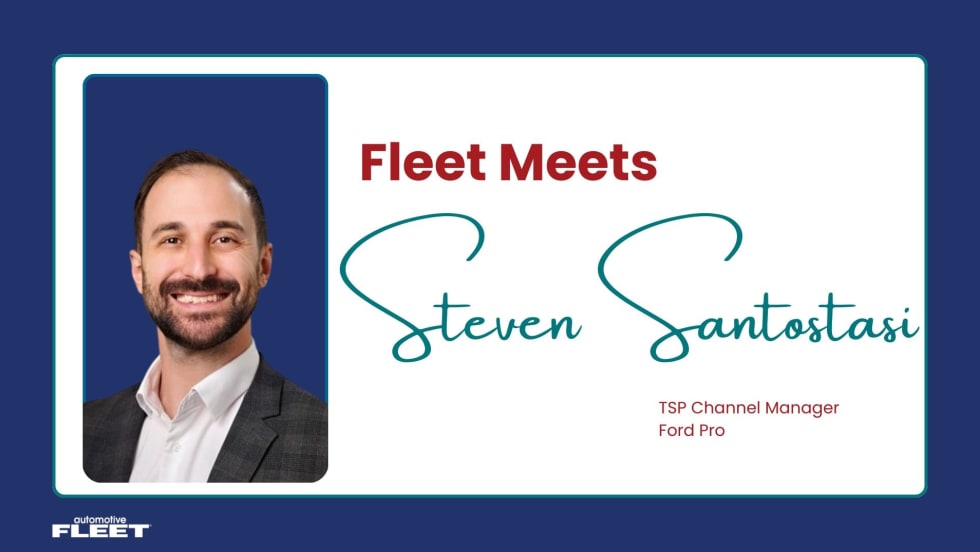
Fleet Meets: Steven Santostasi
This edition of the Fleet Meets series features Steven Santostasi, the current TSP channel manager for Ford Pro.
Read More →
Why Fleet Managers Are Replacing Departmental Vehicles with Shared Motor Pools
Departmentally assigned vehicles often create hidden costs through underutilization, poor visibility, and increased administrative burden. This white paper explores how shared motor pool strategies help fleets reduce costs, improve accountability, and optimize vehicle utilization.
Read More →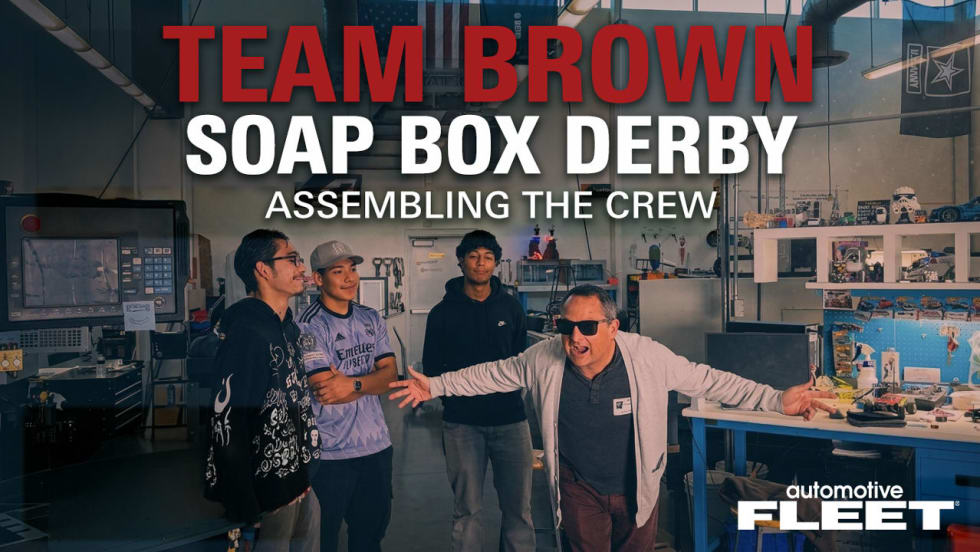
Soap Box Derby Challenge: Assembling the Crew
Meet Gabriel, Matthew, and Angel — the team helping bring this soap box derby build to life.
Read More →