




The introduction of the all-new Tacoma series marks the first step in Toyota’s expanding presence in the North American light-duty truck market.
Toyota has introduced an all-new Tacoma pickup truck line for 2005, featuring a wide selection of models that are larger, more maneuverable, more powerful, and more fuel-efficient than the compact trucks they replace.
“The arrival of the all-new Tacoma series marks the first step in expanding our presence in the North American light truck arena,” said Don Esmond, Toyota Division senior vice president and general manager.
Eighteen model configurations make up the 2005 Tacoma line, based on three cab types - Regular Cab, extended Access Cab with new dual access doors and tumble flat rear seats, and the four-door Double Cab. The Tacoma Regular Cab and Access Cab models feature a 73.5-inch-long bed. The Double Cab is available for the first time with a choice between a 60.3-inch bed and the 73.5-inch bed. In addition, the Tacoma line offers the 4x2 and 4x4 drivetrains.
The Tacoma is assembled at the New United Motor Manufacturing, Inc. (NUMMI) production facility in Fremont, Calif.
Larger Than Predecessor Model
The new-generation Tacoma moves well beyond the compact-truck dimensions of the previous model. Regular Cab 4x2 models are built on a new 109.4-inch wheelbase (an increase of 5.9 inches); PreRunner and 4x4 Regular Cab Tacomas sit on a 110-inch wheelbase; 4x2 Access Cab models ride on a 127.2-inch wheelbase (an increase of 5.3 inches); Access Cab PreRunner and 4x4 wheelbase is 127.8 inches. The Double Cab with the standard five-foot bed shares the 127.8-inch wheelbase, and the new Double Cab long-bed models ride on a 140.9-inch wheelbase.
Front and rear track have been widened by nearly four inches, yielding more than four inches of additional shoulder and hip room. The Tacoma Access Cab models add dual rear access doors for 2005. Rear doors on Double Cab models are more than three inches longer than before and open to 80 degrees to give passengers easier access.
New Engines & Transmissions
The 2005 Tacoma line features two engines: a new 2.7L VVT-i DOHC four-cylinder engine that produces 164 horsepower and 183 lb-ft. of torque and a revised 4.0L VVT-i DOHC V-6 that produces 245 horsepower and 282 lb-ft. of torque (replacing the 190-hp 3.4L V-6 in the 2004 models). Both feature a new Electronic Throttle Control System with intelligence (ETCS-i) that helps improve performance and fuel economy.
Two new transmissions are offered with the V-6 engine, a six-speed manual and a five-speed automatic. The four-cylinder models offer a choice between a five-speed manual and a four-speed automatic transmission.
New Composite Inner Bed
A significant change can be found in the factory-equipped composite inner bed, which features a new sheet-molded compound (SMC) deck and walls that are 10-percent lighter than steel, yet tougher and more durable. The bed deck features two-tier loading and integrated deck rail utility that includes four standard adjustable tie-down cleats. The rails are compatible with Toyota accessories, including cargo bed cross bars, a fork-mount bike rack, and diamond-plate storage boxes. An available 115V/400W powerpoint further extends the bed’s utility. Double Cab models offer a first-in-class roof rack system with crossbars that deploy from the roof rails.
Interior storage has been maximized in Access Cab and Double Cab models by means of tumble-flat rear seats with underseat storage and, on Double Cab models, additional storage behind the rear seatback. On Double Cab and all models with bucket seats (except the sport seats), the front passenger seat folds flat and features a tray table.
New Dynamic Control Features
In all 2005 Tacoma models, the standard four-wheel anti-lock brake system (ABS) is augmented by the electronic brake-force distribution (EBD) feature and brake assist. EBD optimizes brake pressure at each wheel for greater control under braking, especially when cornering. The brake assist system is designed to determine if the driver is attempting emergency braking. If the driver has not stepped firmly enough on the brake pedal to engage the ABS, the system supplements the applied braking power until pedal pressure is released.
The optional vehicle skid control (VSC) and Traction Control (TRAC) systems give Tacoma models traction on- or off-road by helping the vehicle stay on course. The system detects front-wheel slide and rear-wheel slide during cornering and attempts to control either condition with throttle intervention and/or by braking individual wheels.
The VSC and A-TRAC systems include Automatic Limited-slip Differential (A-LSD), which uses brake intervention in place of a mechanical-type LSD unit to help reduce tire slippage at the rear wheels.
On automatic transmission models, the VSC and TRAC option also includes Hill-start Assist Control (HAC). When the option is ordered along with the TRD Off-Road Package on 4x4 V-6 automatic models, it also includes the Downhill Assist Control (DAC) system.
By independently controlling the brakes at each of the wheels as needed, the HAC system helps to prevent the vehicle from rolling backward or slipping sideways during transition from a stopped position to climbing an upgrade.
The DAC system uses engine braking to regulate downhill speed and independently control the brakes at each of the four wheels to improve directional stability. The feature also works in reverse and is automatically de-activated if the driver depresses the brake or accelerator pedals, presses the DAC button, or shifts into neutral.
Toyota Introduces All-New Tacoma Pickup Truck Line
The introduction of the all-new Tacoma series marks the first step in Toyota’s expanding presence in the North American light-duty truck market.
More Operations

Hybrids: Electrification Without the Challenges
For fleet managers, fuel is one of the biggest line items in the budget — and it's one hybrids can shrink without changing how your people work. Download the eBook to see the numbers, understand the technology, and get a step-by-step guide to making the switch.
Read More →
How NOV Uses Telematics to Improve Fleet Safety Across 160 Locations
James Victory of NOV discusses how the company manages fleet safety, maintenance, and telematics across more than 150 locations supporting oilfield operations throughout the U.S.
Read More →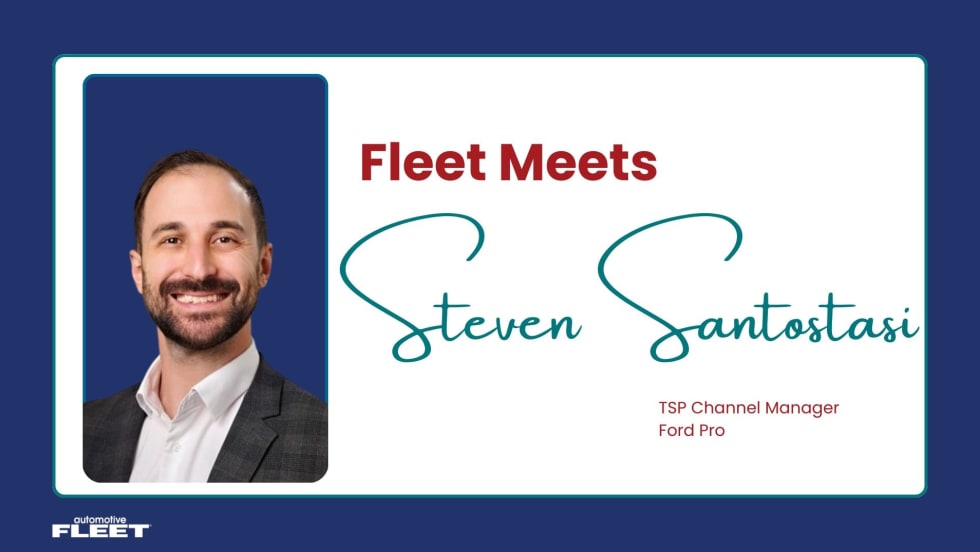
Fleet Meets: Steven Santostasi
This edition of the Fleet Meets series features Steven Santostasi, the current TSP channel manager for Ford Pro.
Read More →
Why Fleet Managers Are Replacing Departmental Vehicles with Shared Motor Pools
Departmentally assigned vehicles often create hidden costs through underutilization, poor visibility, and increased administrative burden. This white paper explores how shared motor pool strategies help fleets reduce costs, improve accountability, and optimize vehicle utilization.
Read More →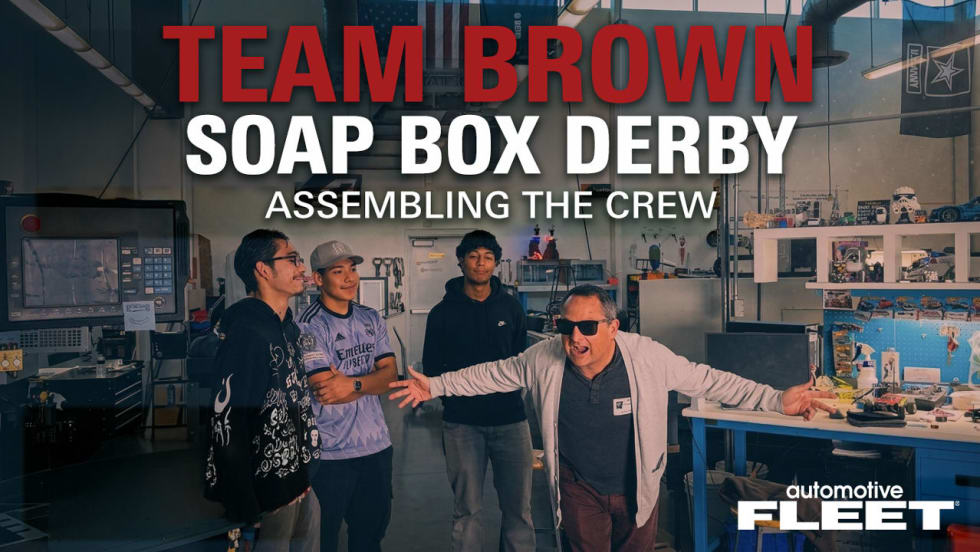
Soap Box Derby Challenge: Assembling the Crew
Meet Gabriel, Matthew, and Angel — the team helping bring this soap box derby build to life.
Read More →
BBL Fleet Acquires Velcor Leasing Corporation
BBL Fleet expanded its footprint in the fleet management industry with the acquisition of Velcor Leasing Corporation of Madison through a stock purchase agreement finalized Feb. 27, 2026.
Read More →
Lytx Introduces New AI Fleet Technologies at Protect 2026
The company introduced new AI-driven fleet safety and operations technologies during its annual user conference.
Read More →
Fleet Costs Are Rising: Here’s How Leaders Are Responding
Fleet leaders are under pressure to reduce costs, adapt to economic uncertainty, and make smarter decisions. See how peers across North America are responding with real data, proven strategies, and forward-looking insights. Download the 2026 Market Pulse Report to benchmark your strategy and uncover where you can gain an edge.
Read More →
From Waffle House to AI: Fleet Trends You Need to Know
In this AF news recap, host Faith Howell covers how Waffle House stepped up during disaster response and new AI tech on the market.
Read More →
Fleet Operations in the Age of AI: Navigating Ethical and Legal Challenges
AI is no longer a future concept for fleets—it’s already embedded in the tools, data, and decisions that operators rely on every day. In this episode of the Fleet Forward Podcast, recorded live at Fleet Forward, industry leaders take the conversation beyond hype to examine what responsible AI adoption really looks like in fleet operations.
Read More →