




'Torturing' the New F-150
Aluminum is nothing new to the engineers at Ford. More than 20 years ago, the Dearborn, Mich.-based OEM began playing with the metalloid when it started the Aluminum Intensive Vehicle (AIV) program.

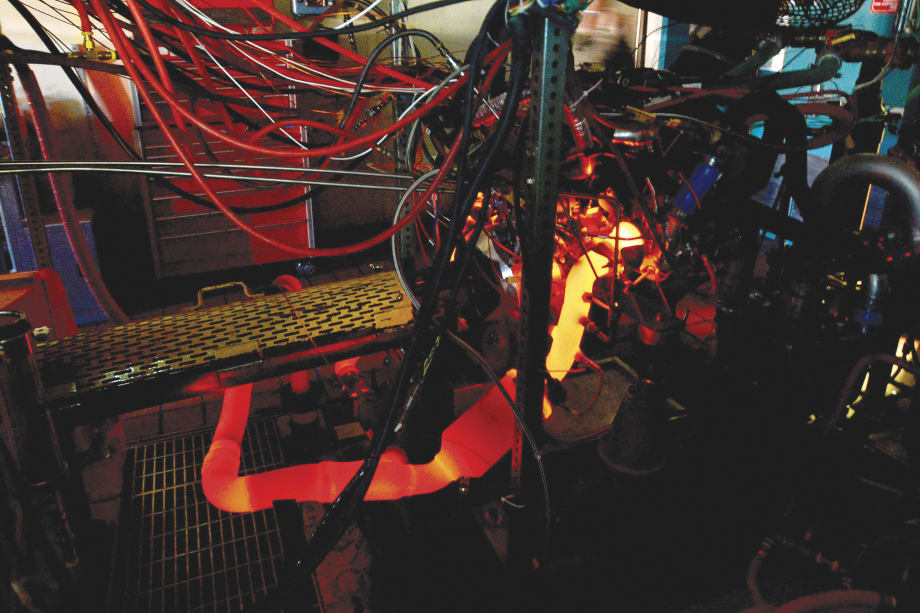
The turbocharger and exhaust components of Ford's all-new 2.7L EcoBoost engine glow red as it runs under load and at full power on a dynamometer. Photo courtesy of Ford.
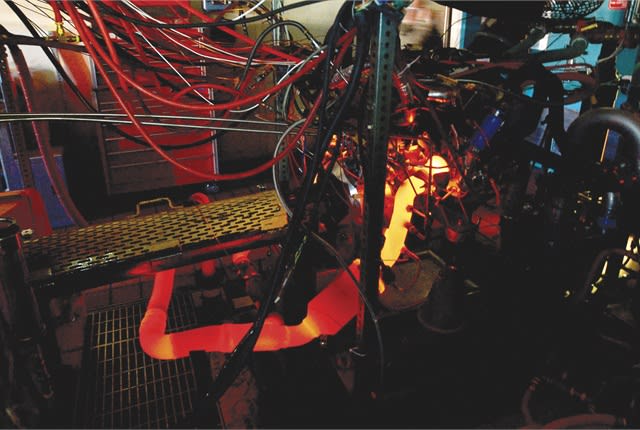
The turbocharger and exhaust components of Ford's all-new 2.7L EcoBoost engine glow red as it runs under load and at full power on a dynamometer. Photo courtesy of Ford.
Aluminum is nothing new to the engineers at Ford. More than 20 years ago, the Dearborn, Mich.-based OEM began playing with the metalloid when it started the Aluminum Intensive Vehicle (AIV) program in 1993. The fruits of this program can be seen in not only the MY-2015 F-150, particularly in the way this next-generation pickup can survive the number of "torture tests" Ford has put it through before releasing it into the market.
"Back in 2009, the U.S. was just starting to recover from recession, auto sales were at their lowest point in decades, and many automakers were putting their product investments on hold," said Raj Nair, Ford's group vice president, Global Product Development, at a media-only event this past April. "Innovating in this environment was really a challenge unlike any other we had faced, especially for a vehicle as important to the company as the F-150."
The event showcased the testing that every component of the new F-150 has gone through, including box-to-frame corrosion testing, solar weathering, and even making sure the badging was built "Ford tough."
"I've been with the company for 23 years, and I think this is best quality badge yet," said Cynthia McComb, Ford material engineer. She explained that the new Blue Oval badge is made up of five different components that have been subjected to a range of ultraviolet exposure, humidity, and thermal states.
There are still some unanswered questions concerning the new F-150, particularly when it comes to fuel economy and pricing. While the topics were discussed during the initial press conference, a final announcement on MSRP and mpg were tabled until a later date.
Peter Reyes, chief engineer on the F-150, spoke exclusively to Automotive Fleet in more detail about how the aluminum body could affect repair costs and procedures.
"We think the costs are going to hold the same," Reyes said. "Yes, some of the aluminum is going to cost more, but the way we've sectioned and built the truck, it's easier to make those repairs.
According to Reyes, the ability to drill out rivets and replace them is simpler than trying to replace welds. Also, while you can't section, weld, cut, and then put high-strength steel back together again, it is possible with aluminum.
"The service team, who was a part of the up-front work done even before preprogram kick-off, said, 'OK, if some of the materials are going to cost more, how are we going to make the overall labor hours and repairs smaller, better, and less expensive?' We think we've balanced all that," Reyes added.
Ford has also developed a one-day training program for people who haven't worked with aluminum where they are educated on different aluminum repair techniques.
After a tour of the Ford Research Innovation Center and a demonstration how the new 2.7L EcoBoost engine performs on a dynamometer, media attendees were presented with the Ford Racing Team's Baja 1000 F-150, which, to the team's surprise, was a 2015 Ford F-150 disguised to look like the previous year's model. According to Jim Stevens, Ford's production design engineer — engine development, "the truck ran flawlessly."
More Operations

Avis Budget Group Deploys Neology Toll Management Technology Across Major Brands
Neology’s neoFleet platform will manage toll transactions and toll-authority operations for vehicles across Avis, Budget, Payless, Budget Truck and Zipcar.
Read More →
Fleet Personal-Use Charges Edge Higher in 2026
Nearly eight in 10 surveyed fleets allow personal use of company vehicles, while just over half of respondents report charging employees for the privilege.
Read More →
The Future of Fleet + What’s Changing Right Now | AF News Recap
Could developments overseas offer a preview of what’s coming for U.S. fleets? This week, we’re looking at the future of AI, autonomy, and electrification, plus Ford Pro’s new certified pre-owned program, smarter vehicle offboarding, and a new way for fleets to manage toll expenses.
Read More →
How to Handle Vehicle Offboarding
What do fleet managers need to do when a driver leaves?
Read More →
Fleet Manager’s Ultimate Playbook: Navigating the New Standard in OEM Connectivity
Rising operating costs, driver safety concerns, and unplanned downtime are putting unprecedented pressure on modern fleets. Discover how fleet managers use embedded OEM connectivity and real-time vehicle data to cut TCO, prevent downtime, and protect drivers without aftermarket telematics hardware.
Read More →
U.S. Bank Adds Verra Mobility Toll Management to Voyager Fleet Platform
The integration allows U.S. Bank Voyager fleet customers to manage toll payments and violations alongside fuel, EV charging and maintenance expenses.
Read More →
ADAS Prevents Crashes. But Repairs Cost More | AF News Recap
ADAS-equipped vehicles may crash less often, but they can cost more when they do. This week, we’re breaking down what that tradeoff means for fleets, plus Subaru’s first Forester Wilderness Hybrid, Nissan’s new e-POWER Rogue, and why Calstart has become Catalyst Mobility.
Read More →
Moventum Fleet Management Names Mark Iorillo Head of Sales
Iorillo brings nearly 20 years of fleet management and sales experience to the role, including previous positions at Element Fleet Management, CEI, Donlen and Ryder.
Read More →
Fleet Has a Talent Pipeline Problem. What Comes Next? | AF News Recap
Where will fleet’s next generation of leaders come from? This week, we’re looking at the industry’s talent pipeline, what certification can add to a fleet career, how to build an award-worthy track record, and the return of Automotive Fleet’s Personal Use Survey.
Read More →
Smith System Launches Driver Risk Management Program
Fleets have more driver data than ever, but identifying risky behavior doesn't necessarily correct it. Smith System's new Driver Risk Management program combines monitoring, training, and follow-up coaching to help fleets connect risk signals with driver intervention.
Read More →