




Top 7 Trends in New-Vehicle Selection & Purchasing
Anticipated is a significant growth of hybrids and import-badged vehicles in commercial fleet usage, the increasing influence of purchasing and procurement groups, and more sophisticated online new-vehicle ordering systems.

1. Significant Growth of Hybrids in Commercial Fleets
Many companies are becoming more aware of the environmental impact of their fleets, as well as the fuel efficiency of their fleet vehicles, said Linda Tiberi, manager, motor company relations for PHH Arval.
Jim Tangney, vice president, purchasing for Emkay Inc., agrees, and he predicts that there will be significant growth of hybrid-powered vehicles in commercial fleets. “Hybrid vehicles will become more accepted, especially as the domestic manufacturers start introducing their models,” said Tangney. “Improved fuel economy will drive fleet clients to take an extra look at the savings these vehicles can provide.”
Tim Duckworth, manager, manufacturer relations for GE Commercial Finance, Fleet Services, agrees.
“GE has seen an increase of approximately 12-percent year-over-year demand for hybrid or flex-fuel vehicles. As long as fuel prices remain high and as OEMs produce more hybrid models, we can anticipate this to be a significant growth area,” added Duckworth.
“We anticipate a greater interest and demand in fleet utilization as this new technology becomes economically viable,” said Jim Creighton, director of operations, ARI. “As the infrastructure is put in place to support and maintain both hybrid and fuel-cell vehicles, fleets will begin to incorporate them into the mix where it makes sense both financially and environmentally.
” Many companies are concerned about their corporate identity and want to be associated with environmentally friendly initiatives. “Studies have shown that altering the mix of vehicles in a fleet can dramatically reduce greenhouse gas emissions - and also positively impact the fuel budget,” said Tiberi. “As a result, fleet managers will be including more of these new types of environmentally friendly vehicles in their selectors.”
Agreeing with Tiberi is Jack Pierce, vice president, operations in Atlanta for LeasePlan USA. “As fuel costs continue to increase, so will the number of hybrid and alternative-fuel vehicles in fleets. More clients are adding these types of vehicles to their fleets to enhance fuel cost savings,” said Pierce.
2. Increased Use of Online New-Vehicle Ordering
“Fleet management company Web sites are carrying more information and reporting capabilities, and making more information available to their customers,” said Tangney. “We have seen a huge increase in Web site usage by clients and drivers. This trend will only increase as more tech-savvy employees enter the work force. Fleet managers and their drivers are becoming more self-sufficient in searching for information about their fleets, such as ordering, status inquiry, product research and comparisons, and generating reports.”
Creighton of ARI concurs.
“We see an ever-increasing demand for online Web-enabled ordering for all types of vehicles. Fleets want to get the drivers more actively involved, including configuring their own vehicles to further streamline the process. In the future, trucks with extensive upfitting will be ordered the same way a typical sales sedan was done just a few years ago,” said Creighton.
There will also be greater demand on manufacturers for instant information via the Internet. “Fleet managers want more information from the fleet management company (and therefore, by extension, the manufacturers),” said Pierce.
Others, such as Rob Scaffidi, director of customer service at Donlen, see current Web-enabled technology solutions for drivers being further refined and becoming more sophisticated, such as:
Online ordering by drivers.
PUSH programs, such as preventive maintenance reminders and overdue notices, MPG monitoring, business and personal mileage reminders, and overdue notices.
3. More Import-Badged Vehicles in Commercial Fleet Usage
There will be an increase in the selection of import vehicles as opposed to domestic vehicles. Some clients are moving toward ordering more import-badged nameplates that historically have had better resale values.
Others also agree that there will be more non-domestic-badged car and truck products acquired by commercial fleets.
“For instance, Korean products have raised their profiles in terms of styling and quality, while being highly competitive in terms of price. While these have not yet hit the fleet market, they will eventually, becoming attractive alternatives to be included in fleet selectors,” said Tiberi.
Domestic manufacturers are diluting the marketplace by maintaining high incentive amounts, said Tangney. “Some clients are ordering more new models with the hopes that these new entries to the marketplace will carry improved value at the time of sale. Some clients are increasing their depreciation rates in order to limit their exposure at the time of sale,” said Tangney of Emkay.
The new International Accounting Standards and the closed-end lease options are changing the way clients will purchase vehicles. “Companies are no longer staying with a specific OEM every year, they are moving from one manufacturer to another. There are fewer multi-year contracts and CAP agreements with manufacturers,” said Pierce of LeasePlan USA.
However, others see single sourcing as continuing to be a strong factor in fleet purchases. “Selecting one supplier allows customers to take advantage of higher competitive price allowances,” said Scaffidi of Donlen.
4. Increased Influence of Purchasing & Procurements Groups in Making Fleet Decisions
Companies are combining multiple disciplines under one group to aid in the process of selecting vendors.
“Purchasing fleet vehicles is a business decision; it’s no longer based on the relationship between a fleet administrator and the manufacturer,” said Pierce. “Purchasing/procurement groups now have direct involvement in the selection of the fleet management provider as well as the manufacturers, influencing the vehicle selection process.”
They are utilizing fleet management companies’ databases and eliminating the need to maintain an in-house database. “This also reduces the administrative cost to a client to maintain their own database, as well as increases data integrity,” said Scaffidi.
5. Ongoing Aggressive Manufacturer Volume Incentives
The extremely competitive environment to get as many fleet orders as possible to keep plants running near capacity will continue to fuel the very aggressive rebate and incentive scenario, said Creighton.
A recent trend that has really taken off in the last several years is the changing definition of a “volume order.”
“The number of vehicles that defines ‘volume’ has taken a huge step backward,” said Tangney. “Now ‘volume’ can be defined by some of the Big 3 as anywhere from 1-25 vehicles; where in the past you may have needed to order 50-75 vehicles per year. This trend will need to reverse itself if manufacturers want to keep residual values on their vehicles,” said Tangney.
6. Increased Popularity of No-Charge & Discounted Equipment Packages
No-charge or discounted equipment packages offered by the chassis manufacturers will start to become more popular but many fleets don’t appear to be taking advantage of them now, said Gino Fontana, director of purchasing operations for Wheels Inc. “Manufacturers are offering more in the way of upfitting packages, including General Motors’ Commercial Business Choice and Ford’s Econo Cargo package, many of which are free or in lieu of fleet incentives. Fleets should make sure to compare these packages versus body companies’ offerings when fleet selectors are developed and choices around upfitting are made,” said Fontana.
7. Fewer SUVs and More Crossover Vehicles in Fleet Use
Manufacturers will develop different types of products that will change the profile of fleets. These vehicles will provide many of the benefits of SUVs, but have an improved risk profile (not as many rollovers, etc.) and better fuel efficiency.
Some crossover vehicles may be more like station wagons. Several manufacturers, including Ford, DaimlerChrysler, and Subaru, will offer AWD versions of new sedans. These vehicles are likely to replace higher-priced SUVs when safety is a concern and there is not a true need for an off-road-type vehicle, said Tiberi.
There will be more development of crossover-type vehicles that combine the best of all worlds - the economy and size of car with the utility of a minivan and/or SUV, said Creighton.
More Operations
What Fleet Managers Really Want From Vendors
From customer service frustrations and technology breakdowns to RFQs, change management, and the growing impact of turnover across the industry, this conversation pulls back the curtain on the real operational challenges fleet managers are navigating every day.
Read More →
Fleet Safety Masterclass: Industry Leaders on Storytelling, Strategy & Innovation
In this special masterclass episode, industry leaders break down what it really takes to build safer fleets in today’s increasingly distracted and data-driven world.
Read More →
Integrating Legacy Fleet Systems and Historical Data
In this episode, we bring together fleet and technology leaders to unpack the realities of data integration, system migrations, and the evolving role of AI in fleet management.
Read More →


From Resistance to Results: Change Management Strategies for Fleets
From new technologies and safety programs to evolving regulations, fleets are under constant pressure to adapt. But as Dr. Betz explains, success isn’t about the system you implement—it’s about whether your people actually use it.
Read More →
Where We're Headed: A Practical Look at AI in Fleet
Discover how AI is actually being deployed in fleets, not just marketed, including practical use cases and emerging risks.
Read More →
How Coca-Cola United Protects Its Fleet from Growing Legal Risk
Growing legal exposure can put fleets at risk. Here's one company's approach.
Read More →
Fleet Managers Think They Understand Their Costs. The Data Says Otherwise.
Most fleet managers say they have a strong handle on their costs, but new research from Bobit Business Media tells a different story. A 2026 survey of 190 fleet professionals reveals a widespread "confidence gap" where fragmented systems, disconnected data, and delayed reporting are leaving major blind spots hidden beneath the surface. Find out what the data actually shows.
Read More →
Cameras, Safety and Insurance: From Reactive Claims to Real-Time Prevention (Part 2 of 2)
Part Two: Commercial auto remains one of the most challenging and costly lines of coverage for fleet operators and insurers alike. Continue learning more about how to effectively address these issues from Onur Aksan, Enterprise Business Development Executive, Geotab
Read More →
New Trucks, AI & Summer Downtime | AF News Recap
From new truck updates to AI-powered driver coaching and summer maintenance tips, this week's fleet headlines are all about keeping things moving.
Read More →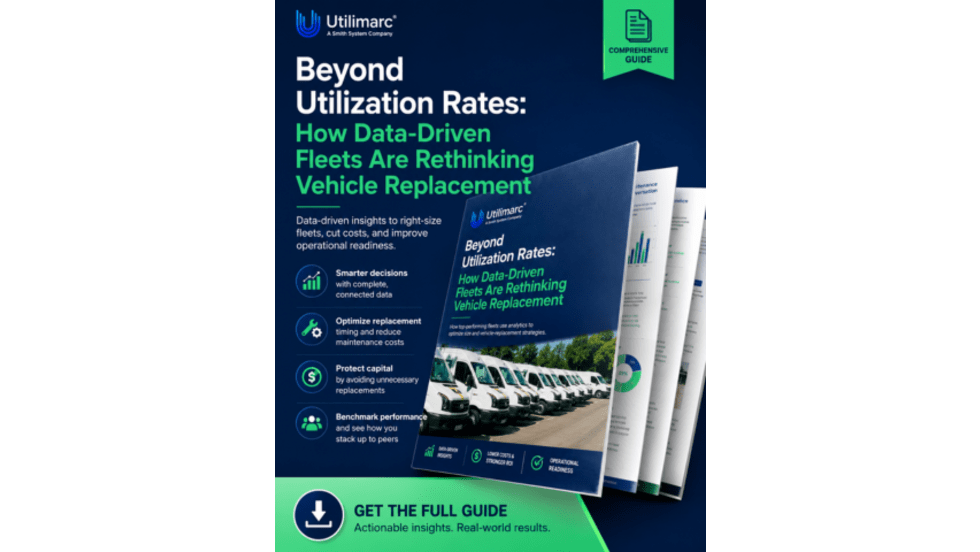
Beyond Utilization Rates: Smarter Fleet Replacement Decisions
Vehicle replacement decisions affect every aspect of fleet performance, from operating costs to asset availability. This guide explores how fleet leaders use integrated data, benchmarking, and lifecycle analytics to determine the right fleet size and optimize replacement timing with greater confidence.
Read More →