




Three Mobility Opportunities Emerging from the Lockdown
Issues forced on us from the pandemic — such as managing passenger loads on public transit, pedestrian-only city streets, and demand for cashless transactions — will present new opportunities for traditional and startup transportation players alike.

Urban planners will usher in a Renaissance for clean, livable cities with slow streets as humanity gets back to basics.
Ford City Insights Platform image courtesy of Ford Motor Company.
The world has been sheltering in place for the past several weeks to contain the outbreak of COVID-19. While we are all anxiously awaiting the reopening of the economy, it is unlikely that things will go back to normal coming out of this crisis.
Below are three observations, viral effects, that I believe will impact the way we work and move around the city. These viral effects also present an opportunity (or missed opportunity if gone unheeded) to gain step function achievements in productivity and elevate the quality of our lives:
- Working from home and flexible hours will become commonplace
One silver lining from this crisis is that it has thrusted positive change upon the traditional companies that would otherwise steadfastly insist on their employees to commute to the office everyday with little regard to the efficacy of this policy. As companies are forced to conduct business remotely, videoconferencing and other enterprise collaboration tools have come to fill the void, efficiently displacing office meetings, hallway chatters, and other office distractions.
This is proving, what has long been regarded by academic researchers and innovative companies, that telecommuting can be just as effective and at times more efficient than commuting to work. As an example, Japan is a country known for its long office hours. Staying late in the office is a sign of good work ethic and ‘loyalty’ to the employer, yet the country suffers the lowest labor productivity in G7 countries.
The habits that we are forming now are unlikely to disappear as quarantine measures are lifted and people are slowly allowed to go back to work. Companies will need to encourage remote work and institute innovative measures such as rotating office days for their employees to maintain low density in their offices yet keep the occasional yet essential face time alive for employees.
This will save companies on property, equipment, and insurance cost in the long run and yields employees with a more flexible work environment that contributes to employee wellbeing, health, and happiness, directly impacting worker productivity.
- Public transit operators must innovate or face decline in ridership
With acute consciousness for hygiene and heightened focus to maintain personal space, public transit agencies are at risk of riders not returning because of fears that they are in tight and confined quarters with other riders. Data from China shows that as the lockdown was eased, private car use rose to a 66% share, from 34% pre-Covid, with public transport use seeing an almost identical decline in usage.
This is a problem for the already ailing transit agencies that have suffered declining ridership and rising operating costs over the years due to in part to rigid routes and schedules and competition from TNC’s and alternate modes of transport like walking and cycling.
But shrinking demand is not the most daunting challenge that agencies are faced with post-COVID. It is, rather counterintuitively, supply constraints that will be the Achilles heel as agencies will be grappling with striking the right passenger load factor (PLF) as they balance efficiency versus safety.
If you look at the average bus or train, to maintain strict social distancing, you need to run the vessel at 15% to 20% of the peak capacity. So peak rush hour capacity will become the bottle neck.
Transit operators will need to reassure the public that their trains, subways, and buses are clean. They should embark on marketing campaigns to build trust and simultaneously invest in frequent cleaning intervals and new disinfecting procedures. Agencies should also make wearing masks, like buying tickets, mandatory prior to boarding.
They will also need to invest in new technologies to improve customer service levels. Microtransit and on-demand transport options offer promising potential for first/last mile services that can be fulfilled via smaller form factor vans with lower passenger density and higher service frequency than large buses.
This is a creative way to build dynamic capacity into the system and virtually scale the transport volume and frequency that would otherwise prove cost-prohibitive to do by building fixed infrastructure and adding new services. These digital tools are also ideally suited to enable contact tracing. The need for public and private partnerships is stronger than ever before.
Lastly, cities and municipalities will need to urge the public to adopt healthy mobility modes — walking and cycling — particularly for short and medium distances. They should also discourage the use of private cars with measures such as congestion pricing, imposing tolls, and capping the number of taxis and TNC vehicles on the road.
In New York City in March, Citi bike ridership jumped 67% compared to March 2019. Several companies are enhancing cleaning procedures e.g. with nano-septic self-cleaning surfaces. Already cities are initiating active transportation policies, with Milan planning to convert 35 km of street to pedestrian and bicycle space and Buenos Aires expanding active transportation infrastructure.
Public transit agencies in the U.S. are eligible to receive $25 billion in emergency funding as part of the CARES Act. How can they strategically deploy these funds in ways that are focused on users, not existing systems? How can they aggressively invest in programs that give people access to mobility options that they need in an equitable way so that they don’t rush to the market buying cars that they can’t afford and that our infrastructure can’t handle anyways?
How can we ensure mobility for all, including the unbanked and those without access to smartphones? Can we provide free transit to those who need it most? It’s a fact that geographic mobility leads to economic mobility. How can we set this virtuous cycle in motion and raise a nation?
How can we take a leadership position in electrification to save the planet and contain the mounting health costs to our nation? As oil futures are trading into the negative for the first time in history with demand drying up and no one wanting to store the black gold, it’s tempting to fall back on what’s convenient and kick the EV can down the road. Would transportation leaders and policy makers do what is right versus what is convenient?
Urban planners and policy makers of our time have the tools and authority to help usher in a renaissance for clean, livable cities with slow streets as humanity gets back to basics. Will they have the resolve to overcome politics and focus on partnerships and people?
- Taxi and fleet operators can reclaim their crown lost to TNC’s
With Uber/Lyft entering the scene in full force by 2013, they started quickly eating into the profitability of taxi companies. The wrecking taxis and its medallion owners then looked like a multi-company pile-up. Quickly hemorrhaging riders to more convenient service providers like Uber/Lyft, taxi fleets and their profits began to dwindle. This crisis presents remaining taxis and emerging fleet-owned rideshare companies with an opportunity to serve customers with a new promise: consistent quality rides.
Because fleets are professionally managed and maintained, the operators can implement strict safety and cleaning procedures on their fleet and market that as a key point of differentiation versus TNCs who cannot tightly control the shape and state of the heterogenous vehicles that their independent contractors own and drive.
Taxis and fleet operators can wield uniform “rideshare-friendly” vehicles in their fleet (e.g. with plexiglass partition between passengers and drivers for safety and privacy) and advertise their “Service Quality SLA” as a line of defense against TNCs, with scattered hit or miss service experience.
Platforms and modern tech stacks can further enhance the rider experience by providing convenient app-based on demand services with cashless transactions that riders have come to appreciate with TNCs. Furthermore, these platforms can now enable new use cases such as authenticating passengers and confirming their health state prior to boarding via facial recognition software and biometrics scanning sensors.
In the U.S., Alto has been pioneering clean premium rides delivered by professional drivers in Texas. Kaptyn, another player in the space, hopes to steer the Las Vegas taxi industry towards the future.
One of Ridecell’s partners in India, BluSmart, is pioneering clean mobility with a BEV fleet, professionally cleaned and maintained by its employee drivers, with app-based reservation for consumers. By differentiating from the large incumbents like Uber and Ola, BlueSmart has been able to grow their market share in a crowded space and quickly become one of the largest passenger EV fleet operators in India.
The transportation space has already been experiencing tectonic shifts across the value chain driven by the strong forces of Connectivity, Autonomy, Shared, and Electric. COVID-19 just put things in high gear, further thrusting upon change and shrinking timelines in an already shifting industry.
The challenges abound. Who will seize the opportunities?
Babak Khademi leads growth at Ridecell, a shared mobility platform enabling new business models for OEMs and players across the automotive value chain.
More Fleet Forward
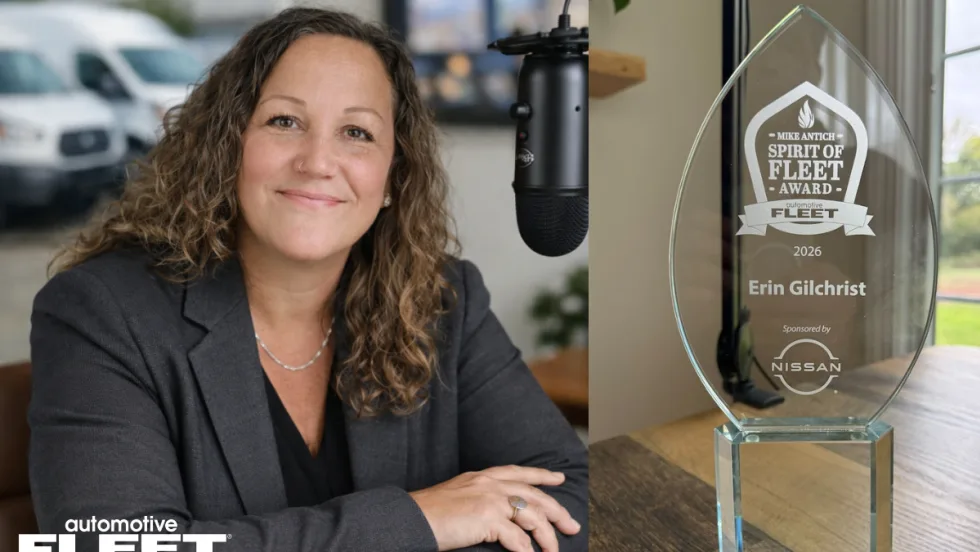
Erin Gilchrist Receives Mike Antich Spirit of Fleet Award
Last week at AFLA in Vegas, Erin Gilchrist received the inaugural, brand-new Spirit of Fleet Award.
Read More →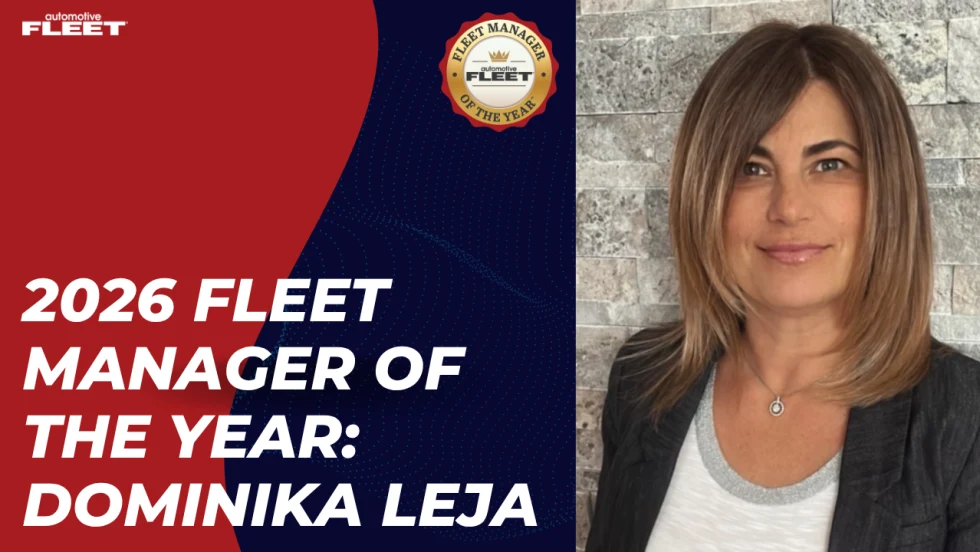
Dominika Leja Named the 2026 Fleet Manager of the Year
The AstraZeneca associate director of fleet was recognized for her leadership in fleet electrification, cost savings, and operational transformation.
Read More →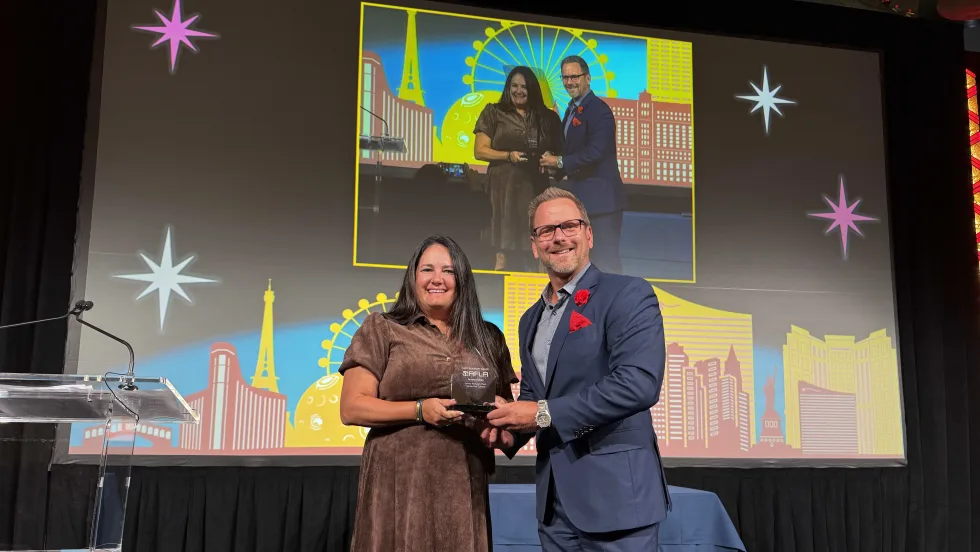
Jamie McKay Named the 2026 Fleet Visionary Award Winner
The Aptive Pest Control fleet manager was recognized for her approach to operations, data, lifecycle management, and driver needs.
Read More →
Fleet Forward Conference Introduces One-Day Passes for 2026
New one-day registration gives fleet professionals the flexibility to attend Tuesday, Wednesday, or Thursday, with passes available for $199 through Sept. 18.
Read More →
Vibe Coding: When Fleet Managers Become Software Builders
Five fleet professionals — none with programming skills — discuss how they’re using AI to build fleet solutions in-house and in a fraction of the time.
Read More →
Fleet Forward Conference Tackles Fleet Industry’s Growing Leadership Gap
This session will examine succession planning, knowledge transfer, and the skills the next generation of fleet leaders will need as veteran professionals leave the industry.
Read More →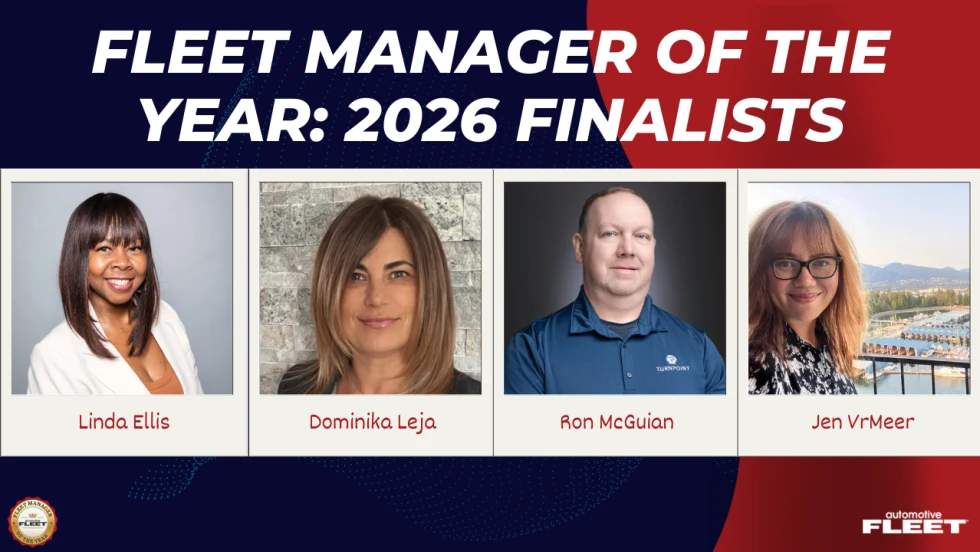
2026 Fleet Manager of the Year Finalists Announced
Who are the 2026 Fleet Manager of the Year finalists?
Read More →
John Rossant to Deliver Opening Keynote at 2026 Fleet Forward Conference
The CoMotion founder will draw on developments across Europe, China, the Middle East, and other international markets to identify trends that could influence how U.S. fleets plan for the coming decade.
Read More →
How to Build Custom Fleet Tools With AI and Vibe Coding [Webinar]
A new Automotive Fleet webinar explores how fleet managers are using AI and vibe coding to automate routine work and create simple operational tools without traditional programming skills.
Read More →