




The World Has Been Mapped into Three-Meter Squares: What Are the Implications for Fleet?
Identifying the exact delivery point down to a three-meter square on a large corporate campus, construction site, or any location without an address would result in valuable cost and time savings for numerous fleet applications.

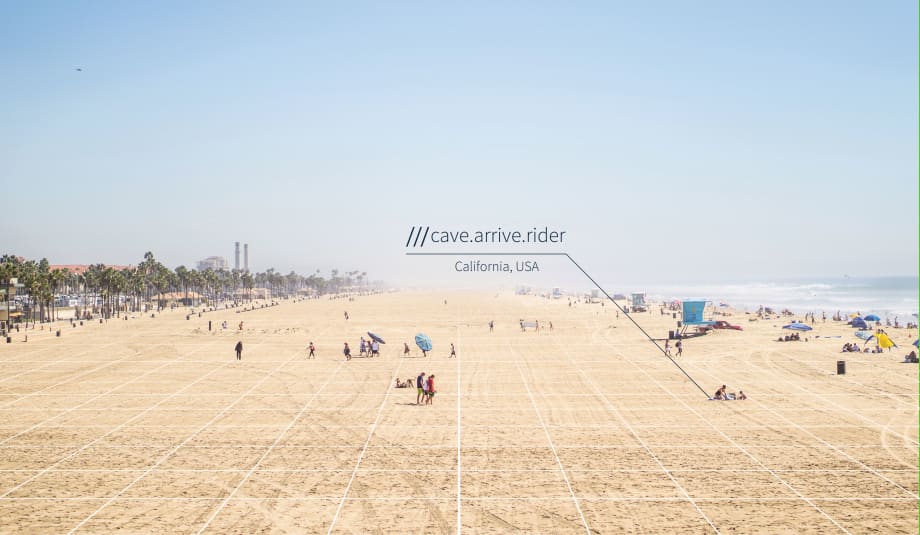
With the world now mapped into 57 trillion three-meter squares, each with a permanent three-word address, goods and people can be moved to precise locations without conventional addresses — from construction sites and loading docks to pop-up businesses and even beaches.
Photo courtesy of what3words.
If you’ve ever pondered how many 3-meter squares would cover the entire globe, the answer is around 57 trillion. And as of 2013, each of those 57 trillion squares has been assigned a three-word address.
The square from which you’re reading this has its own unique address, perhaps it’s “///livery.coalition.quartet.” Your home, office, and children’s school have multiple addresses as well. Is this the makings of a worldwide parlor game, or a revolution in mapping, addressing, and geo-location?
Regarding the latter, more than 75% of the world’s 7.4 billion people don’t have a reliable address. The London-based company that created the algorithm to convert GPS coordinates into unique three-word addresses, what3words, is working with global partners in diverse applications from postal services, tourism, and emergency services to disaster relief, infrastructure, and logistics & deliveries.
The applications are not limited to the third world, but expand to developed countries with well-defined addresses — and those working in fleet.
For instance, a new delivery driver given the street address of Bobit Business Media’s headquarters in Torrance, Calif. might attempt to drop a package at the front entrance instead of the loading dock at the back of the building. Using what3word’s assigned address for the loading dock (“///dinner.part.pounds”) the driver would’ve saved a few minutes.
Now imagine the time lost trying to find the right door on a much larger corporate campus, drop equipment at a vast construction site, or deliver a client to a meeting point — and then multiply that by thousands of occurrences.
“Technology has driven huge improvements in mapping and navigation in recent years,” says Ashley Marie Cashion, vice president, USA for what3words. “That’s given businesses and fleets a clearer picture of where their drivers and customers are, but the central part of this experience — identifying a specific location — remains a serious issue.”
Cashion references and estimate from UPS — the company famous for routing its trucks to avoid left turns — that saving each of their drivers one mile would recoup $50 million a year for the business.
“Having to search for the right drop-off location not only adds up to lost time and extra costs for e-commerce, delivery and logistics companies, but also creates a poor experience for customers and consignees, who spend time having to give lengthy directions to couriers over the phone,” she says.
Last year, Mercedes-Benz became the first automaker to integrate what3words by installing it in the infotainment system of the 2018 Mercedes A-Class, with a wider rollout this year. The system is specifically designed for voice input, eliminating one of the frustrations of using voice to enter traditional street addresses, Cashion says.
The integration allows drivers to navigate to any precise point in the entire world, including parks, beaches, parking lots, temporary sites, or a landmark in a forest.
Route optimization systems, ride-hailing apps, and enterprise resource planning (ERP) software companies have integrated what3words, with more partnerships planned, Cashion says. The company is set to open an office in San Francisco to serve the U.S.
Cashion will present the seminar “New Global Location Technology and the Potential for Fleets and Logistics” at the 2018 Fleet Forward Conference, convening Oct. 8-10 in San Francisco.
“We’re working to make what3words the new standard in global addressing,” she says. “And we’re looking forward to sharing our plans, including actual case studies and specific systems integrations, with fleet audiences at the Fleet Forward event.”
Originally posted on Work Truck Online
More Operations
A buyer's guide to fleet management software in 2027
Buying fleet management software in 2027 means looking beyond features and price. As fleet operations, technology and expectations evolve, this guide explores what today’s fleet professionals should consider when choosing a system that can deliver value now and adapt to what comes next.
Read More →
What Will Shape the Next Era of Fleet Management?
EVs, AI, and autonomous vehicles are reshaping fleet management. Discover what’s ahead—and how fleet leaders can prepare for the next era.
Read More →
How Fleets Can Recruit and Train Veterans for Technician Roles
Here's how the technician shortage has affected uptime for fleets, and what to do about it.
Read More →

Avis Budget Group Deploys Neology Toll Management Technology Across Major Brands
Neology’s neoFleet platform will manage toll transactions and toll-authority operations for vehicles across Avis, Budget, Payless, Budget Truck and Zipcar.
Read More →
Fleet Personal-Use Charges Edge Higher in 2026
Nearly eight in 10 surveyed fleets allow personal use of company vehicles, while just over half of respondents report charging employees for the privilege.
Read More →
The Future of Fleet + What’s Changing Right Now | AF News Recap
Could developments overseas offer a preview of what’s coming for U.S. fleets? This week, we’re looking at the future of AI, autonomy, and electrification, plus Ford Pro’s new certified pre-owned program, smarter vehicle offboarding, and a new way for fleets to manage toll expenses.
Read More →
How to Handle Vehicle Offboarding
What do fleet managers need to do when a driver leaves?
Read More →
Fleet Manager’s Ultimate Playbook: Navigating the New Standard in OEM Connectivity
Rising operating costs, driver safety concerns, and unplanned downtime are putting unprecedented pressure on modern fleets. Discover how fleet managers use embedded OEM connectivity and real-time vehicle data to cut TCO, prevent downtime, and protect drivers without aftermarket telematics hardware.
Read More →
U.S. Bank Adds Verra Mobility Toll Management to Voyager Fleet Platform
The integration allows U.S. Bank Voyager fleet customers to manage toll payments and violations alongside fuel, EV charging and maintenance expenses.
Read More →
ADAS Prevents Crashes. But Repairs Cost More | AF News Recap
ADAS-equipped vehicles may crash less often, but they can cost more when they do. This week, we’re breaking down what that tradeoff means for fleets, plus Subaru’s first Forester Wilderness Hybrid, Nissan’s new e-POWER Rogue, and why Calstart has become Catalyst Mobility.
Read More →