




The Tax Consequences of Driver Reimbursement
When a company adopts a driver reimbursement program, it shifts all costs to the employee. The problem, from a tax view-point, is that if not handled correctly, reimbursement payments to employees can be considered taxable income by the federal government and some states. For instance, a monthly vehicle allowance is taxable to the employee, and the company is subject to its portion of FICA tax. The net result is that the employee’s combined state and federal tax burden will increase, which, in t


1. Taxable Income.
If a company provides an employee a $500 monthly car allowance, the employee will have approximately $200 in tax liabilities for federal and state income tax, based on a 40-percent combined tax bracket. If the employee needs to spend $200 on taxes, in reality he or she will have only $300 to spend for the car, not $500.
2. Two-Percent Adjusted Gross Income Threshold.
Theoretically, employees can deduct all business-related expenses and business mileage on their federal and state personal income tax returns and get the $200 back. However, this is not always the case. On an individual tax return, an employee must itemize deductions; not everyone does. If deductions are not itemized, then a driver is not eligible for any of the business-related tax deductions for the use of his or her personal vehicle.
If a driver does itemize deductions, then a 2 percent of adjusted gross income floor has to be met before expenses for the business-related use of a personal vehicle can be deducted. “For example, if an employee is making $100,000, the first $2,000 is not deductible. The adjusted gross income floor restricts an employee’s ability to obtain a tax benefit on business-related vehicle expenses,” said Jim Fredlund, director of tax management for GE Commercial Finance Fleet Services. “This rule only applies to individuals, not companies. In addition, if a driver is married and files a joint income tax with a combined annual income exceeding $145,950, then there is a phase-out of up to 80 percent of the allowable itemized deductions beyond the
2 percent threshold.”
3. Social Security (FICA) Taxes.
Using the example of a $500 per month car allowance, this money is subject to FICA taxes, which are shared by the employer and employee. FICA taxes cannot be reduced by itemized deductions for the business use of a personal vehicle.
4. Interest Payments are Not Tax Deductible.
If the employee finances a personal vehicle, the interest expense is not tax deductible. The IRS ruled years ago that personal interest payments are not deductible by individuals even if used to finance a personal vehicle required for their jobs. However, if a business finances a company vehicle, the interest expense is deductible.
5. Increased Risk of IRS Audit.
The audit burden falls on the reimbursed employee for substantiation of all business expenses. Employees may not realize that mileage expenses and other reimbursed costs for business use of a personal vehicle are subject to audit by the IRS, and drivers are notorious for not keeping good records.
Exaggerated Business Mileage
Employees may feel that their company is not adequately reimbursing their personal vehicle use for business purposes. “When this occurs, employees will attempt to maximize their reimbursement for mileage and vehicle expenses. One common way is to exaggerate business mileage,” said Fredlund. “We have access to numerous studies with our lessees that show when you go from a reimbursement program to a company-provided car program, the reported business mileage goes down by 30 percent. It is not that employees drive less, it is that the business miles no longer generate reimbursement monies, so employees are reporting the actual miles. This tells me that when a company switches to a driver reimbursement program it can expect a 30-percent exaggeration of business miles driven,” said Fredlund.
Increased Employee Turnover
In addition, employee turnover increases when a company eliminates a company-provided vehicle program. “We have found that when companies go to driver reimbursement from a company-provided vehicle, there is about a 10-percent loss in work-force because employees do not like the new reimbursement program,” said Fredlund.
With all of these negative tax implications, how can a company justify a driver reimbursement program to its employees?
Let me know what you think.
mike.antich@bobit.com
More Operations
What Fleet Managers Really Want From Vendors
From customer service frustrations and technology breakdowns to RFQs, change management, and the growing impact of turnover across the industry, this conversation pulls back the curtain on the real operational challenges fleet managers are navigating every day.
Read More →
Fleet Safety Masterclass: Industry Leaders on Storytelling, Strategy & Innovation
In this special masterclass episode, industry leaders break down what it really takes to build safer fleets in today’s increasingly distracted and data-driven world.
Read More →
Integrating Legacy Fleet Systems and Historical Data
In this episode, we bring together fleet and technology leaders to unpack the realities of data integration, system migrations, and the evolving role of AI in fleet management.
Read More →


From Resistance to Results: Change Management Strategies for Fleets
From new technologies and safety programs to evolving regulations, fleets are under constant pressure to adapt. But as Dr. Betz explains, success isn’t about the system you implement—it’s about whether your people actually use it.
Read More →
Where We're Headed: A Practical Look at AI in Fleet
Discover how AI is actually being deployed in fleets, not just marketed, including practical use cases and emerging risks.
Read More →
How Coca-Cola United Protects Its Fleet from Growing Legal Risk
Growing legal exposure can put fleets at risk. Here's one company's approach.
Read More →
Fleet Managers Think They Understand Their Costs. The Data Says Otherwise.
Most fleet managers say they have a strong handle on their costs, but new research from Bobit Business Media tells a different story. A 2026 survey of 190 fleet professionals reveals a widespread "confidence gap" where fragmented systems, disconnected data, and delayed reporting are leaving major blind spots hidden beneath the surface. Find out what the data actually shows.
Read More →
Cameras, Safety and Insurance: From Reactive Claims to Real-Time Prevention (Part 2 of 2)
Part Two: Commercial auto remains one of the most challenging and costly lines of coverage for fleet operators and insurers alike. Continue learning more about how to effectively address these issues from Onur Aksan, Enterprise Business Development Executive, Geotab
Read More →
New Trucks, AI & Summer Downtime | AF News Recap
From new truck updates to AI-powered driver coaching and summer maintenance tips, this week's fleet headlines are all about keeping things moving.
Read More →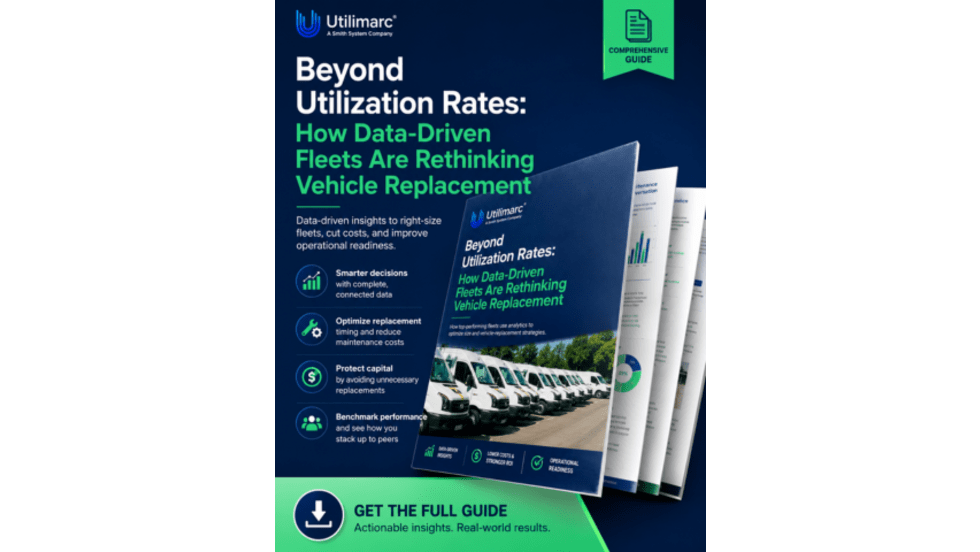
Beyond Utilization Rates: Smarter Fleet Replacement Decisions
Vehicle replacement decisions affect every aspect of fleet performance, from operating costs to asset availability. This guide explores how fleet leaders use integrated data, benchmarking, and lifecycle analytics to determine the right fleet size and optimize replacement timing with greater confidence.
Read More →