




Related: 6 Questions for ARI's New President
The Pros and Cons of a Sale/Leaseback Program
There are a number of reasons that companies will sometimes consider a sale/leaseback program then leasing them back. Here are some serious implications to assess before making the decision.
by Bob Cavalli
September 7, 2018
It is common for a new supplier of a fleet to provide the services needed to complete the administrative elements of a transaction, but the costs will rest on the fleet being purchased.
Photo via Getty Images.
10 min to read
No matter what business your company is in, there is no more important element than cash flow.
As most senior business managers, financial experts, and consultants will tell you, cash is king.
Cash enables the company to meet obligations such as tax payments, paying suppliers (accounts payable), making payroll, and literally keeping the doors open and the lights on. Cash funds the development of new products and services for your customers, as well as the development of your employees.
This is one major reason that a cash flow statement — sometimes called a source and application of funds — is one of the three primary financial statements companies produce. The other two are profit/loss statements and balance sheets.
Tapping into the fleet as a source of cash is the most common reason companies consider selling the fleet to a fleet lessor and leasing it back.
What Is A Sale/Leaseback?
A sale/leaseback is a transaction where the owner of an asset sells it to another party, who then leases it back to the original owner. Sale/leasebacks are relatively common in the commercial real estate market, but not entirely uncommon in the fleet industry.
For fleets, there are three situations where a sale/leaseback transaction can happen:
■ Leased Fleets: Just because a fleet is already leased does not prevent a sale/leaseback transaction. Sometimes a fleet’s relationship with an incumbent supplier has deteriorated to the point where the company just wants out as quickly and completely as possible.
■ Owned Fleets: The company owns the vehicles, and can sell them to a fleet lessor (and lease them back) relatively easily, without an incumbent ‘middle man’ in the transaction.
■ Reimbursed Fleets: Though it’s extremely rare, even a reimbursed program can set up sale/leaseback transactions to drivers who are using a company provided monthly stipend to pay for a vehicle.
Keeping in mind that, in any business, cash flow keeps a company solvent, tapping the fleet as a source of funds makes sense, provided all the implications of the transaction are carefully considered.
Leased Fleet
A sale leaseback of a fleet that is already leased is usually a way not only to create cash, but to accomplish a change in a supplier either via a winning bid or, as previously mentioned, to free the company from a dysfunctional relationship with the incumbent. The straight economics might take the following form:
First, the existing lease should be an open-end TRAC lease. Yes, a closed-end, net lease can be involved; however, the “purchase price” of the vehicle, rather than based upon a mutually agreed upon depreciation reserve rate, usually has some level of profit baked in, as it is the lessor (in a closed-end lease) who is taking the residual risk.
Now, let’s take some reasonable assumptions, and walk through the process. Let’s say that the Cap cost of the vehicle at lease inception was $30,000, the depreciation reserve rate was 2% permonth (50 month rate to zero), and the vehicle was scheduled to be replaced after 30 months in service.
Let’s also assume that the sale leaseback was to happen after 20 months in service. At that point, the “purchase” price of the vehicle would be the then remaining unreserved “book” value:
30,000 x .02 = $600/month reserve.
$600 x 20 months in service = $12,000 in depreciation reserve.
$30,000 cap cost - $12,000 reserve = $18,000 unreserved balance.
In this example, the “purchase” price of the vehicle would be the unreserved, “book” value of $18,000.
Since the vehicle is being replaced prior to the forecasted replacement (30 months vs. 20 months at the time of the sale/leaseback), the leaseback must calculate a new reserve amount/rate, which will take the new $18,000 “cap cost,” and reduce it down to the value originally forecast. Here’s how that is done.
First, take the anticipated residual value at the originally planned replacement, at 30 months; subtract from it the sale price, $18,000:
$30,000 x .02 X 30 =
$18,000 depreciation reserve
over originally forecast replacement
at 30 months.
$30,000 - $18,000 =
$12,000 unreserved balance at
forecast 30-month replacement.
The remaining amount that must be reserved, over the remaining 10 months in service (from 20 months at sale to 30 months replacement) is $6,000. In this case, it is the same monthly amount as in the original lease.
However, $600 per month is not 2% per month, using $18,000 as the cap cost. It is 3.33%/month ($600 / $18,000 = .0333.). The leaseback rate factor will be higher than that in the original lease, all other rate components (funding, administrative fee, etc.) being equal.
This process should be done for each vehicle in the transaction.
Next Considerations
The above process would be performed if one assumes that the sale price in the leaseback is equal to the unreserved book value of each vehicle. It is possible, however, for the lessee (fleet) to request purchases at that value or the fair market value, whichever is greater. Doing so could result in a capital gain if the market price is greater than the book value, a positive TRAC lease final payment.
If, for example, our sample vehicle, with a sale price of $18,000, has a market value of $20,000, it is perfectly acceptable for the lessee to price the sale at market value. After all, from a contractual standpoint, a TRAC lease usually calls for the sale of the vehicle leased at fair market value.
What happens here, though, is that the seller (fleet) would be realizing a capital gain on the sale of $2,000, which may be taxable, and would add cost to the overall transaction. The lessee will need to make a decision: sell at fair market value which risks creating a taxable capital gain, but which also maximizes the cash created by the transaction, or sell at unreserved book value, which while bringing less cash, avoids any capital gain.
Further, there also may be sales tax considerations in a sale/leaseback transaction. When a vehicle is sold, most states require the seller to collect tax on the sale price and for the buyer to pay it.
The state of California charges a state sales tax on the sale of a vehicle of 7.5%, and the state also cautions that additional local taxes of up to an additional 2.5% might also be charged. In New York, the rate is 4%, again with additional local jurisdictions’ rates applied.
Thus, these taxes may be applicable, and add substantial cost to the overall sales/leaseback transaction. In most cases, sales taxes can either be paid up front, or capped into the new lease; the former deducts from the overall cash available from the transaction, the latter will add to the lease payment, and thus reduce cash flow. It is important, then, to consult with your company’s tax experts and, if necessary, the state/locality before making a final decision.
Administrative Considerations
Depending upon the structure of the transaction, there can be some rather cumbersome administrative and document issues that will need to be addressed.
In the case of the sale of a fleet of vehicles that is already leased from a fleet management company (FMC), a lessee (company) should keep its existing supplier informed, give reasons for the transaction, and get their full cooperation. FMCs hold titles, and will need to cooperate with the new lessor (purchaser) in order for the transaction to proceed smoothly and promptly. It isn’t likely that they’ll be overjoyed at the prospect of losing your business, but if you’ve kept them informed along the way, and they’re professional in their dealings, this shouldn’t be a problem. Even better, notify the current supplier of your intentions, and see if you can obtain their commitment to cooperate in writing.
Then there is an issue of paperwork. Selling a vehicle requires several documents that should be produced for each vehicle, such as a bill of sale, title transfer, federal odometer statement, new title/registration, and power of attorney.
All vehicles will have to be re-titled and re-registered to the new owners, and a blanket power of attorney needed to accomplish it all. This said, it is common that the new supplier (purchaser) of the fleet will be more than happy to provide the services needed to complete the administrative and clerical elements of the transaction, but the costs will be the responsibility of the fleet being purchased: a $50 fee for re-registration and titling, for a 500-unit fleet will cost $25,000.
Be ready for that cost.
Drivers and Other Stakeholders
Clearly, the fleet manager/department isn’t solely responsible for the decision, transaction and the ongoing management of a sale leaseback.
For a fleet of any size at all, the decision to enter into a sale leaseback isn’t a fleet manager’s decision; he or she may well be the one to gather the necessary information, but the CFO, treasurer, or other financial officer of the company will likely be the one to sign off on the process. What information will they need?
They’ll need to know why the fleet manager is recommending the decision in the first place.
They’ll need to know how much cash the sale will generate, and an amount net of administrative costs.
Additionally, they’ll need to know the benefits/ draw backs of the transaction.
They’ll also need to know what taxes the company will be responsible for.
Of course, it isn’t always a fleet manager making the recommendation. Sometimes, the company, looking for cash, sees the fleet as a good source.
In such cases, it is the fleet manager who, from an administrative and management standpoint, should make certain of their involvement in the decision. If the buyer/lessor changes, there will likely be services the fleet manager will have to establish, implement, and manage.
What about drivers? Company vehicles are a key component of their job, whether it’s selling new products and services, delivering them, or servicing customers. They have, sometimes for many years with the same suppliers, called the same numbers, dealt with the same people, serviced vehicles at the same shops, picked up new vehicles at the same dealers, and now, as with any change in a fleet supplier, they will have to learn new processes, new paperwork, and new phone numbers when they need help. This is no small task; much of the above becomes second nature over time.
Communicating with drivers, and their direct supervisors, is important whenever a new supplier is chosen; it is even more important in a sale/leaseback, as the change happens far more quickly. Things such as procedures for a maintenance management program, toll free numbers for accident reporting, even telematics (both devices and driver access data) will all be different. Since the sale leaseback will likely take some period of time (weeks?), fleet managers will have time to meet with the new FMC or supplier to discuss driver communications and how any new fleet programs work.
Executing the Plan
Ultimately, as with nearly every other business process, a successful sale leaseback will depend upon careful planning, regular communication with drivers, other company stakeholders, and both the incumbent (if any) and new lessor.
The most common purpose of a sale leaseback is the creation of cash.
As the process begins, make certain that all internal interested and/or involved parties are notified (drivers, finance, treasury, HR, even legal).
If currently leased, get the incumbent lessor to put its intention to cooperate in the process in writing.
If owned, some internal “value” must be determined for each vehicle involved.
Work with the treasury/tax department to outline any and all tax implications the transaction will create.
Know that there are also administrative expenses involved, such as re-registration and re-titling, bills of sale, federal odometer statements; the new lessor will likely provide the administration of these items; however, the costs will be borne by the company.
Keep all parties involved as the process plays out; match activity to your plan.
Finally, make certain that all drivers, and their supervisors, are aware of changes in fleet service programs, including materials, contact names, email addresses and phone numbers, and procedures.
Most lessors will ‘recommend’ a sale leaseback to a company, albeit cautiously. It is by far the quickest way to get the business into their portfolio, and they’ll be as helpful as they can to get done smoothly. Not so much for any incumbent that is being replaced, this is why communication is so important. A sale/leaseback can create hundreds of thousands, even millions of net cash dollars for the company, which is why even though it can be a complex transaction, it is done. A fleet manager who has developed a good relationship with stakeholders and management will help make a major transaction go as quickly and smoothly as possible.
Subscribe to Our Newsletter
More Operations
Managing Fleet Costs in an Era of Permanent Volatility
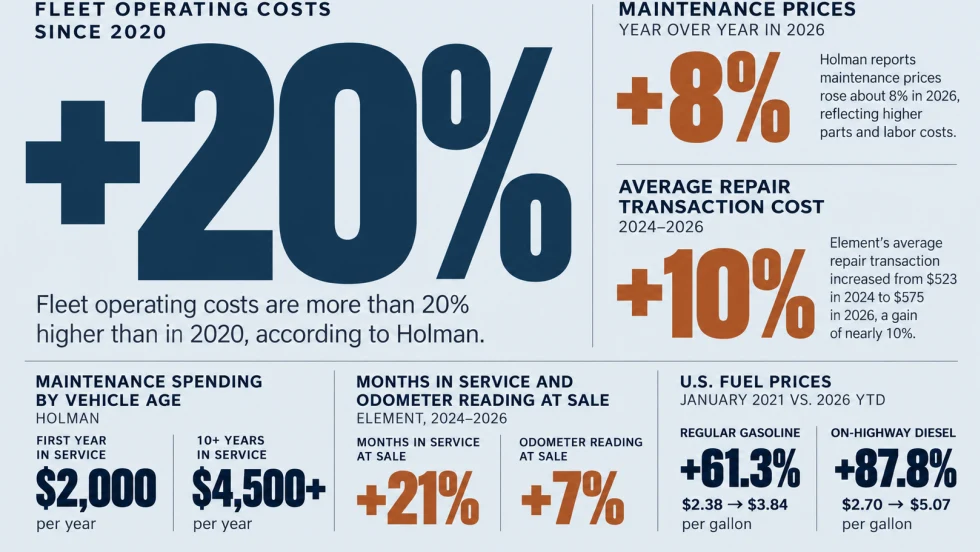
Fleet operating costs have risen more than 20% since 2020, raising a key question: When does extending a vehicle's service life stop making financial sense?
Read More →
The Next Evolution of Fleet Management: Autonomous Operations
This opening keynote session at the Fleet Forward Conference highlights the future of autonomous driving for fleets.
Read More →
How to Reduce the Total Cost of Risk From Catalytic Converter Theft
A stolen catalytic converter can cost fleets far more in downtime and lost productivity than in repairs. A total-cost-of-risk approach can help fleet managers quantify their exposure and prioritize theft prevention.
Read More →

Personal-Use Charges Rise as Vehicle Values Fall | AF News Recap
Personal-use charges are climbing, wholesale used-vehicle values are declining, and commercial fleet sales growth is slowing. This week, we're breaking down the latest fleet data, plus how Element Fleet Management is helping Waymo prepare for its first Canadian robotaxi market.
Read More →
Here's When You Should Make an Exception to Fleet Policy
Fleet policies are designed to create consistency, but not every driver or situation fits neatly within standard rules.
Read More →
AI-Native or AI-Acquired: What Should Fleet Managers Look for in an AI Platform?
Six questions can help fleet managers look beyond AI marketing claims to evaluate integration, data access, and real-world operational performance.
Read More →
Sponsored•October 14, 2026
A buyer's guide to fleet management software in 2027
Buying fleet management software in 2027 means looking beyond features and price. As fleet operations, technology and expectations evolve, this guide explores what today’s fleet professionals should consider when choosing a system that can deliver value now and adapt to what comes next.
Read More →
What Will Shape the Next Era of Fleet Management?
EVs, AI, and autonomous vehicles are reshaping fleet management. Discover what’s ahead—and how fleet leaders can prepare for the next era.
Read More →
How Fleets Can Recruit and Train Veterans for Technician Roles
Here's how the technician shortage has affected uptime for fleets, and what to do about it.
Read More →
Avis Budget Group Deploys Neology Toll Management Technology Across Major Brands
Neology’s neoFleet platform will manage toll transactions and toll-authority operations for vehicles across Avis, Budget, Payless, Budget Truck and Zipcar.
Read More →