




The Juggler: Big Apple Circus Takes the Show on the Road
Transporting the Big Apple Circus requires a big top’s worth of planning. Learn how Tom Larson and his crew take the show on the road.

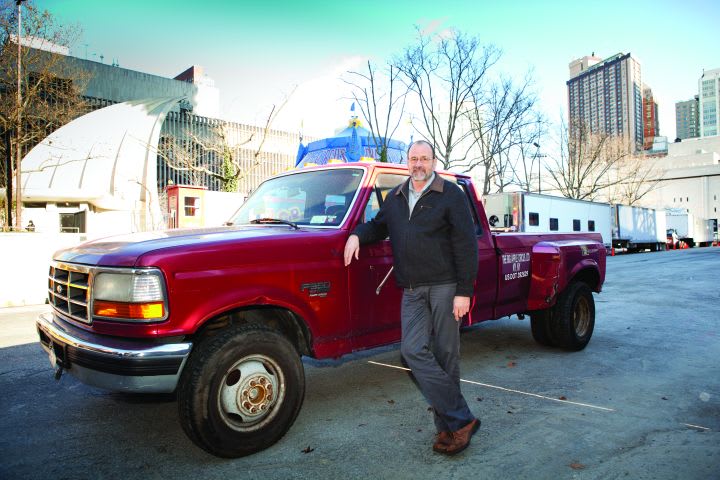
The Big Apple Circus’ Tom Larson manages a fleet that includes 10 Ford F-350 pickups.
Photo: The Big Apple Circus
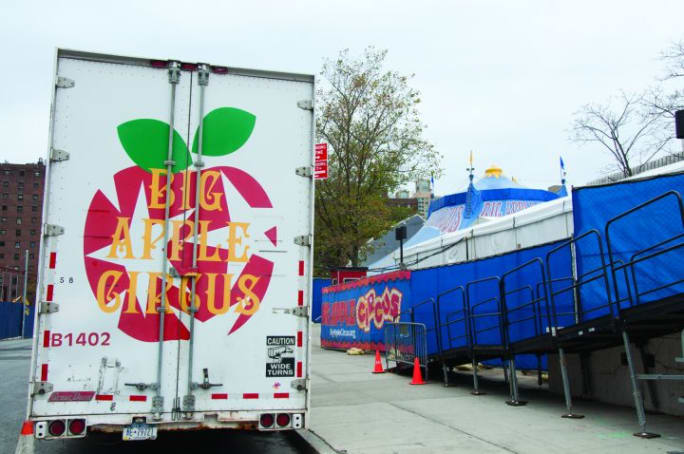
City-to-city moves, animal transportation, and other circus-specific issues create new challenges for the general manager and his crew.
Photo: The Big Apple Circus
Visitors of the famed Big Apple Circus are treated to a one-ring extravaganza of clowns, jugglers, acrobats, trapeze artists, and trained animals. Behind the scenes, General Manager Tom Larson puts on a juggling act of his own: It takes five days to change locations, and Larson is responsible for safely transporting the performers, crew, animals, and equipment.
“There are a lot of tires on the road,” Larson said. He described the logistics of each move as “organized chaos,” noting, for instance, that the last rigs to pull out — the trailers carrying the tents — are the first he needs at the next stop.
Planning the Move
The Big Apple fleet consists of 10 Ford F-350s, four Ford E-Series vans, a Jeep, and four semi-tractors (three Macks and a Western Star). The company also has 38 semi-trailers that carry show equipment and house offices, bunkhouse, and a fully equipped maintenance shop.
There was a time, Larson said, when he could call a trucking company and ask for 30 tractors to tow those trailers, allowing him to complete each move in a single day. But, the current economic climate, the diminishing ranks of Class-A commercial drivers, and U.S. Department of Transportation (DOT) rules have forced the circus to adopt a new strategy.
Today, the moves are made in waves. Several groups of drivers take the wheel over the course of a few days, with legally required breaks in between. “This has caused us to rethink our trucking scheduling,” Larson said. “It affects everything we do, from dismantling and loading trucks to the way they’re received at the other end. It takes us a lot longer to move our show.”
The Big Apple Circus is in an unusual position when it comes to fleet. It has a wide variety of transportation needs, yet they happen in a very short window and, for the major hauls, only six times a year. In fact, the circus fleet only puts about 3,000 total miles per year on the big rigs and not many more on the smaller trucks, which also perform in-town chores.
That means no one is “just a driver”; they all have other full-time jobs within the circus. Larson and other staff members maintain their own Class-A licenses while performing other duties such as lighting, sound, rigging, carpentry, maintenance, and more.
“We are a performing arts organization, yet in the eyes of the DOT, we are a trucking company,” Larson said. Tractor-trailer drivers must pass criminal background checks and a biannual physical, and Larson has to keep abreast of ever-changing state and federal regulations. In December 2011, the DOT reduced a truck driver’s allowed work week to 70 hours. But, chief among these driver rules is mandated rest periods — a model Larson must also follow for pickup and van drivers, as dictated by New York state law.
“We don’t [assign] someone who did two shows on closing day and then worked all night tearing down the bleachers,” he said. “We’re not going to let that person drive a truck until they get the rest they need to drive safely.” Those drivers must keep hours-of-duty logs, even during the long breaks between show moves.
Maintenance and Fuel
Larson maximizes the F-350s’ capabilities by installing camper shells for staff and artist housing while towing travel trailers.
The low miles driven allow Larson to hold vehicles for many years. “We try to cycle them through,” he said. “But with the current financial climate, that hasn’t been possible for a couple of years.” When repair bills reach a threshold, most trucks are retired to the circus’ permanent facility in upstate New York, where they can still perform local errands.
When it comes time to add to the fleet, the circus’ purchasing and procurement department handles the acquisition. When Larson procures a truck on his own, he looks for “slightly used” units. None of the F-350s are more than 10 years old. Thanks to grants from the City of New York, the newest pickups were added with one stipulation. “For the first five years, those trucks were not permitted to leave the city limits,” Larson explained. “We could use them in our borough tours, but then we had to store them.”
The tractors are parked for the vast majority of that time. Inactivity can lead to some peculiar maintenance issues, such as metallic brake pads that corrode and lock to the brake hub. Most maintenance — including brake and bearing repair, as well as tire replacement, oil changes, and tune-ups — can be performed by the crew on the road.
Larson uses a Fleet One card to refuel the big rigs, but that represents only a fraction of his total fuel spend. The circus generates its electricity on tour and, in the winter months, the tents are heated with diesel-fired generators and heaters. To reduce the cost, he’s switching to biodiesel for off-road purposes, which is delivered to their locations. In New York City, biodiesel is cheaper than conventional diesel by about $1.50 per gallon (as of press time).
Larson hopes to run the whole fleet on biodiesel but has to be sure the alternative fuel will be available on the road.
Animal Instincts
Another challenge specific to circus fleets is animal transportation. The Big Apple Circus is famous for its animal acts, and Larson says his four-legged performers receive expert care. “The drivers have to be animal handlers as well,” he said. “The animals receive the proper care, watering, and feeding they need.”
The menagerie includes horses, dogs, a pig, a porcupine, and a capybara, the world’s largest living rodent species. Past four-legged performers include elephants, goats, and llamas.
“I can tell you from personal experience that hauling elephants is a challenge,” Larson said. “If you have animals in the trailer who weigh 8,000 to 10,000 lbs., and they start shifting their weight from side to side, you can really feel it in the tractor!”
Want more trucking and circus? We have you covered!
Originally posted on Work Truck Online
More Operations

A buyer's guide to fleet management software in 2027
Buying fleet management software in 2027 means looking beyond features and price. As fleet operations, technology and expectations evolve, this guide explores what today’s fleet professionals should consider when choosing a system that can deliver value now and adapt to what comes next.
Read More →
What Will Shape the Next Era of Fleet Management?
EVs, AI, and autonomous vehicles are reshaping fleet management. Discover what’s ahead—and how fleet leaders can prepare for the next era.
Read More →
How Fleets Can Recruit and Train Veterans for Technician Roles
Here's how the technician shortage has affected uptime for fleets, and what to do about it.
Read More →

Avis Budget Group Deploys Neology Toll Management Technology Across Major Brands
Neology’s neoFleet platform will manage toll transactions and toll-authority operations for vehicles across Avis, Budget, Payless, Budget Truck and Zipcar.
Read More →
Fleet Personal-Use Charges Edge Higher in 2026
Nearly eight in 10 surveyed fleets allow personal use of company vehicles, while just over half of respondents report charging employees for the privilege.
Read More →
The Future of Fleet + What’s Changing Right Now | AF News Recap
Could developments overseas offer a preview of what’s coming for U.S. fleets? This week, we’re looking at the future of AI, autonomy, and electrification, plus Ford Pro’s new certified pre-owned program, smarter vehicle offboarding, and a new way for fleets to manage toll expenses.
Read More →
How to Handle Vehicle Offboarding
What do fleet managers need to do when a driver leaves?
Read More →
Fleet Manager’s Ultimate Playbook: Navigating the New Standard in OEM Connectivity
Rising operating costs, driver safety concerns, and unplanned downtime are putting unprecedented pressure on modern fleets. Discover how fleet managers use embedded OEM connectivity and real-time vehicle data to cut TCO, prevent downtime, and protect drivers without aftermarket telematics hardware.
Read More →
U.S. Bank Adds Verra Mobility Toll Management to Voyager Fleet Platform
The integration allows U.S. Bank Voyager fleet customers to manage toll payments and violations alongside fuel, EV charging and maintenance expenses.
Read More →
ADAS Prevents Crashes. But Repairs Cost More | AF News Recap
ADAS-equipped vehicles may crash less often, but they can cost more when they do. This week, we’re breaking down what that tradeoff means for fleets, plus Subaru’s first Forester Wilderness Hybrid, Nissan’s new e-POWER Rogue, and why Calstart has become Catalyst Mobility.
Read More →