




The Growth of the Cellular Phone Market
Five years ago this month, the first cellular phone system started operating in Chicago. Improving technology and greater affordability have helped markets emerge nationwide, serving approximately 1.5 million cellular phones.
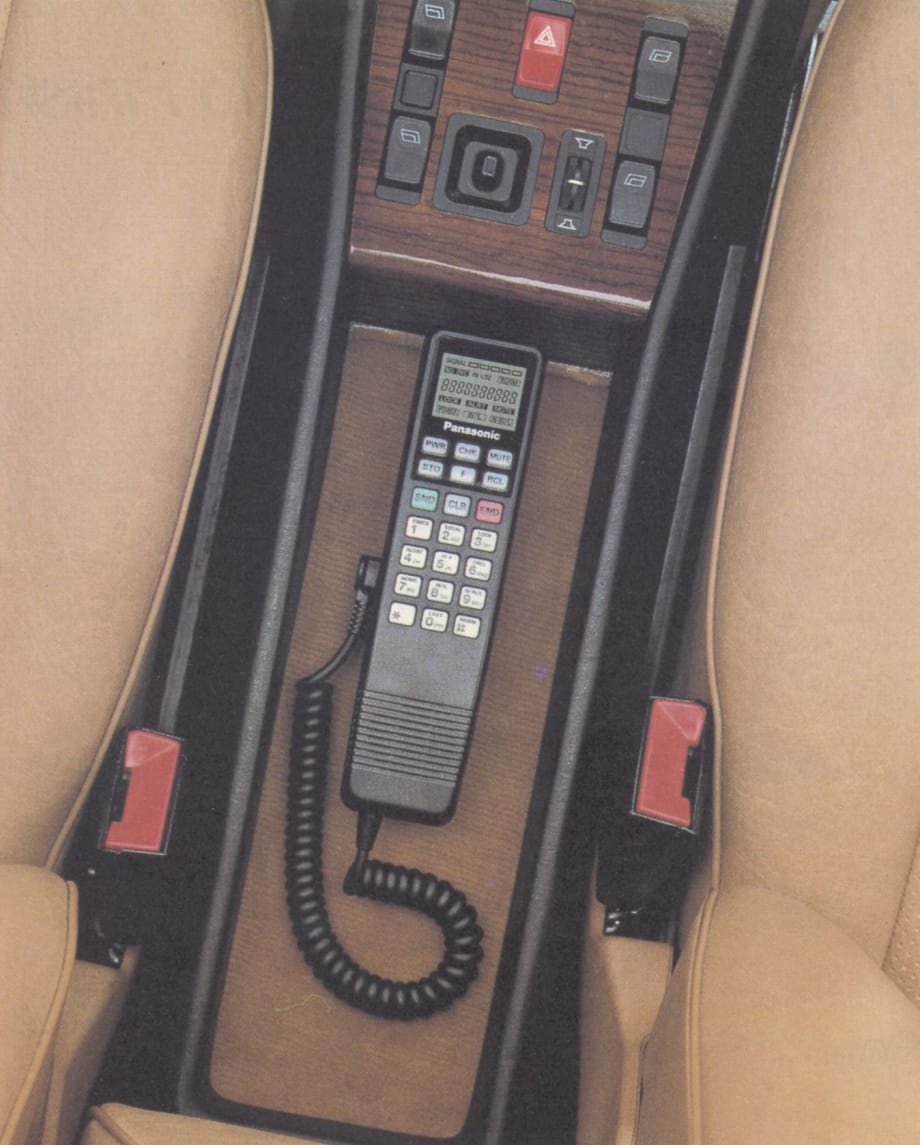
[1988] Since the average fleet drier spends approximately 660 hours per year behind the wheel of a vehicle, unproductive driving time can be better utilized with the assistance of a car phone.
Since the first commercial system became operational in Chicago in October 1983, cellular phone systems have emerged at a startling rate.
By 1985, the 100th commercial cellular phone system had begun service in the U.S., and by 1986, the 200th system started operations. Currently, 306 cellular markets in the U.S. serve approximately 1.5 million cellular phones. This compares to nearly 800,000 units believed to be operating at the end of 1987.
[1988] Since the average fleet drier spends approximately 660 hours per year behind the wheel of a vehicle, unproductive driving time can be better utilized with the assistance of a car phone.
Industry experts say increasing affordability is a main reason behind today's 60,000-unit-per-month rate of growth for cellular phones. While a cellular phone once cost as much as $3,000, prices have tumbled. A car phone can now be purchased for as little as $500.
The advent of cellular phones can also be attributed to their growing popularity in the business world; they are no longer just luxuries for the affluent. According to Cellular Marketing magazine's 1987 Cellular User Survey of 1,000 cellular phone users, sales and marketing personnel made up 27 percent of the cellular phone network, and management personnel comprised another 11 percent of the cellular phone user force (See chart at right).
Equipping a national fleet with mobile communications capabilities is not simple. Each city has its own cellular system or systems, and they are operated individually. Coordination between the cellular supplier, the network operators, and the fleet manager is essential to a smooth and efficient operation of cellular phones in a company fleet.
Cellular Technology
A metropolitan area has a certain number of "cells", each with its own radio transmitter. The transmitters relay cellular phone calls from one cell to another as callers drive between them. The main link that transmits calls between cells is a Mobile Telephone Switching Office (MTSO) - a central cellular control computer. MTSOs monitor the strength of the signal between the cellular telephone and the transmitter and then instantly decide when and if the call should be passed along to another transmitter.
WHO USES CELLULAR PHONES?
sales/marketing personnel | 27% |
real estate professionals | 21% |
professionals | 15% |
business management | 11% |
service industries | 8% |
self-employed business owners | 5% |
medical field | 5% |
other fields | 5% |
public service organizations | 2% |
insurance agents/adjusters | 1% |
The MTSOs connect a cellular network to the regular telephone system, enabling cellular phone users to call anywhere in the world. Cellular phones can be operated anywhere in the U.S. that has a cellular network. A cellular user in another area is known as a "roamer." Practically all cellular companies have agreements with one another to allow for such "roaming" and have the charges appear on the customer's regular cellular telephone bill. However, because different cities are served by different cellular phone companies, special arrangements may have to be made with the cellular carrier, or a credit card may have to be used.
Affordability
One reason the popularity of cellular phones has grown since 1983 is that prices have decreased. Every major city has at least two cellular transmission systems, not to mention numerous equipment dealers. It is because of this competition that cellular phone usage is becoming more practical and affordable. For fleet managers who may be contemplating cellular phones for sales, marketing, and management personnel, several considerations should be made. First, how many units will be needed? While the price of individual phones has dropped to well below $1,000 each, a bulk order will be more cost-efficient. In addition, cellular phone prices vary according to features. What features should a phone have? According to the survey conducted by Cellular Marketing, the features considered most important to cellular users are number memory, alphanumeric readout, and last number redial.
Along with the cost of the hardware itself, a fleet manager will have to monitor a billing statement that includes a monthly charge for service, charges for air time by the minute (about 30 cents per minute), and long-distance toll charges.
Increasing Productivity
According to the results of the Cellular Marketing survey, almost 90 percent of the respondents indicated their productivity had increased since acquiring a cellular phone, a figure slightly higher than the prior year's survey. Also, when cellular customers were asked if their productivity had improved as much as they thought it would, 74 percent responded that it had, compared to 66 percent from the previous year.
Convenience of use is also a benefit to businesspeople with cellular phones. Relatively no training is necessary to become familiar with the use of cellular phones. All that is required is a knowledge of how your individual unit operates, which is usually as simple as memorizing which buttons control redial and memory. Since the average fleet driver spends approximately 660 hours per year behind the wheel of his or her vehicle, unproductive driving time can be better utilized with the assistance of a car phone.
Safety
Considering the amount of time fleet drivers spend in their cars, safety must always be important. Will a cellular phone be a distraction to a driver? Just as a speaker-phone allows "hands-free" phone operation in one's office, a speaker-equipped car phone essentially does the same thing. Almost all cellular phones have optional speaker capabilities allowing "hands-free" operation inside the vehicle. This feature, together with stored phone numbers and memory redial, can assist a driver in the safe operation of his or her vehicle while using a cellular phone.
While the safe operation of a vehicle during the use of a cellular phone is important, another safety-related benefit of cellular phones is their usage in emergency situations. Many cellular telephone companies coordinate programs with local public safety organizations. Some of the programs include charge-free calls to 911 emergency dispatchers to report highway and other roadway accidents, traffic congestion, and providing communications between stranded motorists and emergency service agencies.
Choosing Equipment
For a fleet manager who is considering the installation of cellular phones in company vehicles, there are basically four types of cellular mobile phones to choose from. First, and most likely of the four for fleet useage, are car phones designed to be wired and installed inside a vehicle. Second, there are battery-powered briefcase phones which provide portability away from the vehicle. There also are "trans-portables" that are much lighter and more versatile than briefcase models. Lastly, there are hand-held phones which resemble walkie-talkies and come equipped with small battery packs.
The car phone would seemingly be the most practical type of cellular phone in fleets. It has virtually limitless power and a very strong signal, plus the driver can use the phone in the privacy of his or her vehicle between appointments.
The briefcase model is simply a cellular phone inside a briefcase. It features an eight-hour battery with enough power to transmit 90 minutes of calls. The drawback of the briefcase model is its weight-between 22 and 24 pounds.
The transportable unit, while not as attractive as the briefcase model - it has no carrying case, just a shoulder strap - offers more versatility and convenience. It is noticeably lighter (about 10 pounds) and has the ability to convert back and forth from car phone to field phone. This is possible because of a modular design which allows the phone to be unhooked from the car and fitted onto a portable battery component. A transportable is capable of the same high-power transmission outside the car as it does inside. Transportable phones generally come with four-hour batteries capable of transmitting 60 minutes of continuous calling.
The most portable, lightweight cellular phone is the hand-held model, weighing only two to three pounds. These units only have 30-minute batteries, however, and recharging is needed after every 30-minute calling period.
****se of cellular phones by company fleets is growing rapidly, according to Mark Bell, national sales manager for US West Cellular. In a speech at the International Mobile Communications Expo in Las Vegas last April, Bell pointed out that fleets currently represent an estimated 50,000 subscribers. Over the next five years, Bell said, this figure is expected to increase to as high as one million.
One company that has recently begun using cellular phones in its fleet vehicles is Wilmington, DE-based DuPont. Don Eastburn, DuPont's fleet manager, says that about a year and a half ago salespeople began purchasing or leasing cellular phones for use in their company cars. The company reimbursed the employees for the expenses of the phones, then undertook a detailed study to determine if a fleet-wide cellular program would be cost-beneficial. According to Eastburn, the study showed that equipping DuPont's approximately 4,000 company vehicles with cellular phones would cost around $1 million.
Based on estimates of return of $14 million, DuPont began installing cellular phones for field salespeople. As of now, about half of the fleet is cellular, and Eastburn hopes to be completely cellular by early Spring 1989. "We are finding that the phones are valuable sales tools," says Eastburn, "and they give our salesforce a more professional edge in the marketplace."
Eastburn says that productivity has increased 10 to 15 percent since the cellular program began, and driver feedback has been "100 percent positive."
More Operations

Fleet Has a Talent Pipeline Problem. What Comes Next? | AF News Recap
Where will fleet’s next generation of leaders come from? This week, we’re looking at the industry’s talent pipeline, what certification can add to a fleet career, how to build an award-worthy track record, and the return of Automotive Fleet’s Personal Use Survey.
Read More →
Smith System Launches Driver Risk Management Program
Fleets have more driver data than ever, but identifying risky behavior doesn't necessarily correct it. Smith System's new Driver Risk Management program combines monitoring, training, and follow-up coaching to help fleets connect risk signals with driver intervention.
Read More →
Automotive Fleet Opens 2026 Personal Use Survey for Commercial Fleet Managers
Less than two weeks left! Commercial and corporate fleet managers are invited to share how their organizations handle company vehicle personal-use policies, charges, and driver eligibility.
Read More →
From AI Prompts to AI-Generated Safety Songs | AF News Recap
Can better prompts make AI more useful for fleet managers? This week, we’re breaking down smarter fleet analysis, an AI-assisted experiment that turned safety training into music, and what happened to fuel prices in August.
Read More →
How to Write Better AI Prompts for Fleet Analysis
Include these six elements in your fleet prompts to generate more relevant analysis and accurate answers.
Read More →
Fleet Meets: Eric Kilgore
This edition of the Fleet Meets series features one of the industry's best leaders driving multi-market and national operations.
Read More →
Why Reactive Fleet Management Is Becoming Too Expensive to Sustain
Research highlights a growing need for proactive management strategies to address rising costs in fleet operations effectively.
Read More →
What Your Fleet KPIs Aren’t Telling You
Tracking fleet metrics is only useful when the data leads to better decisions. This guide helps fleet leaders assess cost, utilization, and downtime more accurately, identify performance gaps, and prioritize the actions that can improve operational results.
Read More →
Hidden in Plain Sight: Fleet Compliance Risks
Fleet compliance isn't just about having policies — it's about consistently enforcing them. This practical guide reveals six hidden compliance risks common in public sector and shared fleet operations and outlines proven strategies to improve visibility, accountability, and audit readiness
Read More →
Turning Fleet Payment Data into Executive Insights
Does data alone drive results in operations?
Read More →