




The Emergence of e-Plates to Track Fleet Assets
I enjoy following the fleet management industry in the UK since it is among the most sophisticated in the world. Innovative trends often first appear in the UK, which makes for interesting conjecture as to whether they may be a prelude to what might emerge in the U.S. fleet market. One recent development was a controversial decision to test radio frequency identification (RFID) chips embedded in the license plates of vehicles. The UK Ministry of Transport gave the official go-ahead in August


The U.S. is Closely Watching
State officials in the U.S. say they’ll be closely watching the UK trial. “We definitely have an interest in testing an RFID-tagged license plate,” said Jerry Dike, chairman of the American Association of Motor Vehicle Administrators and director of the Vehicle Titles and Registration Division of the Texas Department of Transportation, in an article on the Web site, www.wired.com/. “We see tremendous advantages to (e-plate) for everything from verifying registration and insurance to Amber (missing child) Alerts,” said Dike.
An e-plate is the same shape and size as a conventional license plate and is mounted to a vehicle in the same way. However, each e-plate contains an embedded tag with a unique, 128-bit encrypted identification number that is transmitted for detection by an RFID reader. This provides the ability to identify and locate in real-time any vehicle, anywhere (whether stationary or mobile), and in any weather condition. An RFID reader network, which includes fixed location readers for use on the roadside and portable readers (for use in surveillance vehicles and handheld devices), transmits in real-time the unique identifier to a central system where it is matched with the corresponding vehicle data, such as vehicle registration number, owner details, make, model, color, and tax/insurance renewal dates. Each vehicle’s e-plate ID code is registered in the UK Ministry of Transport’s vehicle database.
State Governments Interested in RFID Tracking
In Texas, a state bill has been introduced to replace vehicle
inspection stickers with RFID tags for use by law enforcement to enforce compliance with the state's mandatory insurance laws.
The Oregon Department of Transportation is evaluating a proposal to use RFID to calculate road use taxes based on actual usage. The state is investigating two approaches. The first uses a GPS device in the vehicle to calculate how many miles are traveled. The second approach uses an electronic system to log the distance traveled. In both cases, a black box records and stores the mileage data. When a driver refuels, a built-in RFID chip transmits the data to a reader near the fuel pump, and the mileage charge is added to the fuel bill.
U.S. Fleets Use RFID for Asset Management
Many U.S. fleets have been actively experimenting with RFID as a fleet management tool. For instance, Wal-Mart is using RFID to track trucks, forklifts, and other mobile devices in Dallas. It says it plans to expand its RFID asset-tracking program.
Likewise, United Parcel Service is testing a mix of active and passive RFID to monitor vehicle movement and location. In its most recent vehicle-tracking pilot, UPS installed RFID equipment at gates and entry points at facilities in New York City and Atlanta. RFID tags were placed on vehicles to monitor their activity at controlled access points as they entered or exited a facility.
Walgreens Co. recently announced it would deploy I.D. Systems' Wireless Asset Net industrial fleet management system on a fleet of material handling vehicles at a distribution center in Illinois. This is Walgreens’ third major distribution center equipped with the Wireless Asset Net. In another fleet application, AXCESS International installed its ActiveTag system at JFK International Airport for use by food service companies to control vehicle access. The system provides automatic identification and validation of authorized trucks to improve security and safety, and reduces the time it takes to enter the facility. Automatic e-mail alerting and paging is activated should a security breach occur.
Are e-Plates Feasible in the U.S.?
RFID-embedded license plates cost 10 time more than ordinary plates. As a result, strong support from governors and state legislatures is needed before e-plates are tested in individual states. However, the increased cost of e-plates may be offset if it can be shown that they can help generate supplemental tax revenues. From a fleet perspective, an e-plate can be an effective tool for access control, asset tracking, mileage tracking, and fleet policy compliance. However, there are legitimate concerns regarding privacy infringement and the legality of tracking individuals by movement of their vehicles.
Let me know what you think.
mike.antich @bobit.com
More Telematics

Element Expands Waymo Partnership to Support Toronto Robotaxi Fleet
As Waymo prepares to enter the Canadian market, Element Fleet Management will oversee the fleet operations supporting its planned Toronto launch. The partnership highlights the maintenance, charging, and infrastructure requirements behind operating autonomous vehicles at scale.
Read More →
GM Launches OnStar Fleet Intelligence Platform With AI Assistant
The new platform brings vehicle data, order tracking, connected services and fleet analytics into one system, with an AI assistant that can answer fleet questions using natural-language prompts.
Read More →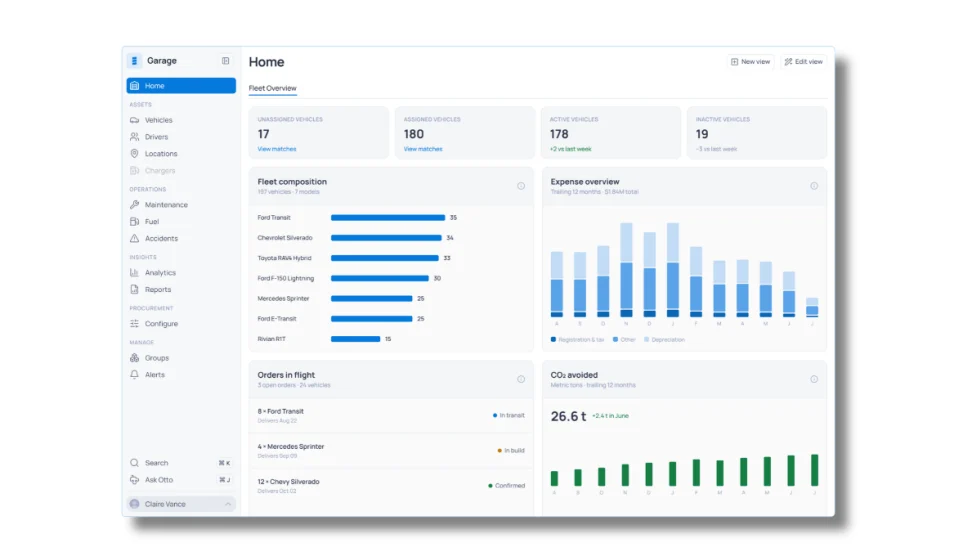
Inspiration Fleet Introduces Garage 2.0 Fleet Intelligence Platform
Fleet managers increasingly have access to data from vehicles, telematics, fuel, charging, and other systems, but those sources don't always communicate with one another. Inspiration Fleet's Garage 2.0 platform brings that information together while letting fleets keep working with different technology and service providers.
Read More →
Inside Inspiration Fleet’s New Platform for Connecting Fleet Data
Inspiration Fleet CTO Chris Getner explains how the new Garage 2.0 platform is designed to connect disparate fleet data and what that could mean for fleet managers in practice.
Read More →
Fleet Manager’s Ultimate Playbook: Navigating the New Standard in OEM Connectivity
Rising operating costs, driver safety concerns, and unplanned downtime are putting unprecedented pressure on modern fleets. Discover how fleet managers use embedded OEM connectivity and real-time vehicle data to cut TCO, prevent downtime, and protect drivers without aftermarket telematics hardware.
Read More →
Samsara Driver Perks Adds New Benefit for Corporate Fleet Drivers
The rewards program gives eligible professional drivers access to discounts from more than 50 brands while giving fleets another way to support recruitment, retention, and the driver experience.
Read More →
Inside the Church of Jesus Christ of Latter-day Saints’ Two-Track Telematics Strategy
With 20,000 vehicles and two fundamentally different driver populations, the Church faced a fleet management problem that a single telematics program couldn't solve. How it responded offers a replicable framework for any fleet where one size doesn't fit every driver.
Read More →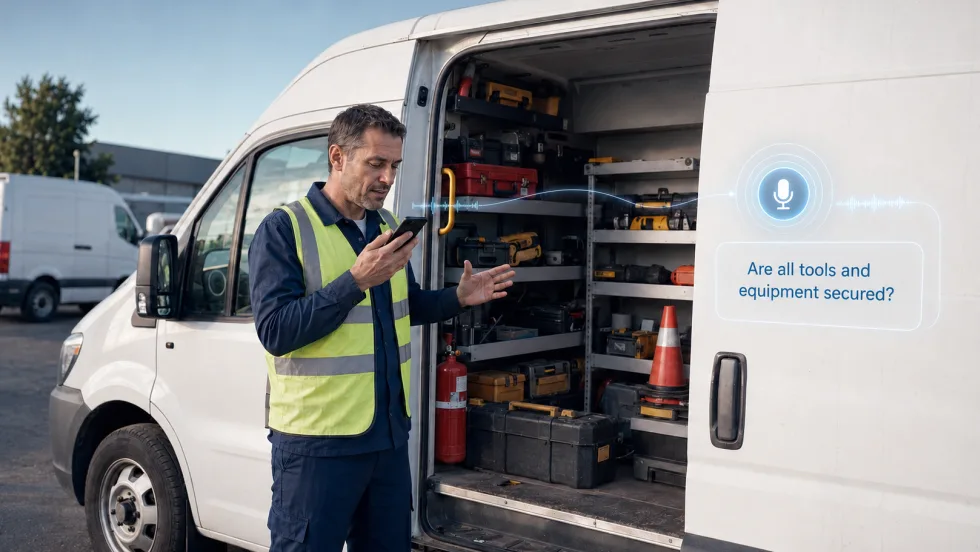
How Conversational AI Can Make Fleet Tasks Easier for Drivers
While most generative AI tools help fleet managers interpret data at their desks, Connex2X is applying voice interaction to tasks behind the wheel.
Read More →
Why Fleets Are Creating Dedicated Fleet Analyst Positions
Are fleet analyst positions the new norm? Listen here to find out.
Read More →
Teletrac Navman Begins Next Chapter as Standalone Private Company
What's new with Teletrac Navman and its new owner?
Read More →