




The City of Fayetteville Converts to Biodiesel
After several years in the making, the City of Fayetteville, Ark.’s attempts to convert its diesel-powered vehicles to biodiesel have become a reality. Last June, out of 545 fleet vehicles, 52 percent were converted to biodiesel.

City of Fayetteville’s Mayor, Dan Coody had a vision to convert the city’s diesel powered vehicles to biodiesel. Fortunately, David Bragg, fleet operations superintendent, was familiar with alternative fuel and was able to orchestrate a highly successful implementation process. Several years ago, while serving as fleet director for the City of Little Rock, Ark., Bragg was involved with the Clean Cities organization, a U.S. Department of Energy (DOE) agency that promotes alternative fuels. While there, he visited a commercial biodiesel plant in Kentucky that used by-product animal fat. Bragg considered using biodiesel; however, at the time, it was more expensive than petroleum diesel and transportation was not economically feasible.
Biodiesel Fuels Teamwork
In fall 2005, several articles appeared in Fayetteville-area newspapers describing conversion of cooking oil waste to biodiesel for alternative use in diesel-powered vehicles. Restaurants and commercial food processors in the area produce substantial quantities of waste cooking oil.
With the help of Brian Pugh, the City of Fayetteville’s recycling coordinator, Bragg thought of ways to gather data and formulate answers to the following questions.
• As an environmentally sensitive city, can we be assured that home-brewed fuel would actually reduce emissions?
• Though we are fuel-exempt, with what other motor fuel regulations would we have to comply?
• Are substantial quantities of waste oil actually available?
"I am a strong believer in protecting the environment. Everything we can do to reduce the dependence of foreign oil and also stimulate the economy here in Arkansas with our farmers makes sense to me," said Pugh.
Bragg and Pugh found that plenty of waste oil was generated; however, it was a marketable commodity, and the quantity producers had collection contracts in place, with oil going into animal feed.
"We talked with a local company that puts conversion kits on diesel engines for the everyday driver, enabling them to pull up to a cooking oil container at a restaurant and fill up, which was a great resource to learn from, but again, there was no scientific verification of emission results," added Pugh.
According to Pugh, they worked with companies in Arkansas that have entered the biodiesel business using mostly soybeans.
The American Society for Testing and Materials (ASTM) provides a standard specification for biodiesel. Without proper lab testing, there is no assurance emission benefits of biodiesel will be realized. Purchasing fuel from a certified commercial producer provides that assurance, as well as assurance that other fuel regulations are followed. Two commercial biodiesel facilities in Arkansas produce ASTM-certified fuel primarily from soybean oil.
The results were presented to the mayor, and the City received support to proceed with a project to implement ASTM-certified commercially produced biodiesel in the City’s fleet. According to Bragg, Coody wanted the City of Fayetteville to be proactive with implementing alternative fuel, particularly biodiesel.
"I have strongly supported this project from the beginning," said Coody.
Assistant Fire Chief Bud Thompson was involved in arranging the switch for Fayetteville Fire Department to begin using B-20. Thompson did some research to determine if B-20 would be a suitable fuel for an emergency response fleet.
He had a few issues to consider and watch for:
• Reduced mileage (increased fuel costs).
• Reduced power output.
• Clogging of fuel filters due to increased solvency of B-20.
• Increased chance for fuel gelling during cold weather.
"After about two months of use, we had no problems related to the use of B-20," said Thompson.
He relied on Bragg’s recommendation to use the fuel and trusted Bragg’s knowledge and experience in fleet maintenance.
Thompson has seven frontline fire engines, two reserve fire engines, three front-line ladder trucks, and one reserve ladder truck. All but one ladder truck and one fire engine consume B-20. The reason, according to Thompson, is due to travel distance to obtain fuel and the need to keep these trucks in or near their response area.
Fuel Tanks Become Available
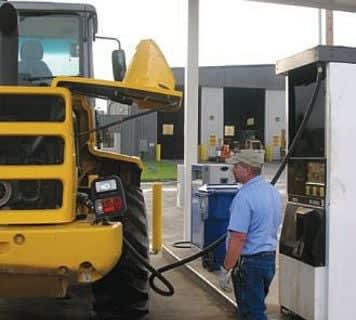
Fuel pumps in Fayetteville were previously located at the fuel supplier’s site and connected directly to bulk storage tanks. Bragg says the fleet was billed daily for fuel pumped, and the site was approximately three miles from the fleet maintenance facility. "The distance was causing substantial loss in mileage and crew time," said Bragg.
They were looking to discontinue use at the facility and build a new facility at the City’s on-site fleet location.
In June 2007, after several months of the engineering and bidding process, the City of Fayetteville opened its new fuel facility and began pumping a B-20 blend into all of diesel-powered equipment, slightly over half of the fleet, and two thirds of total fuel use.
According to Bragg, the City has replaced 70,000 gallons of petroleum fuel with B-20 annually and is currently saving 2.4 cents per gallon with B-20 versus petroleum diesel. If the price differential holds, the City plans to increase to a B-50 blend in the summer months.
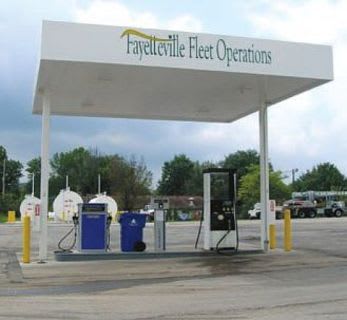
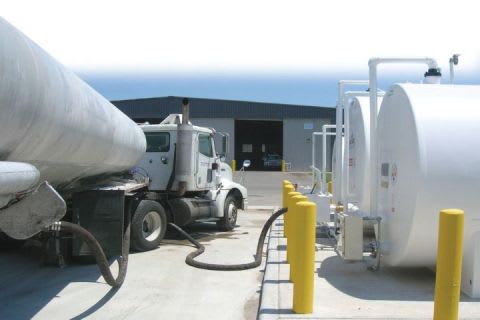
Due to shipping distance from biodiesel producers, a separate pure biodiesel storage tank was installed and full tanker loads are purchased from the producers. The fuel is blended with premium diesel inside a dispenser at a ratio programmed by management. To the City’s knowledge, it operates the first biodiesel dispenser capable of blend-at-the-dispenser in the U.S.
More Green Fleet

EV Charging Use Is Outpacing Infrastructure Growth
ChargePoint’s 2026 Charging Forward Report points to rising charger use, higher-powered charging, commercial vehicle electrification, and energy-management technology. Here’s what fleets should know.
Read More →
Merchants Fleet Reports 290M EV Miles as Fleets Navigate Changing Electrification Market
From millions in operating savings to hundreds of millions of EV miles, Merchants Fleet’s latest report reveals what’s working and what’s changing in fleet electrification.
Read More →
The EV Breakdown Nobody's Talking About: Why Most Electric Vehicle Roadside Calls Aren't Mechanical Failures
Here's why EV breakdowns are widely misunderstood.
Read More →
ChargePoint Now Available in Energy Pass
ChargePoint and additional planned charging network integrations were added to GM's Energy Pass.
Read More →

First Look: Slate Auto's Electric Fleet Pickup
Could an affordable, modular EV pickup make electrification more practical for fleets?
Read More →
Slate Debuts Colorful, Unique EV Models
A recent media and client event, studded with electric vehicles dressed up on platforms, planted a new position for the manufacturer in the wider EV market. Fleets will find cost-saving advantages.
Read More →
Slate Electric SUV, Pickup Switchable Model Aims For Light-Duty Fleets
Everything about this EV is counterintuitive and understated, making it stand out from the crowd.
Read More →
Inspiration Mobility Acquires Key Electrada Assets
Inspiration Mobility Group has acquired select assets of Electrada, adding the fleet electrification provider's team, technology, and charging infrastructure development capabilities to its energy management business.
Read More →
Turning Connected Vehicle Data Into Decisions That Matter
Fleet leaders have more data than ever, but turning that data into clear, actionable decisions remains a challenge. This white paper shows how leading organizations are using connected vehicle data to improve safety, reduce costs, and optimize fleet performance. Learn how to turn insight into action across your fleet.
Read More →