




The Auto Industry's Continued Challenge: GM Chairman calls for better quality, service.
The chairman of General Motors challenged the nation's automobile manufacturers and dealers to do a better job in producing and servicing the cars and trucks purchased by customers.
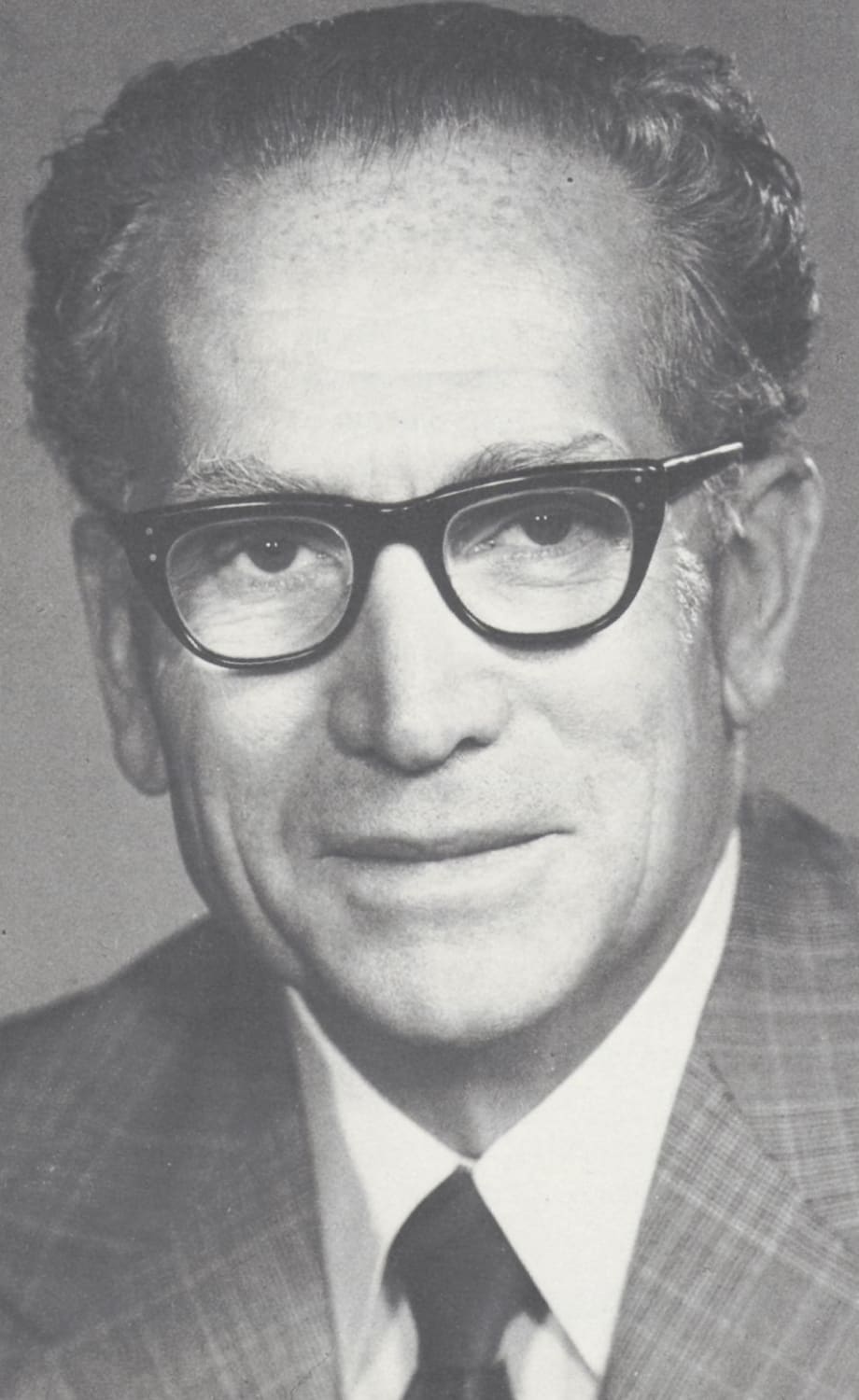
General Motors Chairman Thomas A Murphy
"We - all of us in this industry - have to do better," Thomas A. Murphy declared. "Our concern for the customer's satisfaction must extend all along the line, from the designer's drawing board to the mechanic's workbench.
General Motors Chairman Thomas A Murphy
"Every dissatisfied car-owner tends to multiply his own bad experiences into the entire car population. If his car has a defect, or he doesn't receive prompt and courteous service, he doesn't see himself as an exception. Instead, he is inclined to say 'they just don't build them like they used to.' All of them, mind you. Or, 'there are no craftsmen left.' Nowhere, that is. And so it goes. These natural habits of mind help explain why social commentators find a receptive audience when they deplore what they perceive to be the negative impacts of the automobile upon our society, and they reinforce the importance of our satisfying every customer every time.
"I can only speak for one manufacturer, but I can pledge for General Motors our fullest efforts.
"But really the question must also be decided in the auto showrooms and service bays. The critical interface is between the dealer and the customer. That is where customer service is rendered; that is where customer satisfaction, like the deal, is clinched."
The GM Chairman spoke at the annual luncheon of the Automotive Organization Team, Inc., at the Fairmont Hotel, during which he was one of seven persons to receive the organization's 1977 Distinguished Service Citation. The luncheon was one of many activities in connection with this year's annual convention of the National Automobile Dealers Association.
Murphy asked why the automobile is "maligned so much by so many and so publicly."
"Even though it's safe, it's clean, it's efficient, it's relatively inexpensive and it's handy, he continued, "the automobile today is the product most complained about. The complainers are not only the critical commentators, but - and this is what must concern us - the automobile owners themselves.
"Only one out of 10 persons surveyed perceives the automobile and how it is serviced as 'better than it used to be.' And the people who make and sell automobiles - all of us - are among the most distrusted groups in the country.
"Why is this? Well, I begin by ruling out a devil theory which ties together commentators, academics, bureaucrats, consumerists, politicians and others in some sort of a wrong-headed conspiracy against the automobile. I'm sure they are well-meaning, and we have to heed what they are saying, but I care far less about what they think than I do about what our customers are thinking."
Murphy said GM surveys of satisfaction, or dissatisfaction, among its customers "indicate that about one out of every four car-owners is dissatisfied to some degree."
"Who is to blame?" he asked. "Sometimes it is the manufacturer and the way the car is designed, engineered or built. Sometimes the fault is with the dealer and how the car is sold, prepared or serviced. Sometimes the customer's expectations are overly high, although for the cause of this we ought to look to the promises of our advertising. Forget where the blame may lie. The fact is that when the customer is dissatisfied he blames us all - individually and collectively - and we all suffer in the process.
[PAGEBREAK]
"We speak of one out of four as dissatisfied - 25-percent. Is it wrong to accentuate the negative, to ignore the majority of customers, the three out of four, the 75-percent, who are satisfied? Well, I maintain that 75-percent is not a passing grade in our competitive business.
"It is easy to oversimplify matters like this. Yet, comparing the facts as you and I know them against the public's love/hate attitude toward the automobile, one conclusion seems inescapable. We in the industry have a job to do in demonstrating the meaning of the automobile to our society and - central to that and more immediately - we must provide the individual car-buyer with a greater degree of satisfaction with the product and its service."
Murphy said it may be that the auto industry was late in "recognizing the extent of the public's individual and collective dissatisfaction with our combined performance."
"We were so engrossed - as we need to be - in the daily competition for business that we may have let ourselves grow out of touch with the customer's need for continued satisfaction in a time of heightened expectations and the society's concern for environmental improvement and energy conservation," he said.
"We all know better today. And we are also learning the hard way that the public's opinion of the automobile counts for more than sales gained or lost. We know that every poorly built car, every neglected repair job, every reason for complaint and every impolite response is an invitation to more regulation. Adverse public opinion is the antecedent of government regulation. And the public's opinion of the automobile, good or bad, is rooted largely in our customer's own experiences with our products and our services.
"To the extent that we are to blame, only we can provide the remedy - and we must.
"The time is too late for words alone. We need to act. All of us - manufacturer, dealer and supplier alike - all of us must recognize that all the fault does not lie elsewhere: much of it lies within our own industry."
More Operations

Avis Budget Group Deploys Neology Toll Management Technology Across Major Brands
Neology’s neoFleet platform will manage toll transactions and toll-authority operations for vehicles across Avis, Budget, Payless, Budget Truck and Zipcar.
Read More →
Fleet Personal-Use Charges Edge Higher in 2026
Nearly eight in 10 surveyed fleets allow personal use of company vehicles, while just over half of respondents report charging employees for the privilege.
Read More →
The Future of Fleet + What’s Changing Right Now | AF News Recap
Could developments overseas offer a preview of what’s coming for U.S. fleets? This week, we’re looking at the future of AI, autonomy, and electrification, plus Ford Pro’s new certified pre-owned program, smarter vehicle offboarding, and a new way for fleets to manage toll expenses.
Read More →
How to Handle Vehicle Offboarding
What do fleet managers need to do when a driver leaves?
Read More →
Fleet Manager’s Ultimate Playbook: Navigating the New Standard in OEM Connectivity
Rising operating costs, driver safety concerns, and unplanned downtime are putting unprecedented pressure on modern fleets. Discover how fleet managers use embedded OEM connectivity and real-time vehicle data to cut TCO, prevent downtime, and protect drivers without aftermarket telematics hardware.
Read More →
U.S. Bank Adds Verra Mobility Toll Management to Voyager Fleet Platform
The integration allows U.S. Bank Voyager fleet customers to manage toll payments and violations alongside fuel, EV charging and maintenance expenses.
Read More →
ADAS Prevents Crashes. But Repairs Cost More | AF News Recap
ADAS-equipped vehicles may crash less often, but they can cost more when they do. This week, we’re breaking down what that tradeoff means for fleets, plus Subaru’s first Forester Wilderness Hybrid, Nissan’s new e-POWER Rogue, and why Calstart has become Catalyst Mobility.
Read More →
Moventum Fleet Management Names Mark Iorillo Head of Sales
Iorillo brings nearly 20 years of fleet management and sales experience to the role, including previous positions at Element Fleet Management, CEI, Donlen and Ryder.
Read More →
Fleet Has a Talent Pipeline Problem. What Comes Next? | AF News Recap
Where will fleet’s next generation of leaders come from? This week, we’re looking at the industry’s talent pipeline, what certification can add to a fleet career, how to build an award-worthy track record, and the return of Automotive Fleet’s Personal Use Survey.
Read More →
Smith System Launches Driver Risk Management Program
Fleets have more driver data than ever, but identifying risky behavior doesn't necessarily correct it. Smith System's new Driver Risk Management program combines monitoring, training, and follow-up coaching to help fleets connect risk signals with driver intervention.
Read More →