




The ABCs of CAPs in the Mid-Size Market.
Whatever the perception, the 2001 calendar year registration figures confirm that U.S. fleet purchases are totally dominated by the domestic makers.

Action springs not from thought, but from a readiness for responsibility.-Dietrich Bonhoeffer
Thunder is good, thunder is impressive: but it is the lightning that does the work.-Mark Twain
Things don't turn up in this world until somebody turns them up.--James A Garfield.
The mid-sized or intermediate car segment remains the largest seller as it has for years. More than two-and-a-half million new registrations each year, which beats the second largest by about a half million units.
In the May issue of Motor Trend, author Larry Edsall reported key comments and quotes from domestic and import marketers as well as from analysts. Many feel this segment has been ignored or the factories have turned their backs on the traditional family sedan.
"That's a fair criticism of the domestic industry," says Kurt Ritter, marketing general manager at Chevrolet.
George Peterson, president of Auto Pacific, put in another way: "The way we see it is basically that Detroit just abdicated its position. They walked away from the segment by not being as aggressive as the Japanese."
Whatever the perception, the 2001 calendar year registration figures confirm that U.S. fleet purchases are totally dominated by the domestic makers.
To illustrate, and including every make in the mid-size group, 26.6 percent went into fleet. Maybe a bit misleading.
If we take some of the really non-fleet badges with less than 2.5 percent fleet sales (i.e., a couple of Acura models, Honda's Accord, the Infiniti G20, Toyota's Avalon and VW's Passat), the percent of fleet to total overall registrations jumps dramatically to 35 percent.
To give it another slant, Alan Greenspan, our nation's No. 1 economic guru, recently gave credit to the automotive industry for a resurgence in our U.S. economy. One might say that "fleet" buying in the mid-size segment was a significant part of this reasoning. Combining the numbers for 2001 for GM, Ford, DCX and Mercury totaled 549,381 units registered or whopping 44 percent of this sector of the new car market.
Yet another thought wave for our fleet manager readers comes from a news release form Automotive Lease Guide (ALG) who has now come out with a "fleet residual table" for predicting future used-car values. It's a shocker!
If you study the chart they provided as an example for one of the more popular mid-size base sedan models, reading from the top you see that they project a value of less than half of MSRP after four months and a little over a quarter after two years running at 21,000 miles/yr.
It's not all scary. No one in our business pays MSRP so once you work off invoice and include the incentives, it's totally different picture. If you have volume enough to qualify for a CAP (Competitive Assistance Program), you can then understand why you need it because of the depreciation.
Whether you use Black Book, IntelliChoice or some other residual service, it's much the same. That's precisely why you need to be very familiar with incentives, residuals, the condition of the turned in vehicle, and audit your outsourcer who is remarketing the units.
There it is in stark, black and white. To be a valuable corporate buyer you need to negotiate with knowledge on all the influences that directly affect the earned residuals.
More Operations
How to Manage Conflict for Your Fleet Operations
Conflict management is becoming a core leadership skill. Here are five strategies fleet leaders should know.
Read More →
Turning Connected Vehicle Data Into Decisions That Matter
Fleet leaders have more data than ever, but turning that data into clear, actionable decisions remains a challenge. This white paper shows how leading organizations are using connected vehicle data to improve safety, reduce costs, and optimize fleet performance. Learn how to turn insight into action across your fleet.
Read More →
Cameras, Safety and Insurance: From Reactive Claims to Real-time Prevention
Commercial auto remains one of the most challenging and costly lines of coverage for fleet operators and insurers alike. Learn more about how to effectively address these issues from Onur Aksan, Enterprise Business Development Executive, Geotab.
Read More →

Are You Tracking Your Fleet's True Total Cost of Ownership?
Bobit Business Media surveyed 190 fleet professionals and found that while most fleets are tracking costs, fragmented systems and data gaps are keeping true TCO visibility out of reach. With rising pressure to control spend in an increasingly volatile environment, the gap between what fleets think they know and what the data actually shows is wider than you might expect. See how your peers are managing costs today and where the industry still has room to improve.
Read More →
Turn Fleet Data Into Smarter Decisions
Fleet leaders have access to more operational data than ever, but disconnected systems and unclear metrics often slow decision-making instead of improving it. This article outlines five practical steps fleets can take to transform fragmented data into actionable insights that improve planning, safety, utilization, and long-term performance.
Read More →
Hybrids: Electrification Without the Challenges
For fleet managers, fuel is one of the biggest line items in the budget — and it's one hybrids can shrink without changing how your people work. Download the eBook to see the numbers, understand the technology, and get a step-by-step guide to making the switch.
Read More →
How NOV Uses Telematics to Improve Fleet Safety Across 160 Locations
James Victory of NOV discusses how the company manages fleet safety, maintenance, and telematics across more than 150 locations supporting oilfield operations throughout the U.S.
Read More →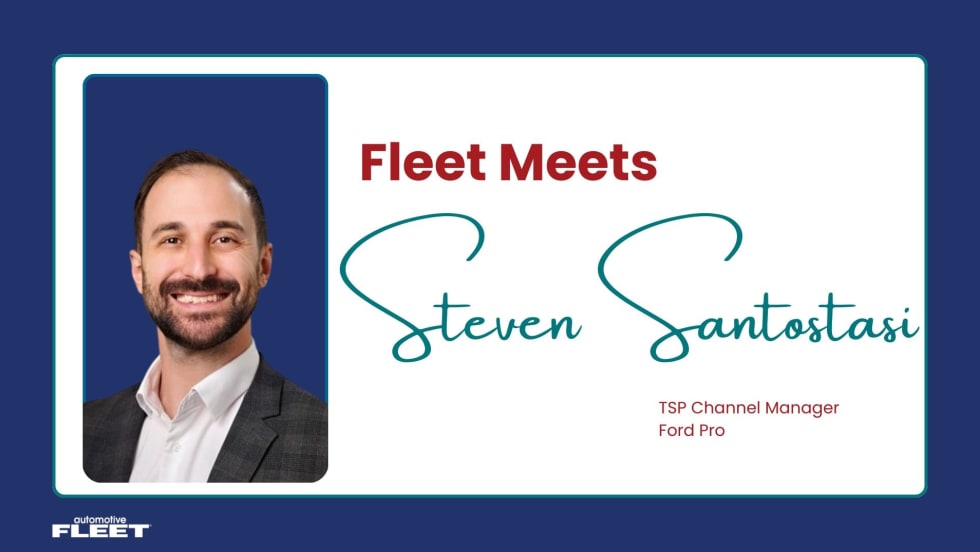
Fleet Meets: Steven Santostasi
This edition of the Fleet Meets series features Steven Santostasi, the current TSP channel manager for Ford Pro.
Read More →
Why Fleet Managers Are Replacing Departmental Vehicles with Shared Motor Pools
Departmentally assigned vehicles often create hidden costs through underutilization, poor visibility, and increased administrative burden. This white paper explores how shared motor pool strategies help fleets reduce costs, improve accountability, and optimize vehicle utilization.
Read More →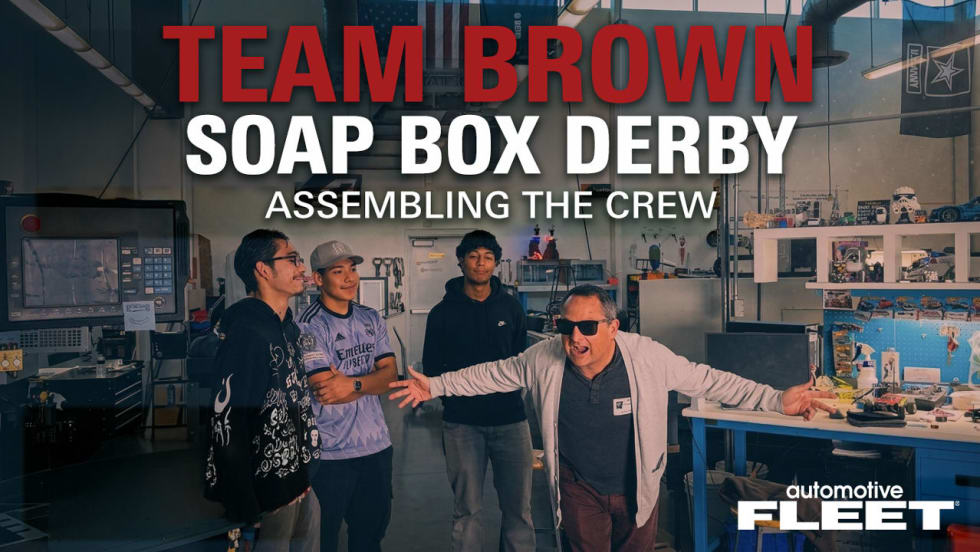
Soap Box Derby Challenge: Assembling the Crew
Meet Gabriel, Matthew, and Angel — the team helping bring this soap box derby build to life.
Read More →