




The 2007 Ford F-150 Repeats as AF Fleet Truck of the Year
For the second straight year, commercial fleet managers select the Ford F-150 AF’s Fleet Truck of the Year. Always a popular choice for getting the job done, the truck is noted for performance, functionality, durability, and safety.
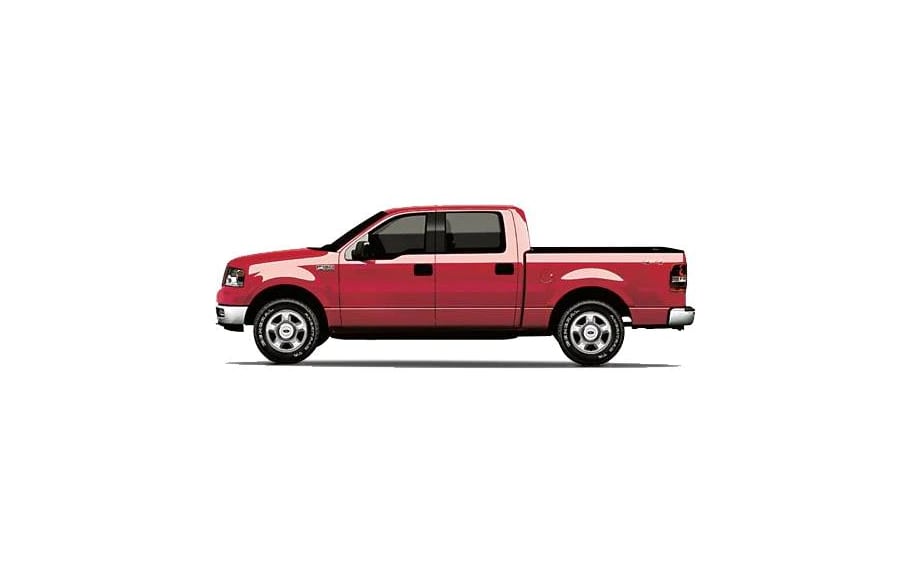
Photo: Kelley Blue Book
Renown for its ruggedness, durability, gritty performance, and dependability, the 2007 Ford F-150 upheld its reputation among fleet industry professionals as it brought home Fleet Truck of the Year honors for the second straight year. Sponsored by Automotive Fleet and Business Fleet magazines, this year’s annual Fleet Truck of the Year competition featured 38 domestic and import-badged 2007-MY light trucks. Qualified fleet buyers voted online via the magazines’ websites.
“The F-150 is the best-selling under-8,500-lb. GVW pickup in both the commercial and government sectors,” said John Ruppert, general manager, commercial and government operations, Ford. “Since it was introduced as all-new in 2004, we’ve been able to improve on an already industry-best product.”
The F-150’s Pillars of Innovation
The best-selling pickup for 29 years, the F-150 has won numerous accolades, including North American, Texas, and Motor Trend Truck of the Year, and was recognized by J.D. Power & Associates as the highest-ranked light-duty full-sized pickup in initial quality.
“The question isn’t how the F-150 can continue to lead the industry among our competitors; it’s how they can compete with the F-150 and its added value, content, and capabilities,” said Ruppert. “Quality, durability, and reliability are, and will continue to be, the F-150’s pillars of innovation.”
Packing a Punch
Available in five series — XL, XLT, STX, FX4, and Lariat — the F-150 offers a variety of body configurations, including three cab choices (Regular, SuperCab, and SuperCrew), three box lengths (5.5, 6.5, and 8 feet), and two box styles. The 6.5-foot bed was added to the SuperCrew during the 2006-MY. All versions are standard-equipped with tailgate assist.
The SuperCab and SuperCrew feature two rows of seating and four doors for easy access, while the 4x2 XLT version of both cabs offers the new FX2 Sport Package as an option.
The 2007 F-150 is powered by either a 4.2L V-6 202-horsepower or 4.6L Triton V-8 248-horsepower engine in both 4x2 and 4x4 capacities. The F-150 also offers a 5.4L three-valve Triton V-8 300-horsepower engine with variable cam timing and electronic throttle control, also available as an E-85 option. The V-6 has either a five-speed manual or four-speed automatic, while the V-8 is equipped with a four-speed automatic overdrive transmission.
Promoting Passenger Safety
Hydroformed front frame rails designed to collapse on impact helped the F-150 earn the National Highway Traffic Safety Administration’s (NHTSA) Five-Star rating for driver and right-front passenger frontal crash rating.
“The reasons we selected the F-150 as our primary pickup 20 years ago are the same today,” said Robin Robinson, key supplier manager for Federal Way, Wash.-based Weyerhauser Co. — a forest products company with 2,500 total vehicles, of which 1,000 are F-150s.
“In addition to providing the best overall lowest total cost of ownership — including acquisition, resale, maintenance, and fuel — the F-150 has an excellent safety rating, which is an employee concern,” said Robinson.
Torque-based electronic throttle control uses driver input from the accelerator pedal to actively modulate torque at the drive wheels. The technology produces seamless engine response, improved fuel economy, and enhanced vehicle systems integration.
Four-wheel vented-disc anti-lock brakes and a tire-pressure monitoring system are offered as standard, while Traction Assist can be ordered on 4x2 V-8 models. A new DVD-based navigation radio with in-dash screen is also available.
F-150 Gets the Job Done
Known for its durability and ability to handle diverse road conditions, the F-150 has always been a popular fleet truck, providing best-in-class towing at up to 10,500 lbs., with a maximum payload capacity of 3,050 lbs.
“Our pickups are used primarily off-highway over rough terrain, sometimes on very crude logging roads, carrying equipment and crews into the woods,” said Robinson. “The F-150 continues to perform well under all conditions and we can run in excess of 125,000 miles before replacement, which is at about every five years.”
During a time when gasoline prices are constantly fluctuating, the F-150 maintains a competitive fuel economy, achieving up to 15/20-mpg city/highway, depending on engine and drivetrain.
“Our employee satisfaction survey results show the F-150 continues to be the favorite among our crews, citing among other features, structural integrity, comfort, and its large size,” said Robinson.
Originally posted on Work Truck Online
More Operations

Fleet Has a Talent Pipeline Problem. What Comes Next? | AF News Recap
Where will fleet’s next generation of leaders come from? This week, we’re looking at the industry’s talent pipeline, what certification can add to a fleet career, how to build an award-worthy track record, and the return of Automotive Fleet’s Personal Use Survey.
Read More →
Smith System Launches Driver Risk Management Program
Fleets have more driver data than ever, but identifying risky behavior doesn't necessarily correct it. Smith System's new Driver Risk Management program combines monitoring, training, and follow-up coaching to help fleets connect risk signals with driver intervention.
Read More →
Automotive Fleet Opens 2026 Personal Use Survey for Commercial Fleet Managers
Less than two weeks left! Commercial and corporate fleet managers are invited to share how their organizations handle company vehicle personal-use policies, charges, and driver eligibility.
Read More →
From AI Prompts to AI-Generated Safety Songs | AF News Recap
Can better prompts make AI more useful for fleet managers? This week, we’re breaking down smarter fleet analysis, an AI-assisted experiment that turned safety training into music, and what happened to fuel prices in August.
Read More →
How to Write Better AI Prompts for Fleet Analysis
Include these six elements in your fleet prompts to generate more relevant analysis and accurate answers.
Read More →
Fleet Meets: Eric Kilgore
This edition of the Fleet Meets series features one of the industry's best leaders driving multi-market and national operations.
Read More →
Why Reactive Fleet Management Is Becoming Too Expensive to Sustain
Research highlights a growing need for proactive management strategies to address rising costs in fleet operations effectively.
Read More →
What Your Fleet KPIs Aren’t Telling You
Tracking fleet metrics is only useful when the data leads to better decisions. This guide helps fleet leaders assess cost, utilization, and downtime more accurately, identify performance gaps, and prioritize the actions that can improve operational results.
Read More →
Hidden in Plain Sight: Fleet Compliance Risks
Fleet compliance isn't just about having policies — it's about consistently enforcing them. This practical guide reveals six hidden compliance risks common in public sector and shared fleet operations and outlines proven strategies to improve visibility, accountability, and audit readiness
Read More →
Turning Fleet Payment Data into Executive Insights
Does data alone drive results in operations?
Read More →