


At a Glance
Fleet managers can avoid driver privacy issues by doing the following:
Be upfront and develop clear driver safety policies.
Remind drivers what telematics is being used to monitor.
Explain what telematics do and the added benefits.
 MENU
 SEARCH
Implementing telematics into a fleet can be daunting, especially if fleet drivers don’t understand the technology’s value. It's important to address any fleet driver concerns as soon as they arise.


Photo courtesy of iStockphoto.com.
Implementing telematics into a fleet can be daunting, especially if fleet drivers don’t understand the technology’s value to the company, and the fleet.
Traditionally, telematics have been used to keep track of the vehicles themselves. But, today it is used to also monitor driver behavior, which can lead to qualms about the technology for drivers.
The development of concise safety policies and delineating the purpose telematics will provide is the first step of implementing telematics technology into the fleet.
According to Matt Nielsen, director of Information Technology for the Whitton Companies, the company makes sure its fleet drivers know that telematics are implemented to protect the fleet.
“Fleet vehicles are company property and a big reason for a telematics program is to protect the company asset,” Nielsen said. “We address telematics usage up front with our fleet drivers.”
Whitton Companies operates a fleet of approximately 250 vehicles and an estimated 25 percent of them use telematics. For success, fleets need to ensure that conversations regarding privacy are had with fleet drivers.
“The No. 1 mistake fleet managers make is not discussing privacy concerns with employees,” said Ryan Driscoll, marketing director, GPS Insight. “Having the conversation as to why the company has chosen to use GPS tracking, how it is intended to be used, and why it will not be an intrusion of privacy, is critical in making sure fleet drivers are on board.”
And, from a fleet’s standpoint it is important to carry out these policies.
“When we implemented WEX telematics, we created policies and procedures outlining everything that would be tracked and what the information received from the system would be used for,” said Denise Canady, chief compliance officer Marrakech Inc.
Fleet policies need to be clear about what role telematics will play.
“When implementing fleet telematics systems, the key to developing driver policies is transparency,” said Joe Castelli, vice president of fleet and commercial operations for LoJack. “The policy must also be clear on what the telematics system is monitoring.”
Adding to Castelli’s point is Bernie Kavanagh, vice president, corporate payment solutions at WEX Inc.
“A well-designed policy will also extend beyond the vehicle and speak to the safety of the employee and the general public, but is careful not to infringe on the employees non-business activities,” Kavanagh said. “For that reason, when drafting a driver policy, definitions and parameters need to be provided for things like time of day and acceptable travel, geography, speeding and safety (may include cell-phone use), idling, vehicle maintenance, substance abuse, adherence to applicable laws, and more.”
It’s important to assure fleet drivers their privacy isn’t being infringed on. The priority is to keep track of the heart of fleet operations, the vehicles.
“It is common for employees to feel as though GPS tracking/telematics is intrusive to their privacy, but it is crucial that you remind them that they are driving an expensive company asset and management has every right to know how it is being used,” Driscoll said. “It isn’t about getting the employees in trouble either; it’s about reducing costs, reducing risk, and increasing revenue for the business.”
Another approach fleet managers can take to avoid driver privacy issues is to focus on fleet drivers.
“It must also be clear that the telematics system is not intended to be an invasion of privacy, but instead a tool to help improve driver safety and efficiency,” Castelli said.
According to Castelli, fleet managers should explain to their drivers that telematics improve areas such as driver safety, time spent in traffic, and even facilitate driver training.
On the other hand, Toby Weir-Jones, product manager for FleetOutlook points out how fleet managers can avoid privacy issues.
“Privacy concerns are best mitigated with transparency about governance. This requires clear, easily understood policies; strong training and repetition; and a tangible incentive to comply,” Weir-Jones said.
Being honest and clear with fleet drivers will alleviate some of the stress associated with privacy issues.
“We are very open about the fact that all of our vehicles are equipped with telematics devices,” said Thomas Farley, president of Farley & Son, Inc. “Employees and fleet drivers know that telematics help us solve questions with customers and any problems with finding misplaced equipment.”
The company has equipped approximately 89 pieces of its equipment with a telematics device and there have been no issues with drivers over privacy.
Similarly, Canady with Marrakech Inc. said the company has not had any issues with its employees over privacy, citing the company’s honesty with drivers since implementing telematics.
“None of my employees raised this concern,” Canady said. “Just make sure you are up front with your staff, tell them what will be tracked, and what the information will be used for.”
Apart from openness with fleet drivers, fleet managers need to take actions as soon as an issue arises.
“Fleet managers must respond to driver privacy concerns in a quick, efficient manner, so drivers feel their concerns are being addressed,” Castelli said. “The No. 1 mistake fleet managers often make when implementing a telematics system is not including it as part of driver training.”
According to Nielsen, Whitton Companies has been using telematics in its vehicles for approximately three years and even includes a disclaimer at the bottom of driver time cards: “GPS can be used to correct erroneous time reporting.”
In this case, Whitton Companies’ fleet drivers know from the start and can reap the benefits of telematics by getting their hours of service corrected instantly instead of filling out endless paperwork.
Developing trends indicate the vocational focus of the fleet influences whether driver privacy issues arise.
“We see most privacy concerns in field service organizations in the utility, telecommunications, municipality or government, field forces with organized labor agreements, and large field service organizations, mainly due to the sophistication of the operation of that scale where privacy issues are much more visible than in smaller groups,” said Weir-Jones of FleetOutlook.
Driscoll with GPS Insight noticed a similar trend, where concerns over driver privacy are seen in specific fleet types.
“We have noticed that privacy is more of an issue in the pharmaceuticals space and outside sales forces, where employees are given company vehicles that are also for personal use,” Driscoll said.
Whether fleet driver privacy issues arise, it is important to emphasize its need and how it will help drivers.
“Driver privacy issues are not an issue for every driver, however, this clearly needs to be addressed up front and to everyone in the driver fleet,” said Castelli of LoJack.
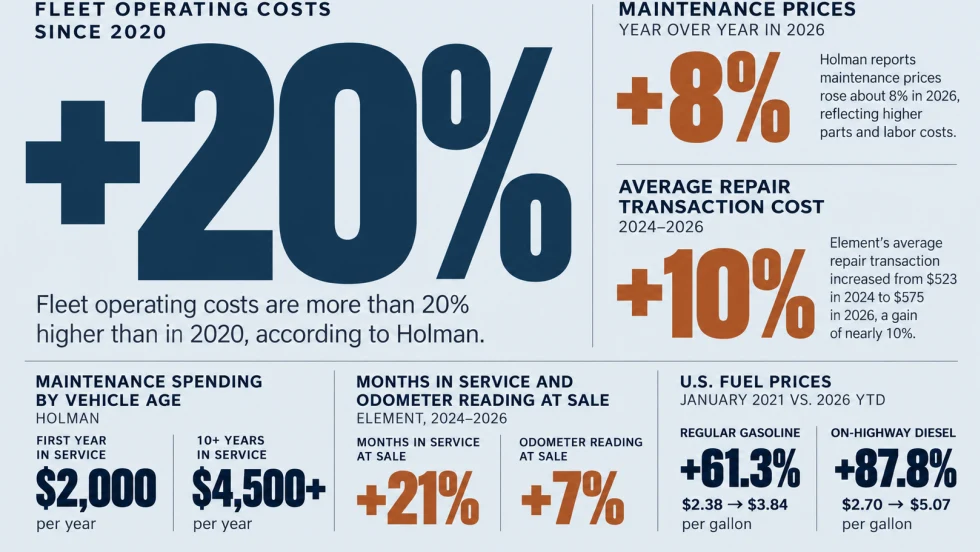
Fleet operating costs have risen more than 20% since 2020, raising a key question: When does extending a vehicle's service life stop making financial sense?
Read More →
This opening keynote session at the Fleet Forward Conference highlights the future of autonomous driving for fleets.
Read More →
A stolen catalytic converter can cost fleets far more in downtime and lost productivity than in repairs. A total-cost-of-risk approach can help fleet managers quantify their exposure and prioritize theft prevention.
Read More →
Personal-use charges are climbing, wholesale used-vehicle values are declining, and commercial fleet sales growth is slowing. This week, we're breaking down the latest fleet data, plus how Element Fleet Management is helping Waymo prepare for its first Canadian robotaxi market.
Read More →
Fleet policies are designed to create consistency, but not every driver or situation fits neatly within standard rules.
Read More →
Six questions can help fleet managers look beyond AI marketing claims to evaluate integration, data access, and real-world operational performance.
Read More →
Buying fleet management software in 2027 means looking beyond features and price. As fleet operations, technology and expectations evolve, this guide explores what today’s fleet professionals should consider when choosing a system that can deliver value now and adapt to what comes next.
Read More →
EVs, AI, and autonomous vehicles are reshaping fleet management. Discover what’s ahead—and how fleet leaders can prepare for the next era.
Read More →
Here's how the technician shortage has affected uptime for fleets, and what to do about it.
Read More →
Neology’s neoFleet platform will manage toll transactions and toll-authority operations for vehicles across Avis, Budget, Payless, Budget Truck and Zipcar.
Read More →