




State-of-the-Art Technologies Fleets are Using to Succeed
Fleets that are not aligning their business strategies to factor in the latest in fleet technological developments might be missing out on some of the most critical tools necessary to help them thrive in the industry.

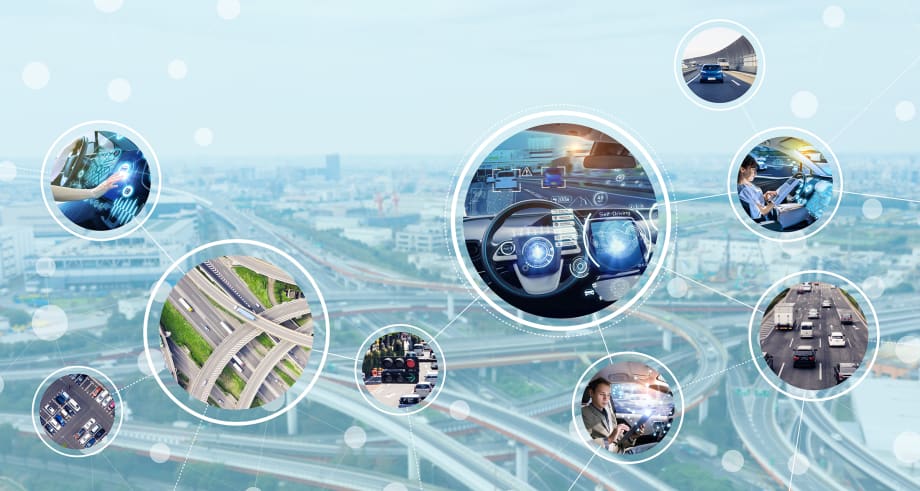
Photo: GETTYIMAGES/metamorworks
The fleet industry is not shy from embracing innovation, as many of the latest trends in fleet technology have become a necessity to running a successful fleet.
Some key areas that many successful fleets are engaging in include the latest driver safety tech, telematics capabilities, and sustainability initiatives. Establishing strategies to incorporate these practices for fleets into their operations has become increasingly integral, now and moving forward.
Fleets who are not aligning their business strategies with these topics in mind might be missing out on some of the most critical tools necessary to help them thrive in the industry.
Automotive Fleet spoke to several fleets to see what best practices and solutions they have implemented to maintain a successful operation.
The Benefits of Telematics
The telematics space has grown a lot since the technology’s beginnings, resulting in a variety of solutions and tools available for fleets today.
Fleet managers who are looking to support very specific fleet needs for the respective business and industry will find a lot can be gained through the utilization of telematics, whether the solutions be centered around driver safety, productivity, idling, etc.
A recent fleet technology trends report conducted by Bobit Business Media, publisher of Automotive Fleet, when looking at 2020 data found there was a reported year-over-year 8% increase in the number of fleets using telematics. This represented a jump from 64% in 2019 to 72% in 2020.
This survey featured respondents from the transportation, service, and construction industries.
Overall, these participants observed increased improvements in critical areas such as productivity, routing, and customer service, when compared to the previous year.
When breaking down other specific gains through the implementation of telematics, respondents reported an average 8% decrease in fuel costs, an 11% reduction in accident costs, and a 10% decrease in labor costs.
The survey also found that in-cab video telematics solutions had also increased in utilization for business operations resulting in subsequent operational benefits; for example fleets in the service industry using in-cab video say driver safety improved by 82%, year-over-year.
However, with the implementation of telematics devices come associated costs, a major pain point for many fleets. The 2021 survey found that 44% of fleets rated increasing costs as a top challenge to their operations.
However, the return on investment (ROI) that is brought about via the usage of telematics technologies can cancel out some of the costs associated from utilization. The survey found that 32% of respondents reported a positive ROI in six months of implementing this kind of fleet tech.

Yogi Shivdasani
[EMPTY CREDIT]
Yogi Shivdasani, VP, North America supply chain, LKQ Corporation, noted the positive ROI benefits that can ultimately be discovered for fleets, observing this in his own operations.
Shivdasani, who was the winner of the 2020 Fleet Executive of the Year award, said by implementing telematics he was ultimately able to reduce idling across his fleet, bringing the average down to 15-20 minutes.
This timeframe was closely monitored by his fleet team to make sure drivers did not exceed limits.
“If anybody’s ever thinking about implementing telematics, just look at your idling. If it’s anything over an hour, and you cut it to 30 minutes, or if it’s over an hour and a half, and you cut it to 30 minutes or less, you’ll make up for the expense that pays for the telematics,” Shivdasani said. “But there is also so much more I get out of telematics.” This ultimately resulted in a savings of $7.5 million for his fleet.
Success with this initiative was grounded in establishing a telematics program for a fleet of approximately 5,300 LKQ vehicles.
The 2021 study also found approximately 55% of survey respondents reporting the impact of the COVID-19 pandemic as having a negative effect on their operations.
Following the declaration that COVID-19 was a pandemic, the U.S. economy was divided into essential and non-essential businesses.
Many of the fleet vehicles operated by non-essential businesses were idled and parked during most of the economic shutdown. Company drivers at non-essential companies were encouraged by their management to conduct their business virtually.
Alex May, senior manager of fleet at Rollins, Inc., who manages a fleet of 13,100 vehicles that served as an essential business through the pandemic, said that telematics offered critical assistance for his fleet with regards to helping identify vehicle utilization, particularly since the downturn in the economy caused some additional employee turnover and subsequent un-utilized vehicles

Alex May
[EMPTY CREDIT]
“Telematics helped bring more attention to underutilized vehicles that possibly are not needed, or ones that we can transfer to other branches where they can be better utilized. We can also look at over utilized ve-hicles, so we can move vehicles to shorter routes to insure out vehicles last through our cycles” said May.
Marca Brown, manager - fleet optimization, DTE Energy, and a 2020 Fleet Visionary of the Year Honoree, also observed complications her fleet experienced as a result of COVID-19.
“The pandemic hit at a bad time for us. We had just embarked on what is likely the most aggressive redesign of all of our fleet processes in the company’s long history. During 2020, we created or re-designed over 40 key processes. We organized all of that effort to match DTE’s Service Keys – safe, caring, dependable, efficient,” said Brown.

Marca Brown
[EMPTY CREDIT]
Her team’s new strategy for 2021 includes continued investment in telematics solutions and other forward-looking fleet tech. “For 2021, we have created an equally aggressive plan. Among the most impactful of those will be our electrification (EV) project, customer satisfaction project, and vendor management project.”
Manage the Data
However, a crucial component to utilizing newer fleet technology is identifying the data points that are being captured through these solutions and finding what are the most important discoveries that can be actionable to your fleet. This is a point of frustration for some fleets dealing with a “firehose” effect from an abundance of data being made available to them.
Fleets who have reflected on recent successes in their business believe that identifying the right partners and vendors in the industry that will best support their operations is an essential solution to getting the most out of the data they collect.
Lee Pierce, senior director, fleet operations, for DBi Services, which operates 5,000 fleet assets, noted that effective data management was key to some of her recent successes in fleet, which helped her achieve the most recent 2020 Edward J. Bobit Professional Fleet Manager of the Year award accolade.
She said leveraging critical fleet software was essential to parsing through the data that helped make her operations successful.
She incorporated fleet software that helped identify where she should be making important business decisions, targeting on data points that included a focus on vehicle utilization and spend, and helping identify order volume for OEMs. She was able to effectively drill down and identify the information that mattered most to her fleet in the moment.

Lee Pierce
This data collecting was supported through a partnership with her fleet management company, as she said leveraging their platforms together was an essential piece to her success. “Feed their system with data, even if you use other third party data,” Pierce said. “Consolidating into one spot is key, if not, you are missing out on financial opportunities and/or general compliance/utilization.”
Brown of DTE Energy also said that partnering with her FMC was critical to recent successes at her company.
Prior to collaborating with her FMC, much of the fleet’s processes conducted internally were done manually.
“We have used a lot of their technology in the effort to modernize our fleet. We partner with their truck department and truck engineer to help us spec the safest, most appropriate truck for the job,” Brown said. “Their proprietary fleet management system allows us to order more accurately, keep digital records, and track status of a vehicle throughout its life. We also have access reporting that we never had and they provide us with custom reporting.”
Keeping Fleet Safety in Check
Closely addressing the perennial concerns of fleet safety is an area that has been essential to many successful fleets over the years, not just with the adoption of telematics solutions that help monitor driver behaviors, but also the incorporation of more advanced driver-assistance system (ADAS) equipped vehicles.
Fortunately for fleets, ADAS technologies have become increasingly standard on base-level trims of more recent model-year vehicles. Indeed, May of Rollins said that approximately 60% of his fleet is now equipped with ADAS tech.
However, one of his biggest challenges with introducing ADAS equipped vehicles is making sure drivers understand how the technology works, with an emphasis on clarifying that these technologies are designed to support good driving behaviors, not serve as a substitute for their driving capabilities.
“They’re called assistance systems; they’re not replacement systems for drivers,” he said. “There are times where these systems may not work properly, and so the drivers just have to be just as aware on the road.”
Also important, May said, is for his drivers to embrace these systems, and not few them as irksome distractions.
“We want to make sure they’re not turning the systems off, whether this is because the system makes beeping noises or maybe something else that just annoys the driver,” he said.
While May has found successes in his fleet by ensuring these safety technologies are made increasingly available to his drivers, he said he hopes that telematics data will one day be able to collect additional information on driver behavior through the ADAS technologies, as means to further improve fleet safety.
“At this point, telematics systems don’t really have the ability to talk to the vehicle from the standpoint of the ADAS systems,” he said. “All of the things that we develop our scorecard from, through telematics, we really can’t see that from the ADAS systems at this time. I think if we could tap into the ADAS technology we could look deeper into driver behavior. This I believe, could help us pin-point and correct bad driving habits and possibly prevent accidents before they happen.”
Brown of DTE Energy also noted that safety was critical to her fleet’s success during the modernization efforts she spearheaded.
“Safety is always the top priority at DTE, and we’re proudest of what we’ve done not only to standardize our fleet specs, but to also make vehicles as safe as possible,” she said. “We like to give our drivers the safest vehicles that fit within DTE standards, that includes taking ideas from our FMC partner, our upfitters, drivers, and our internal business unit partners and converting them to vehicles that allow our drivers to do their job safely and effectively.”
DTE’s vehicles have standardized ADAS safety options, such as backup or cross traffic monitors, lane departure, pre-collision assist, blind spot information, and auto high beam. Similar to May of Rollins, educating drivers about the solutions made available on fleet vehicles is a critical part of her fleet processes.
“In addition, because some of these technologies are new to our drivers, we are in the process of creating a series of videos that demonstrate the new technology, how to use it, and how to make sure it’s operational,” she said.

Aleece Beaulieu
[EMPTY CREDIT]
Last year’s 2020 Fleet Visionary of the Year winner, Aleece Beaulieu, senior program manager, transportation Genentech, echoed sentiments about how safety was a major factor to recent successes she has seen with her fleet.
“We partnered with our environmental health and safety partners to complete a risk assessment as to why drivers were getting into accidents, with the goal to reduce our accident rate,” Beaulieu said. “The results supported adding more safety technology features to our vehicles as standard during the ordering process. So now, these features are considered standard for any new vehicle orders.”
Electric Vehicles on the Horizon
Through much of 2020 and so far in 2021, the industry has also seen major announcements regarding the development of battery-electric vehicles directed at the commercial fleet industry. Not only with announcements coming from major OEMs, but also through newer companies who are focused solely on producing battery-electric technology.
Some of the OEMs that had major reveals in the battery-electric commercial vehicle space includes Ford’s announcement of the all-electric E-Transit in 2020; General Motors’ announcing the EV600, an electric light-commercial vehicle; as well as Mercedes-Benz announcing that its eSprinter van would be heading to the U.S. market, just to name a few announcements from major OEMs.
Additionally, other newer automakers with a focus on battery-electric vehicles have emerged. Some prominent names in the industry include Lordstown Motors, Workhorse, Lightning Motors, Rivian, and Electric Last Mile Solutions. Part of this push from some of the manufacturers was spurred by the boom in last-mile delivery business, brought on by the shelter-in-place mandates as a result of the pandemic.
Also reflecting this industry shift, many businesses have implemented corporate sustainability initiatives, with fleet electrification programs being a critical component to this for some.
Companies who have joined the EV100 offers one point of view as to what some of these initiatives might look like.
Some fleets listed in the Climate Groups EV100 include Novo Nordisk, which plans to transition its fleet of 8,000 vehicles to electric vehicles by 2030; Unilever, which is also transitioning its fleet of over 11,000 vehicles to EVs and installing workplace charging for its staff by 2030; and Siemens, which is transitioning its global fleet of approximately 50,500 vehicles to EVs by 2030.
Fleet management company LeasePlan is also committed to the EV100, which plans to achieve net zero emissions across its 1.8 million vehicle customer fleet by 2030 and transition its own employee fleet to EVs in 2021. Genentech is another fleet that is part of the EV100 that is fully embracing the direction the industry is taking in terms of EV adoption. Beaulieu of Genentech has also made sustainability a major component to her fleet program.
“As part of EV100, we have committed to do the following by 2030: convert our sales fleet of over 1,300 passenger vehicles to all electric or plug-in hybrid; electrify the majority of our commuter bus fleet; and transition at least 50% of our 30-plus medium-duty site fleet vehicles to EV or plug-in hybrid,” she said.
She noted that the fleet’s EV100 ambitions, with the gradual transition to battery-electric vehicles, are first being rolled out through the introduction of plug-in hybrid electric vehicles (PHEVs) for her operations. This is partially driven by the fact that many drivers may not be familiar with how to operate EVs; the education of EV technology for fleet drivers will be a critical part of the company’s EV100 plans.
“Based on where you are in the U.S., EVs may not be as widely adopted. So we started with PHEVs and getting drivers comfortable with the technology, building trust,” said Beaulieu. “And it’s a good stepping stone so that employees are more excited to order a full electric vehicle next time they’re allowed to order.”
One of the latest developments in this area on a federal level has been President Biden’s recent announcement, during a Jan. 25, 2021 speech regarding his “Buy American” executive order, that his administration is making a commitment to upgrade the federal fleet to electric vehicles (EVs) made in the U.S.
According to the latest Federal Fleet Report, the fleet consists of over 645,000 vehicles. No formal timeline for the shift has been revealed as of yet.
However, despite these hopeful ambitions for the market, infrastructure and range anxiety still remains a fleet concern. But fleet concerns go beyond these issues as well, as there are many other caveats to introducing this technology more widely to the industry.
“We have looked at EVs and how we could apply them to the business. Right now, a majority of our fleet is light truck, and at this time there are no real choices in that segment. They are coming, but still waiting to see how they perform. There are still a lot of questions that we have to answer from an operating standpoint that we just don’t have any good an-swers for at the moment. It is a segment we are looking at to incorporate as soon as it makes sense,” May of Rollins said.
To more closely follow this rapidly growing segment of the industry, Bobit Business Media launched a new digital publication, Chargedfleet, to create a space for thorough coverage that is happening in the battery-electric vehicle space for commercial fleets.
More Operations

How Fleets Can Recruit and Train Veterans for Technician Roles
Here's how the technician shortage has affected uptime for fleets, and what to do about it.
Read More →
Avis Budget Group Deploys Neology Toll Management Technology Across Major Brands
Neology’s neoFleet platform will manage toll transactions and toll-authority operations for vehicles across Avis, Budget, Payless, Budget Truck and Zipcar.
Read More →
Fleet Personal-Use Charges Edge Higher in 2026
Nearly eight in 10 surveyed fleets allow personal use of company vehicles, while just over half of respondents report charging employees for the privilege.
Read More →
The Future of Fleet + What’s Changing Right Now | AF News Recap
Could developments overseas offer a preview of what’s coming for U.S. fleets? This week, we’re looking at the future of AI, autonomy, and electrification, plus Ford Pro’s new certified pre-owned program, smarter vehicle offboarding, and a new way for fleets to manage toll expenses.
Read More →
How to Handle Vehicle Offboarding
What do fleet managers need to do when a driver leaves?
Read More →
Fleet Manager’s Ultimate Playbook: Navigating the New Standard in OEM Connectivity
Rising operating costs, driver safety concerns, and unplanned downtime are putting unprecedented pressure on modern fleets. Discover how fleet managers use embedded OEM connectivity and real-time vehicle data to cut TCO, prevent downtime, and protect drivers without aftermarket telematics hardware.
Read More →
U.S. Bank Adds Verra Mobility Toll Management to Voyager Fleet Platform
The integration allows U.S. Bank Voyager fleet customers to manage toll payments and violations alongside fuel, EV charging and maintenance expenses.
Read More →
ADAS Prevents Crashes. But Repairs Cost More | AF News Recap
ADAS-equipped vehicles may crash less often, but they can cost more when they do. This week, we’re breaking down what that tradeoff means for fleets, plus Subaru’s first Forester Wilderness Hybrid, Nissan’s new e-POWER Rogue, and why Calstart has become Catalyst Mobility.
Read More →
Moventum Fleet Management Names Mark Iorillo Head of Sales
Iorillo brings nearly 20 years of fleet management and sales experience to the role, including previous positions at Element Fleet Management, CEI, Donlen and Ryder.
Read More →
Fleet Has a Talent Pipeline Problem. What Comes Next? | AF News Recap
Where will fleet’s next generation of leaders come from? This week, we’re looking at the industry’s talent pipeline, what certification can add to a fleet career, how to build an award-worthy track record, and the return of Automotive Fleet’s Personal Use Survey.
Read More →