




Speed & Booze
Coming out against the recent DOT proposal on a Federal Speed limit is probably analogous in some people's minds to being against Law & Order, God & Mom, and Democracy & Decency.
Coming out against the recent DOT proposal on a Federal Speed limit is probably analogous in some people's minds to being against Law & Order, God & Mom, and Democracy & Decency. And when an editor is willing to risk offending a substantial percentage of his audience who have voiced their approval of such a measure, he is certainly skating on thin ice. (I refer here to the recent NAFA survey which showed that the majority of its members endorsed the proposal and which led to the association's official endorsement of the proposal, albeit with some modifications.)
But lest my readers feel I am totally self-destructive and before I am led away to the editorial Happy Vale for R&R, I would like to posit a few questions about the subject of a Federal speed law and, tangentially touch on a few items related to the issue.
Let me begin by saying that I am not against a Federal speed law. Period, But it should be understood that what the National Highway Safety Board of DOT is proposing is not such a law. What they are proposing instead is a law that would govern the speed of a vehicle and limit the reading of a vehicle's speedometer to a given MPH limit.
This is where the fun really begins; for the limit they propose on the vehicle's speed is 95 MPH and speed registration limit on the speedometer is 85 MPH. On top of that, when a car is driven over 81 MPH, a series of flashes and noises will radiate from the car to give it the appearance of a Roman carnival coming down the road.
Aside from the fact that only one driver in a thousand ever drivers over 85, and despite the consideration that speed-freaks will find a way to dismantle such warming devices and governors in seconds, I think all fleet buyers should consider how much this extra equipment is going to add to the price of their cars.
Of course, if such devices save just one life, they are worth it. But are they really going to do this? Or are we merely getting a sugar coating of security over the bitter pill of more federal controls? Some statistics on the causes of accidents, auto injuries, and fatalities might be interesting at this point. According to the National Safety Council, 15.2 percent of all accidents, 33.4 percent of auto fatalities, and 20.4 auto injuries were due to excessive speed in 1969. Of course these figures do not take into account the definition of "excessive" in this study (and it would be interesting to discover what percentage of those tabulated were exceeding 80 MPH). Consequently, "excessive" could mean 25 MPH in a 20 m.p.h. school zone.
The point I am trying to make here is that no governor or alarm system is going to cut down the accident rate that substantially. Moreover, it diverts the public's attention away from the real killer on our highways - the drunken driver.
Again, according to the National Safety Council's figures for 1969, the drunk driver was responsible for 50 percent of all auto accidents, injuries and fatalities. Now those are figures I can understand and respect. I really don't care much how one defines "drunk" in this context as long as I know that drinking is causally connected to driving impairment and an eventual accident.
Referring again to the NAFA survey, I see that I am not completely alone in my stance. As one respondent wrote, "(Let's) see the problem of highway deaths faced head on, where the real problem is, namely drinking while driving...."
Now if NAFA wants to get behind a really controversial and meaningful issue, they should come out for a Federal statute on the drunken driver. I'm still for leaving such legislation in the hands of the states, but it we've got to have Big Brother looking over us, let's give him something worthwhile to look for. At least that's opinion of yours truly.
More Operations

Fleet Has a Talent Pipeline Problem. What Comes Next? | AF News Recap
Where will fleet’s next generation of leaders come from? This week, we’re looking at the industry’s talent pipeline, what certification can add to a fleet career, how to build an award-worthy track record, and the return of Automotive Fleet’s Personal Use Survey.
Read More →
Smith System Launches Driver Risk Management Program
Fleets have more driver data than ever, but identifying risky behavior doesn't necessarily correct it. Smith System's new Driver Risk Management program combines monitoring, training, and follow-up coaching to help fleets connect risk signals with driver intervention.
Read More →
Automotive Fleet Opens 2026 Personal Use Survey for Commercial Fleet Managers
Less than two weeks left! Commercial and corporate fleet managers are invited to share how their organizations handle company vehicle personal-use policies, charges, and driver eligibility.
Read More →
From AI Prompts to AI-Generated Safety Songs | AF News Recap
Can better prompts make AI more useful for fleet managers? This week, we’re breaking down smarter fleet analysis, an AI-assisted experiment that turned safety training into music, and what happened to fuel prices in August.
Read More →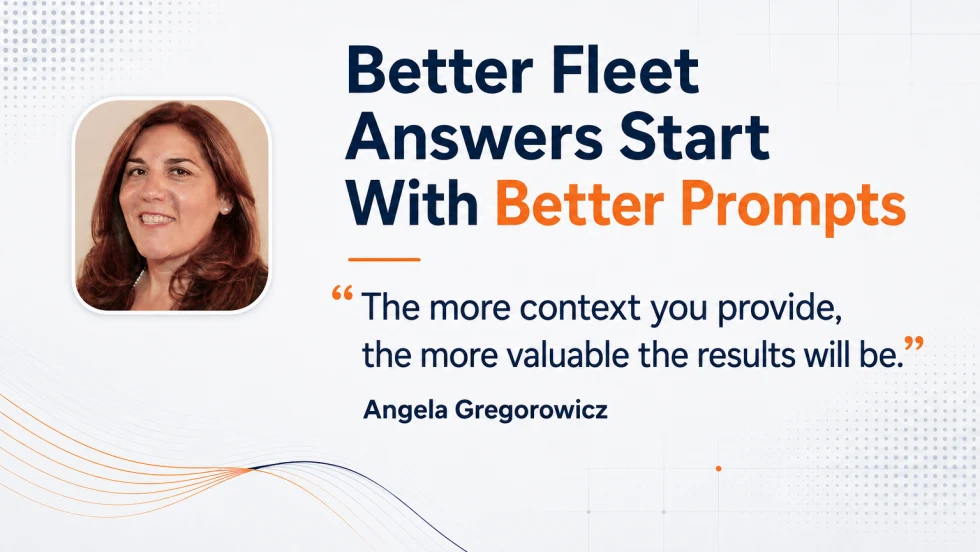
How to Write Better AI Prompts for Fleet Analysis
Include these six elements in your fleet prompts to generate more relevant analysis and accurate answers.
Read More →
Fleet Meets: Eric Kilgore
This edition of the Fleet Meets series features one of the industry's best leaders driving multi-market and national operations.
Read More →
Why Reactive Fleet Management Is Becoming Too Expensive to Sustain
Research highlights a growing need for proactive management strategies to address rising costs in fleet operations effectively.
Read More →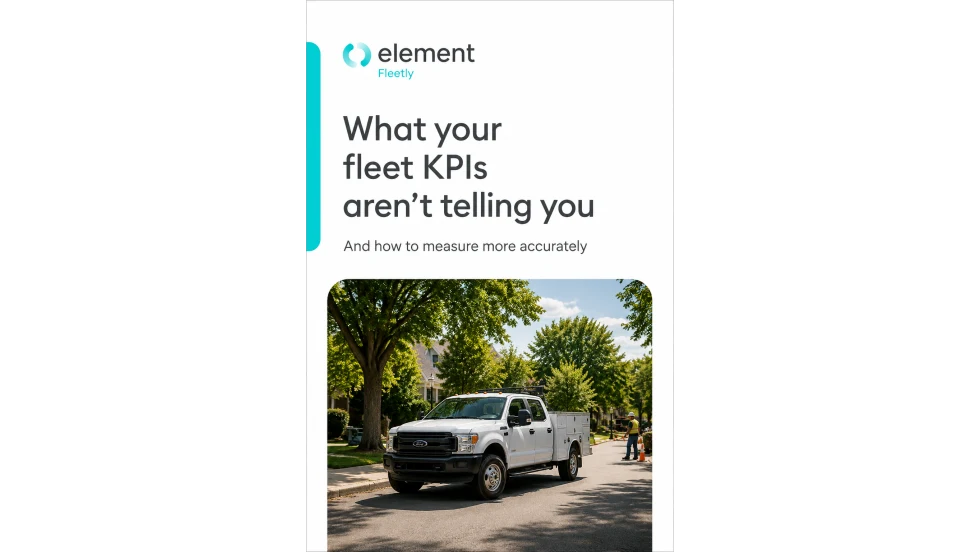
What Your Fleet KPIs Aren’t Telling You
Tracking fleet metrics is only useful when the data leads to better decisions. This guide helps fleet leaders assess cost, utilization, and downtime more accurately, identify performance gaps, and prioritize the actions that can improve operational results.
Read More →
Hidden in Plain Sight: Fleet Compliance Risks
Fleet compliance isn't just about having policies — it's about consistently enforcing them. This practical guide reveals six hidden compliance risks common in public sector and shared fleet operations and outlines proven strategies to improve visibility, accountability, and audit readiness
Read More →
Turning Fleet Payment Data into Executive Insights
Does data alone drive results in operations?
Read More →