




Spec'ing Box Truck Bodies to Maximize Productivity
Improving box truck body specs can boost cost savings and crew productivity. Here are some tips to create a clear plan for each truck, matching the right body specs to the application.

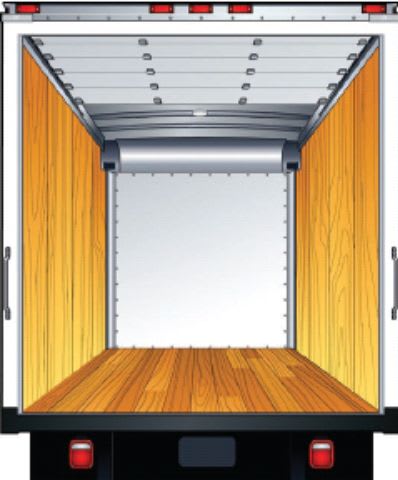
Depending on a truck's application, the basic plywood option is the lowest-cost box interior design. The 3/8-inch plywood protects the aluminum sidewalls.
As a fleet manager, you’re continually looking for ideas to cut work truck operational costs and boost crew efficiency. Managing work trucks with box truck bodies is one area to uncover potential cost savings and increase productivity when it comes to body specs.
Think about it. Could a 2-foot longer box make a difference in getting more deliveries done in fewer trips — significantly lowering transportation costs while gaining revenue per day?
What if a fleet manager spec’d a lower box height (in relation to the top of the cab) to reduce wind drag? What difference would that make in fuel economy savings?
Or, what about cargo access? Would adding a side door make a difference of saving perhaps 5-10 minutes per stop, allowing your crew to get more jobs done in less time?
How should you spec box trucks to realize maximum cost savings and crew productivity in your fleet? Here are 10 points to consider.
1. Truck Objectives
Start by gaining a clear picture of how you intend to use the truck. Ask yourself these questions to gather the details needed to begin formulating the body specs.
- What exactly will you haul in the truck? Think of a maximum load scenario and draw up a comprehensive list of what the truck will carry.
- What total cargo weight will you need to haul? Write down estimated weights next to each cargo item on your list to ensure you’ve covered all bases. If the truck is carrying heavy equipment, such as a forklift, pallet jack, or riding mower, consult the equipment manufacturer for details on shipping weights for those pieces of equipment.
- How much space will the cargo require? Refer to your cargo list. For each item, how much space is needed? For example, if hauling large rolls of wire, how much space, including length, width, and height, does each roll take? How many rolls will be carried on a given load? Will other materials be carried in the box at the same time, such as pipe and conduit? Answers to these questions will determine the minimum required box dimensions.
- How will cargo be loaded on and off the truck? Will you be using a forklift or hand truck? Or, will cargo be loading by hand? Your answers will guide specs regarding chassis height, body placement, whether or not you need a liftgate, walk-up ramp, etc.
2. Chassis Selection
Once you’ve gained an overview of your truck’s objectives, the next step is to choose the type of chassis. The following questions will help guide you through the process.
- What are the GVWR requirements?Gross vehicle weight rating (GVWR) is the maximum amount of total weight, including weight of the truck and its entire payload (equipment, fuel, drivers, and cargo), determined by the manufacturer that a truck is able to carry — and start and stop safely. Consult with the body manufacturer and/or chassis dealer to determine which GVWR chassis is needed to handle your payload requirements.
- Cutaway or standard chassis cab? Will you want access from inside the cab directly into the box? A cutaway chassis allows passage from the cab into the box. Otherwise, a standard chassis with a solid wall in the rear of the cab will work.
- Dual rear wheel or single rear wheel? If your chassis GVWR requirement is less than 10,000 lbs., a single rear wheel van or pickup chassis may be adequate. Just make sure the body width and length is sufficient. For anything over 10,000 lbs. GVWR, you’ll go with a dual rear wheel chassis.
- What is the chassis length? Cargo requirements dictate chassis length. Most upfitters think of length in terms of cab-to-axle (CA). For example, a 12-foot box typically requires an 84-inch CA; 14-foot takes 108-inch CA; 16-foot, 120-inch CA; and so forth.
- What is the tire size? This affects load height. For example, suppose you plan to use a forklift and need your truck to be dock-high. This typically requires a Class 6 or larger truck with 22.5-inch wheels and tires. Choose the tire size that offers the best load height for your application.
3. Body Dimensions
Based on the truck objectives, what body length, width, and height, does your cargo require? Box lengths typically range from 9-foot (on a below- 10,000-lb. GVWR) single rear wheel chassis to as long as 28 foot., requiring a Class 6 and larger chassis.
In terms of box height, will the truck be driven into parking garages or other areas where clearance might be an issue? Also, the higher the box stands above the cab, the greater the wind drag, which affects fuel economy. In this case, you may choose to lower the box height or add an aerodynamic wind faring to reduce drag.
What if you want to increase interior space, but don’t want to make the truck longer? One option is to add an attic, which extends the box over the cab for more space.
4. Body Placement
How do you want the body to sit on the chassis? Many stop-and-go delivery applications require the body to sit lower for easier step in. However, this arrangement must account for wheel wells inside the body, which detract from the flat storage area. To remove the wheel wells and maximize cargo area, spec the body to be mounted above the wheels.
5. Sidewall Material
What type of sidewall material is best for your application and budget? Should you go with aluminum or fiberglass reinforced plywood (FRP)?
The advantage of aluminum is typically lower up-front cost and lighter weight. The trade-off is that aluminum detracts from interior cargo space.
The FRP costs more up-front, but is known for greater durability and offers a smoother, less obstructive surface for graphics and lettering. Slightly more interior space is also gained for the same exterior width as the aluminum bodies.
6. Box Interior & Tie-Down Options
What interior lining should you choose? Here are options to consider.
- Basic plywood lining. Typically the lowest-cost option, 3/8-inch plywood protects the aluminum sidewalls (from floor to ceiling) from being punctured or dented on the inside by loose cargo and allows installation on shelving systems.
To secure cargo with the basic plywood lining, use one of the following:
- Tie rings. Cargo can be tied down to these metal rings recessed into the wall and/or the floor. The key here is determining how many rings you need and where. For example, should the rings be the same distance apart or more concentrated in a certain section of the box?
- E-Track. A steel row of vertical slots is recessed into the plywood and placed the same height from the floor on both sides of the box. Hooking ratchet straps into the slots secures cargo as tight as possible. Adding e-track to the front of the box that corresponds to the same height can track cargo on both the left and right sides. Consult with a body manufacturer to help determine how many rows of e-track are needed and where to place them.
- F-Track. This works much like e-track, but instead of mounted on the walls for horizontal tie-downs, f-track is installed in parallel locations on the box floor and ceiling for vertical tie-downs. This enables partitioning the box space from floor to ceiling.
- Pacific lining. Five rows of horizontal wood slats are evenly spaced in tying down cargo, providing flexibility. The downside is that the aluminum sidewalls are exposed, leaving them vulnerable to puncture damage from inside the box by heavy objects that might slide between the slats.
- Universal lining. This option offers plywood protection 24 inches up from the floor and 24 inches down from the ceiling with three rows of horizontal wood slats, evenly spaced. While gaining more box protection from the plywood sections, you lose lower and higher slats for tie-downs. If tie-down points are needed in those areas, spec tie rings to compensate.
- FRP interior. The fiberglass reinforced plywood (FRP) exterior package works much like the basic plywood lining for aluminum bodies. Secure shelving, tie rings, e-track, and/or f-track can be easily added from basic plywood lining. The FRP interior is all white, enhancing brightness and visibility inside the box.
- Scuff plates. If you’re using a pallet jack or forklift to load cargo onto the truck, consider adding a scuff plate — a 12-inch strip of steel, aluminum or plywood placed on the lower walls of the box. The extra protection offers greater longevity for the box.
7. Door Types & Location
Door selection significantly impacts productivity. Consider these options.
- Roll-up rear door. The advantages include convenience and the ability to unload the truck in tight spaces where swing-open doors might get in the way. The disadvantage is the approximately 6-8 inches of height clearance due to the rails required to roll the door. If carrying tall objects, the clearance limitations with the roll-up door may present an issue.
- Swing-open rear doors. Options typically include single-narrow, double-narrow, double-wide, and full-open swing doors. The swing doors are usually the least expensive door option. They also provide maximum inside height clearance, as opposed to a roll-up door. However, the swing doors are not a good fit for inner-city deliveries where there is limited outside clearance space to swing open the doors.
Side door. Will having easier access to cargo from the side of the box improve crew productivity? If so, here are options to consider.
- Swing doors. You can usually choose single or double swing-out doors. The door opening ranges from 36 to 48 inches. Just as with the swing-open rear doors, make sure sufficient clearance is available outside the truck to open the doors. The advantage is maximum height clearance is gained inside the box.
- Roll-up side door. The benefits and drawbacks of roll-up rear doors are offered. The roll-up side door makes it easier to do deliveries in tight spaces. Yet, 6-8 inches of height clearance are sacrificed inside the box near the door.
- Slide-open door. This is a common spec for bread and snack delivery trucks. You gain the convenience of a roll-up door without sacrificing height clearance inside the box that a roll-up creates. However, some usable wall space inside the box is lost on the side of the door, where the door slides into its pocket.
If you decide to use a side door, how do you want to step up into the box? Typical options include a recessed step well, pull-out step, and stirrup step. Consult with the body manufacturer to determine what best fits your application and budget.
8. Floor Options
What type of flooring is best for your application?
- Pine floor. The lowest-cost option, it can handle most light-duty, dry-freight applications. However, it is not recommended for heavy-duty use. Using a forklift on a pine floor flooring is not a good fit.
- Laminate hardwood. It is an upgrade to the pine floor and designed for heavier-duty applications.
- Aluminum (overlaid on wood). Extra floor protection is provided, especially important if you are carrying liquids that might spill onto the floors. Also, the aluminum counteracts corrosion for greater longevity. The downside is higher up-front cost, compared to other floor options.
- Steel floor (overlaid on wood). Like aluminum, the steel floor offers extra protection compared to pine and hardwood, but at a lower cost than aluminum. In fact, steel actually holds up better to heavy-duty use than aluminum. The downside is that the steel floor must be painted, unlike aluminum, and is vulnerable to corrosion.
9. Roof Options
In general, there are two types of roofs to consider.
- Standard aluminum roof. This is the lowest-cost option and fine for most applications.
- Translucent roof. Made of fiberglass material, the translucent roof allows sunlight through the top of the box, offering better visibility. The downside, however, is heat. Whereas the aluminum roof reflects the sunlight from the box, the translucent roof allows it to pass through, increasing interior temperatures.
10. Cargo Loading Options
How will cargo be loaded onto the truck? The following options can be considered:
- Forklift package. If you plan to use a forklift to load cargo onto the truck, spec a forklift package. This will reinforce the floor with added cross members, a threshold plate, and reinforced rear-end plate.
- Walk-up ramp. This is usually fine for carrying materials on hand trucks or appliance dollies. The disadvantage is that plenty of clearance space at the rear of the truck is required to make room for the ramp. In tight loading and unloading areas, a walk-up ramp would not be a good fit.
- Liftgate. While liftgates range from $1,500 to more than $5,000, depending on weight capacity and type, they are a good fit for loading heavy cargo items into the truck with minimum effort and physical strain on employees, enhancing safety and productivity. Determine which of the following common types of liftgates best fits your application.
- Tuckaway gate. As the name suggests, this liftgate tucks out of the way under the rear of the box, offering easy access to cargo when not using the gate. However, if you need to lift items that require more than three-feet in depth, a tuckaway gate may not offer a large enough platform to safely lift the cargo.
- Railgate. This gate, attached to the rear pillars of the box, offers extra platform size for larger cargo and heavier weight capacities. The downside is the gate must be lowered anytime access is required into the box, which can consume time unnecessarily.
- Beavertail. This liftgate type serves as a heavy-duty ramp to drive riding mowers, tractors, and other type of heavy equipment into the box. The downside is approximately four feet is added to the overall length of the truck.
Originally posted on Work Truck Online
More Operations

90% Use Telematics. Are Fleets Getting Safer? | AF News Recap
This week, we're breaking down which industries have the highest rates, how Jamie McKay manages 2,400 vehicles, what's happening with the 2027 fleet awards, and why software-defined vehicles could introduce new costs.
Read More →
What's Best Handled by an FMC, and What's Better Done Directly?
Fleet managers continue to rely on FMCs for essential services but are taking a closer look at where working directly with suppliers can improve efficiency and responsiveness.
Read More →
Fleet Meets: Erin Gilchrist
Meet Erin Gilchrist, the inaugural Mike Antich Spirit of Fleet Award winner, as she shares insights on leadership, mentorship, the power of industry connections, and why people remain at the heart of fleet's future.
Read More →

How 2026 Fleet Visionary Jamie McKay Manages 2,400 Vehicles Across 37 States
How do you keep 2,400 vehicles running across 37 states? Fleet Visionary Award winner Jamie McKay shares how collaboration, flexibility, and a few simple strategies help her tackle fleet management challenges at Aptive Pest Control.
Read More →
Managing Fleet Costs in an Era of Permanent Volatility
Fleet operating costs have risen more than 20% since 2020, raising a key question: When does extending a vehicle's service life stop making financial sense?
Read More →
The Next Evolution of Fleet Management: Autonomous Operations
This opening keynote session at the Fleet Forward Conference highlights the future of autonomous driving for fleets.
Read More →
How to Reduce the Total Cost of Risk From Catalytic Converter Theft
A stolen catalytic converter can cost fleets far more in downtime and lost productivity than in repairs. A total-cost-of-risk approach can help fleet managers quantify their exposure and prioritize theft prevention.
Read More →
Personal-Use Charges Rise as Vehicle Values Fall | AF News Recap
Personal-use charges are climbing, wholesale used-vehicle values are declining, and commercial fleet sales growth is slowing. This week, we're breaking down the latest fleet data, plus how Element Fleet Management is helping Waymo prepare for its first Canadian robotaxi market.
Read More →
Here's When You Should Make an Exception to Fleet Policy
Fleet policies are designed to create consistency, but not every driver or situation fits neatly within standard rules.
Read More →
AI-Native or AI-Acquired: What Should Fleet Managers Look for in an AI Platform?
Six questions can help fleet managers look beyond AI marketing claims to evaluate integration, data access, and real-world operational performance.
Read More →