




Should Companies Charge Employees Deductibles for Preventable Accidents?
Several questions must be asked and answered prior to adopting a corporate policy of charging deductibles for preventable accidents.
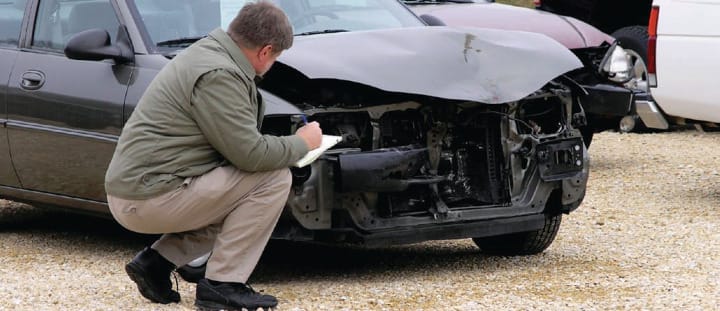
It's the bane of many fleet managers' jobs - the preventable accident. Of course, serious accidents are more than a nuisance. With police reports to file, insurance forms to manage, and repairs to oversee, those minor fender benders and dinged doors can cause significant headaches and paperwork. To instill a sense of responsibility in employees who have the keys to company vehicles, many employers may consider charging workers a deductible after a preventable accident.
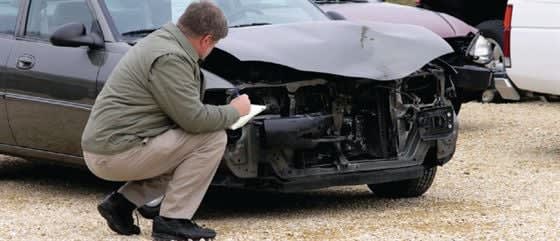
The Federal Motor Carrier Safety Administration (FMCSA) defines a preventable accident as "one which occurs because the driver fails to act in a reasonably expected manner to prevent it." Preventable accidents can occur when drivers are texting, speeding, intoxicated, tired, or simply not paying attention.
However, before instituting a policy about charging deductibles, there are many factors to consider. Do state and local laws prohibit charging a deductible? Does it matter whether the employee is exempt or non-exempt? Does it make a difference if a company self-insures? How will such a policy affect employee recruiting and morale? What happens if employees are allowed access to vehicles for personal use and a family member causes an accident?
Before adopting a corporate policy of charging deductibles for preventable accidents, a fleet manager must understand all the issues to legally protect the company.
[PAGEBREAK]
State and Federal Laws Vary
Company property can be damaged in a variety of ways besides fender benders. Employees can drop and break a brand-new company phone, infect a corporate-issued laptop with a virus while downloading an e-mail, or break the copy machine while vigorously trying to undo a paper jam.
When it comes to damage to any kind of company property, state and federal laws may restrict or prohibit the company's ability to make payroll deductions for loss or damage. Under the federal Fair Labor Standards Act, employers may deduct wages for loss or damage if two conditions are met:
Before money is taken from an employee's paycheck, he or she must sign a written statement agreeing to the deduction.
The deduction does not bring the employee's hourly rate below the minimum wage or violate overtime requirements. This applies to non-exempt employees who qualify for overtime regulations and minimum wage laws.
When it comes to exempt workers who are not subject to minimum wage and overtime requirements, companies cannot deduct wages directly from salaried employees' paychecks as reimbursement for damage to corporate property, according to a 2006 U.S. Department of Labor Opinion Letter.
According to the Opinion Letter, "It would not matter whether an employer implements such a policy by making periodic deductions from employee salaries or by requiring employees make out-of-pocket reimbursements from compensation already received. Either approach would result in employees not receiving their predetermined salaries when due on a 'guaranteed' basis or 'free and clear' and would produce impermissible reductions in compensation because of the quality of the work performed under the terms of the employer's policies..."
Some states also weighed in on the issue of charging employees out of pocket or deducting money from their paychecks for lost or damaged company property. In California, employers may only deduct for cash shortages, breakages, and equipment loss if an employee acted with gross negligence or through a dishonest or willful act.
The issue of wage deductions for damages is complicated and varies so much by state, fleet managers should consult legal counsel before implementing any type of policy that requires paying deductibles for preventable accidents.
[PAGEBREAK]
Consult Experts When Self-Insured
Many fleet operators may have or are considering self-insurance as a way to save money and gain greater control over insurance policies.
When evaluating self-insurance, it's important to understand your policy and how that relates to deductibles. Self-insurance can mean different things, from higher deductibles to completely eliminating comprehensive insurance coverage.
Since policies and laws vary, this is another area in which it is important to consult the experts. Talk with an insurance broker, state regulator, or lawyer before developing a plan for charging deductibles when a company is self-insured.
Will the Policy Hurt Morale?
Charging a deductible for preventable accidents may seem like sound corporate policy. It saves on the bottom line and makes employees accountable for safe and responsible driving habits. However, charging a deductible can cause a backlash. When wage deductions are not allowed, employees most likely will need to pay out of pocket. This may be difficult to enforce, unless the company is willing to consider termination or suing the employee.
Employees may strongly resent paying out of pocket or seeing money come straight out of their paycheck for an accident that happened while they were working.
Knowing they may take a financial hit, an employee may also fail to report minor accidents or be tempted to lie to the police and the company about how an accident occurred. Employees may also insist an accident wasn't their fault and wasn't preventable at all.
In many cases, local law enforcement can help clarify whether an employee was at fault. Many states now use a proportional system that spreads the blame around. For example, if two vehicles collide, one driver may be considered mostly at fault, but the other driver may share a percentage of the fault.
Assigning blame to an aggrieved employee will certainly not create feelings of goodwill.
There are also administrative aspects of charging employees deductibles. If exempt employees are required to pay a deductible, the policy must be sure to have that in writing. Managers and human resources departments must spend time ensuring all paperwork is completed, accurate, and accessible.
With the administrative work involved, it may be more trouble than it is worth for some companies to charge a deductible, particularly for companies with smaller fleets and fewer drivers.
[PAGEBREAK]
Personal Use Can Impact Collection
Companies should also consider how allowing personal use of company vehicles could affect the ability to collect deductibles. For many companies, the easiest approach is to forbid any type of personal use of company vehicles, particularly for any driver other than the employee. However, in some industries and organizations, allowing personal use of a company car represents a significant benefit that can help recruit and retain talent.
If employees are allowed personal use of a company vehicle, policy must clearly outline who can drive that vehicle. Some companies limit use to a spouse only, while others restrict personal use to immediate family. Some allow any licensed driver over a certain age.
Anyone authorized to use the company vehicle must understand the company's regulations, including the policy on deductibles in cases of preventable accidents. It's worth requiring employees, eligible family members, and anyone else who may drive the car to undergo training or at least sign a written form acknowledging they understand their rights and responsibilities.
Charging employees a deductible is complicated enough - getting an employee's spouse or child to pay may be even more difficult. Some insurance companies encourage employers to include a provision in their policies that explicitly states the employee is responsible for the deductible of any insurance claims that result from an accident while that employee's vehicle is driven for a personal reason, regardless of who was actually driving the car at the time of the accident.
Other Options Available
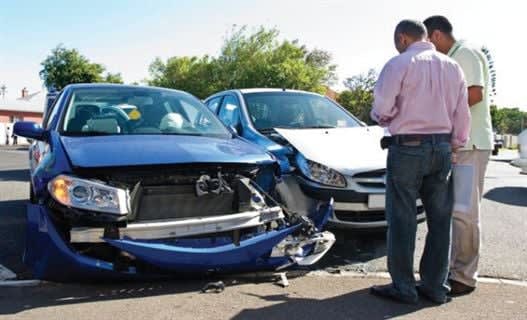
Rather than charging deductibles, employers may want to consider other approaches to discourage unsafe driving or punish such activities. Education and safe driver training designed to minimize accidents is one proactive approach.
Discipline for accidents is another. As parents of teenagers know, taking away the keys to the car can be a highly effective form of punishment. If an employee has had several accidents, termination may be the final option.
When it comes to charging employees deductibles for accidents they could have prevented, there are many aspects to consider. Whatever approach taken, ensure it makes sense from a financial, logistical, and employee morale perspective. Since laws vary greatly depending on state laws or regulations and type of insurance, seek expert advice from lawyers, insurance brokers, and HR staff familiar with the issues.
Once the right policy has been selected, be sure employees are educated about the policy and have signed all necessary documentation. In case of disputes, the ability to prove a policy was well thought-out and consistently implemented is important.
About the Author
Richard D. Alaniz is senior partner at Alaniz and Schraeder, a national labor and employment firm based in Houston. He can be reached at (281) 833-2200 or ralaniz@alaniz-schraeder.com.
More Safety

Fleet Manager’s Ultimate Playbook: Navigating the New Standard in OEM Connectivity
Rising operating costs, driver safety concerns, and unplanned downtime are putting unprecedented pressure on modern fleets. Discover how fleet managers use embedded OEM connectivity and real-time vehicle data to cut TCO, prevent downtime, and protect drivers without aftermarket telematics hardware.
Read More →
From Driver Well-Being to EV Charging | AF News Recap
Mental health belongs in the fleet safety conversation. This week, we’re looking at five ways fleets can support employee well-being before a crisis, plus Holman’s expansion in Mexico, new one-day Fleet Forward passes, and why EV charging demand is outpacing infrastructure growth.
Read More →
Nexar-Nauto Merger Aims to Give Fleets Better Safety Intelligence Through Larger Driving Dataset
Stefan Heck tells Automotive Fleet that combining more than 10 billion miles of driving history with Nexar's AI models will give fleets deeper insights into driver risk and roadway conditions than either company could provide independently.
Read More →
Don't Wait for a Crisis: 5 Ways to Build Mental Health Into Your Fleet Safety Program
For Suicide Prevention Month, fleet and safety leaders have an opportunity to put mental health where it belongs: at the center of workplace safety.
Read More →
How Camera Data Can Strengthen a Fleet’s Insurance Renewal
Insights from a commercial insurance carrier and a broker show how fleets can turn video telematic data, driver coaching, and improved claims results into a stronger case at insurance renewal.
Read More →
The Safest Fleets Aren’t the Ones with the Most Technology
You’ve made the telematics investment. Here’s how to capture the other half of its value and build the safest fleet on the road.
Read More →
Hidden in Plain Sight: Fleet Compliance Risks
Fleet compliance isn't just about having policies — it's about consistently enforcing them. This practical guide reveals six hidden compliance risks common in public sector and shared fleet operations and outlines proven strategies to improve visibility, accountability, and audit readiness
Read More →
NETS Sets 2026 Fleet Safety Benchmark Conference for Indianapolis
The Sept. 15–17 program will feature fleet benchmarking data, case studies, emerging technologies, and implementation strategies while running alongside the NSC Safety Congress & Expo.
Read More →
Off-the-Job Crashes Account for 43% of Employers’ $61.7 Billion Crash Burden
NETS quantifies costs dispersed across fleet, risk, HR, and other departments while providing new per-crash benchmarks for employers.
Read More →
Ram Recalls More Than 1.27 Million 1500 Pickups for Seat Belt Anchor Issue
The recall affects certain 2019-2026 Ram 1500 pickups that may have improperly attached second-row seat belt buckle anchors.
Read More →