




Securing Cargo Spaces With Durable Access Hardware
When securing storage areas within delivery vans, pickup trucks, box trucks, and other specialty vehicles, finding a durable locking and latching solution that is secure and resistant to tampering is crucial.

Latching and locking mechanisms must incorporate ergonomic features that make them easy to operate, so that emergency responders aren’t slowed down by constantly needing to lock and unlock doors and cabinet panels./
Photo: SouthCo
Work trucks are an essential and valuable part of our daily lives and social, economic and workplace economy. Work truck variants range from cable and telecom installer vans to heavy-duty pickup trucks with customized bodies for plumbers, electricians, HVAC installers, and other technicians, to the full range of delivery vehicles that are now integral “last-mile” components of our fast-delivery ecommerce economy.
While there is a wide range of work truck vehicle types and applications, they all have a key feature in common: they secure valuable items — expensive equipment, supplies, or materials to be delivered — in their cargo storage areas.
When securing storage areas within delivery vans, pickup trucks, box trucks, and other specialty vehicles, finding a durable locking and latching solution that is secure and resistant to tampering is crucial.
At the same time, work trucks are hard-working vehicles: depending on their function, their storage areas can be accessed — doors opened and closed, cabinets and compartments locked and unlocked — several times a day, or several times an hour.
Work truck OEMs need to consider selecting proven locking and latching mechanisms that have been tested through hundreds of thousands of cycles to last the lifetime of the vehicle. At the same time, latching and locking mechanisms must incorporate ergonomic features that make them easy to operate, so that delivery personnel and technicians aren’t slowed down by constantly needing to lock and unlock doors and cabinet panels.
Electronic Access: Improving the 'Whale Tail' Latch
Until recently, the most common locking latch on many work truck storage compartments and doors was the mechanical cam latch, with a standard “whale tail” lift latch that was often secured with a mechanical key lock. While reliable and certainly rugged, they can have two main drawbacks:
They can be vulnerable to determined attempts to pry them open, if the vehicle is left unattended for extensive periods of time.
Mechanical keys are at risk of being lost or stolen, complicating access instead of facilitating it.
As a result, work truck OEMs and truck body manufacturers are increasingly turning to electronic locking mechanisms and complete electronic access systems to replace mechanical locking and latching systems.
While it is true that electronic mechanisms can be more of a financial investment than basic mechanical latches, many electronic access technology suppliers have portfolios covering price ranges and materials ranging from all-plastic to all-metal construction. It’s important to assess the reliability and life cycle performance commitments for these devices.
Robust design and quality manufacturing are two keys to expanding the use of electronic access devices while ensuring years of reliable service and security for work trucks. One durability factor to consider is tamper-resistance: how well can a mechanism withstand attempts to pry open a compartment or hatch? The best manufacturers offer mechanisms that support load requirements ranging from 800-1400 pounds.
Construction materials for these mechanisms are also crucial; in some cases, work truck manufacturers will prefer lower-cost locking mechanisms. The risk is that these devices may fail or need repair/replacement early in the life of the truck, undercutting the quality impression a truck OEM or truck body manufacturer wants to establish.
In work trucks, locking/unlocking cycles could repeat fifty to one hundred times a day. When selecting electronic locks, it makes sense to consider latching mechanisms that can demonstrate reliable operation for 150,000 to 250,000 cycles; some manufacturers are working to raise that number to half a million, or even a million cycles. Mechanisms made with steel and corrosion resistance features, and with internal mechanisms such as springs and pins are engineered to function for years of service.
Latching mechanisms also play a vital role in securing cargo areas from the elements, such as water and dust, which are constant challenges for work trucks. Quality latching mechanisms have ratings ranging from IP55 to IP67, which can protect the device’s performance from water and dust, and can help ensure that external doors and compartment panels close securely.

Electronic locks, like Southco’s R4-EM Electronic Rotary Latch can be programmed to automatically lock all the external doors on a work truck whenever the user moves away from it and unlocks all the panels — or only one door or panel, if preferred — when the technician actuates the lock via an electronic key.
Photo: SouthCo
Combining Security & Efficiency
The right access hardware is a significant element to ensuring security and efficiency to storage areas on work truck vehicles. Today’s leading locking and latching providers serving the automotive and delivery vehicle industries typically offer broad portfolios of mechanisms, including high-performance, cost-effective electronic access solutions.
Consider delivery vehicles, one of the fastest growing work truck categories. Exiting and entering the vehicle often presents a critical challenge for latching and locking mechanisms; if it takes 10-15 seconds each time a delivery person enters the vehicle or accesses the storage area, lost time can quickly add up.
However, it’s equally possible that a driver will have to leave the vehicle completely unattended to deliver multiple packages into a location or drop packages to several units in a condo or townhouse development. Other types of work trucks can experience similar usage patterns.
Electronic locks provide a range of access options: push-button controllers using numeric codes, electronic key fobs similar to those used on passenger vehicles and locks that incorporate proximity sensors that automatically react to the presence (or absence) of the key fob.
This kind of technology helps make securing the cargo area easier and more efficient. For example, with a key fob device, the electronic lock can be programmed to automatically lock all the external doors on a work truck whenever the user moves away from it and unlock all the panels — or only one door or panel, if preferred — when the technician actuates the electronic key.
Some suppliers offer integrated electronic swinghandles, with door handle and electronic lock in a single package. These feature an efficient microprocessor-controlled gear motor that ensures minimal power consumption and provides intelligent locking and monitoring capabilities.
They can be used as standalone devices and often offer a variety of access options, including push-button, key fob, proximity and Bluetooth readers. They can also be integrated as part of a vehicle’s complete electronic access system for remote monitoring and audit trail reporting.

Electronic locks can be actuated with a variety of access control devices, including push-button, proximity, Bluetooth and RFID readers, like Southco’s EA-R02 RF Wireless Remote Controller, which includes key fobs.
Photo: SouthCo
Smart Electronic Access Technologies
With the increasing deployment of smart networks and digital devices such as smartphones, there are significant advantages to utilizing full-scale electronic access systems to secure work truck cargo spaces.
An Electronic Access Solution (EAS) is composed of three primary components: an access control or input device, an electromechanical lock and a system for monitoring the status of the access point. For many businesses with fleets of work trucks, where technicians are assigned different vehicles on a rotating or as-needed basis, replacing mechanical keys with more dependable electronic locking systems offers multiple advantages.
The most basic access device is a simple RFID card supplied to truck users on an ongoing basis. However, these cards can be lost or stolen. The most secure access credential supplies an electronic, time-based key via a mobile app on a technician’s or driver’s smartphone.
Throughout the day, the user actuates any electronic locks they need to control via a secure Bluetooth connection. An audit trail is established through cloud-based access controllers to document who accessed the work truck, for how long and in what location.
EAS platforms that use smartphone access provide a valuable tool for fleet management. In many operations, workers may be assigned to different vehicles each day. Rather than having to swap key fobs between drivers, an electronic access platform can update vehicle locks to recognize the key fob or smartphone credentials of the driver assigned to that vehicle.
Electronic access systems can also be useful for protecting valuable packages or equipment within the storage area of the vehicle. Expensive tools or high-value products such as fine jewelry or electronics can be further secured within the cargo area in special storage compartments fitted with an additional electronic lock, which are accessed with a separate Bluetooth-based access code.
The wide range of work truck types, coupled with the wide range of electronic locking and latching mechanism choices available in today’s markets, can present challenges to find the right combination of functionality, life cycle durability and cost.
An essential source of support and creative solutions is an access hardware supplier with extensive experience addressing both functional and aesthetic challenges. They can often draw on existing portfolios and design concepts to help solve these critical engineering and design challenges.
Choosing a proven supplier can help ensure that no matter what kind of work truck is being built, the most efficient, secure, and reliable electronic locking mechanisms can be supplied to protect their valuable cargo.
About the Author: Travis Krell is Business Development Manager, Transportation for Southco, Inc., where he oversees commercial programs for Southco’s Automotive, Heavy Truck, and Specialty Vehicle customers and drives new business. This article was authored and edited according to WT editorial standards and style to provide useful information to our readers. Opinions expressed may not reflect that of WT.
Originally posted on Work Truck Online
More Operations
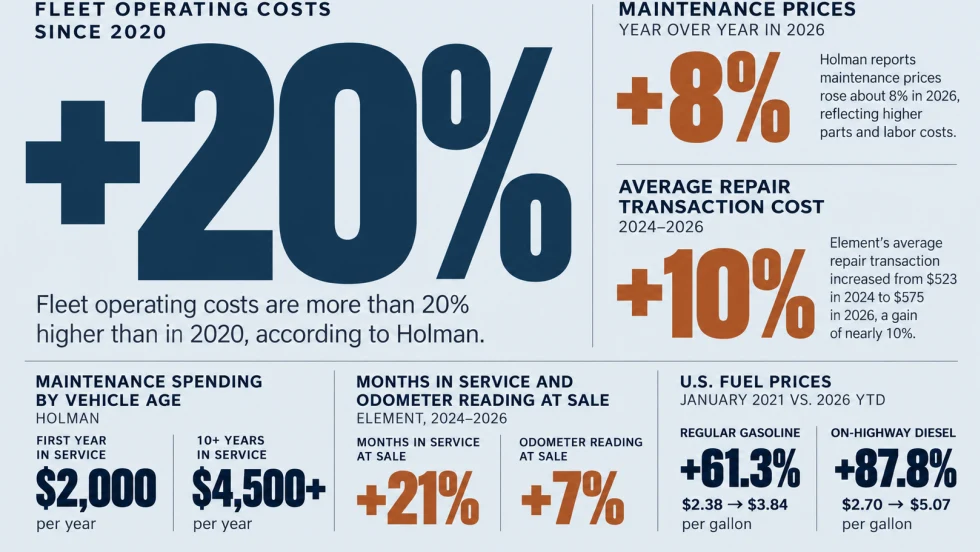
Managing Fleet Costs in an Era of Permanent Volatility
Fleet operating costs have risen more than 20% since 2020, raising a key question: When does extending a vehicle's service life stop making financial sense?
Read More →
The Next Evolution of Fleet Management: Autonomous Operations
This opening keynote session at the Fleet Forward Conference highlights the future of autonomous driving for fleets.
Read More →
How to Reduce the Total Cost of Risk From Catalytic Converter Theft
A stolen catalytic converter can cost fleets far more in downtime and lost productivity than in repairs. A total-cost-of-risk approach can help fleet managers quantify their exposure and prioritize theft prevention.
Read More →

Personal-Use Charges Rise as Vehicle Values Fall | AF News Recap
Personal-use charges are climbing, wholesale used-vehicle values are declining, and commercial fleet sales growth is slowing. This week, we're breaking down the latest fleet data, plus how Element Fleet Management is helping Waymo prepare for its first Canadian robotaxi market.
Read More →
Here's When You Should Make an Exception to Fleet Policy
Fleet policies are designed to create consistency, but not every driver or situation fits neatly within standard rules.
Read More →
AI-Native or AI-Acquired: What Should Fleet Managers Look for in an AI Platform?
Six questions can help fleet managers look beyond AI marketing claims to evaluate integration, data access, and real-world operational performance.
Read More →
A buyer's guide to fleet management software in 2027
Buying fleet management software in 2027 means looking beyond features and price. As fleet operations, technology and expectations evolve, this guide explores what today’s fleet professionals should consider when choosing a system that can deliver value now and adapt to what comes next.
Read More →
What Will Shape the Next Era of Fleet Management?
EVs, AI, and autonomous vehicles are reshaping fleet management. Discover what’s ahead—and how fleet leaders can prepare for the next era.
Read More →
How Fleets Can Recruit and Train Veterans for Technician Roles
Here's how the technician shortage has affected uptime for fleets, and what to do about it.
Read More →
Avis Budget Group Deploys Neology Toll Management Technology Across Major Brands
Neology’s neoFleet platform will manage toll transactions and toll-authority operations for vehicles across Avis, Budget, Payless, Budget Truck and Zipcar.
Read More →