




Say 'No' to Senior Management without Getting Fired
When it comes to cars and trucks, everyone believes they’re experts, especially senior managers. Saying “no” to a senior executive’s "brilliant" idea is a challenge. Preparation, information, and solid communication skills can help.

Cars and trucks are personal things — an extension of personality, a hobby, a place where (other than home and work) people spend more time than anywhere else. Since the dawn of the fleet profession, fleet managers have had to deal with "experts" in the company — those who feel that because they are "into" cars, they know how to run a fleet better.
It isn't too difficult to handle when the "expert" is a sales rep, buyer, or an operations manager. It's when the enthusiastic advice comes from the executive suite that it becomes far more challenging. Here are some tips on how to handle these situations without incurring the wrath of a senior executive.
The following is a true story. A fleet manager for a Fortune 500 company and a 1,300-unit fleet recieved a call one Monday morning from his boss, the senior VP of finance and CFO. The executive shared that over the weekend, he watched a television news segment in which the reporter explained the replacement value of the sum total of all of the individual parts that make up a typical automobile cost several times what the car sold for when new.
The executive asked if the company, rather than selling vehicles via auctions and wholesalers, or to employees, should sell them to junkyards instead. His logic told him if the parts in the vehicle held such cumulative value, surely junkyards would be anxious to pay top dollar for good used vehicles, since they could then sell the parts off the car for such huge profits.
The CFO was absolutely serious and wanted answers to a question that, coming from just about anyone else, would be laughable. Of course, the fleet manager (not having a career death wish) knew he had to give the CFO the impression that his question was a good one, while explaining why the idea wasn't.
This anecdote is a textbook example of the circumstances in which fleet managers often find themselves, and if not handled carefully, can put a serious dent in a fleet manager's career plans.
Not all requests from senior executives are quite as bizarre. Often, they are simply asking why the company shouldn't use smaller cars, smaller engines, or replace the fleet altogether and reimburse drivers. Whatever the idea, if the fleet manager is well prepared and careful about how the disagreement is presented, saying "no" to executives can actually be a boon.
The anecdote just cited, though true, isn't representative of the usual challenges executives present fleet managers. Most of the time, the questions and ideas are grounded not in some idle thought derived from a television show, but serious concern about the company's finances. One of the most common questions takes some form of "Why aren't we using more fuel-efficient cars?" or "Isn't it cheaper for the company to reimburse drivers?"
Fleet managers can prepare to answer this type of question simply in the normal course of doing the job. Knowing what the company's costs are and preparing a thorough analysis of alternatives is the best starting point.
For example, when selecting vehicles for the coming model-year, the fleet manager should be asking that very question — would a smaller car or smaller engine do the job as well as what is used currently? Analyzing the numbers — projected capitalized cost, resale, variable costs — is part of the job in the first place. Once the decision is made, the process of fleet analysis will provide the foundation for the response. The numbers will speak for themselves.
That, however, is only the first step in saying "no" to a senior manager. The next, and possibly more important, step is in communicating the disagreement in a way that, no matter how off the wall the question or idea may be, the fleet manager demonstrates it was taken seriously.
[PAGEBREAK]
The ability to communicate — verbally and in writing — is one of the single most important skills for any manager, and more so for fleet managers. Usually, the best forms of communication are concise and to the point; however, this might be insulting to a senior executive, who thinks his or her idea is original
and important. A more subtle approach can help.
First, the fleet manager's response will depend upon how the executive communicated in the first place:
■ An offhand comment in a relatively casual setting.
■ A comment sent via e-mail.
■ Direct contact for the express purpose of asking the question or floating the idea.
■ Discussion during a meeting about the fleet.
Further, the response will hinge upon the fleet manager's relationship with the executive. The level of detail will also depend upon how seriously, or casually, the issue was raised.
If, for example, it was more or less an offhand comment, offered in a relatively casual setting (at lunch or at a company function), the fleet manager might answer similarly (indeed, it is not beyond the realm of possibility that the executive may not even remember the comment), i.e., a casual response.
However, in instances where an executive expresses concern about rising fleet costs and asks point-blank why the company isn't using more fuel-efficient vehicles, the fleet manager's response should take the form of a formal project.
■ Gather all data used when the model-year selection was made.
■ Put the data in a simple, easily readable format. Graphs are particularly effective.
■ Develop a narrative around the data.
Bluntness is not recommended: "The company cannot use more fuel-efficient vehicles" may be taken as condescending. The narrative might begin thus:
"I certainly agree it is critical the company use the most fuel-efficient vehicles possible. Each model-year, I perform a thorough analysis to determine which vehicles can first perform the mission, and second, can do so in the most cost-efficient manner possible. The following are the results of my research for the current model-year."
The first sentence expresses agreement — that the issue is a serious one. The fleet manager goes on to explain that yes, "I'm on the case." The numbers and other research data will then bear out the conclusion that the company is indeed using the most cost-efficient vehicles possible.
It's a fact of business life: executives have strong egos and don't like to be told they're wrong. However, talented executives don't mind being shown they're wrong, provided it is done in a business-like manner. When an executive asks a question or approaches a fleet manager with an idea, he or she is looking for affirmation as much as agreement.
The difference is simple:affirmation that the fleet manager recognizes the overall issue, e.g., that cost efficiency should be a focus, and agrees the executive's idea is a good way to achieve it. If the fleet manager understands the difference and responds accordingly, saying "no" won't necessarily be catastrophic.
It can, however, be a short trip from acknowledgement and agreement to condescension — but that is a road to disaster. As self-confident as executives may be, they are certainly also smart enough to recognize they're being pandered to. Sometimes, a fleet manager can be tempted to simply put off the inevitable.
In reaction to an executive's suggestion that the company should be using four-cylinder engines (when the fleet manager knows it would not work), agreeing to try a test group of smaller engines is not an answer. It can further backfire if the executive follows up by asking why the company hasn't tested or researched them in the past. A kind of "I never thought of that; let's give it a try" response can do a great deal more harm than good.
Simply put, if a fleet manager is doing the job well, the sort of requests, suggestions, and questions that flow down from the executive suite will be anticipated, and formulating answers is only a matter of gathering appropriate data and adding the aforementioned narrative.
Once again, most of these inquiries revolve around concerns about the expense of running a fleet, though some may simply result from a personal preference (i.e., a dislike of a particular make or model on the selector).
One challenge nearly every fleet manager faces at one point or another — sometimes every year — is reimbursement. "Why are we in the business of providing company vehicles? Why can't we simply reimburse employees for using their own?"
The idea is attractive to an executive, thinking not only can they save money on the vehicles themselves, but eliminate a perceived unnecessary and costly function, i.e., fleet management. Rather than wait for the idea to surface, smart fleet managers conduct the reimbursement versus company-provided vehicle analysis on their own every year and present it as part of an annual review of operations. What they may find is additional cost savings, such as vehicles that don't meet the break-even criteria set by policy.
There is a relatively new challenge faced by the fleet manager today: strategic sourcing. Companies have turned to sourcing as a tool to leverage all manner of spending into savings, rebates, and lower pricing. Sourcing professionals are often drawn to fleet spend, particularly fuel, as something that can be combined with other expenses.
Many companies use purchasing cards for items such as travel and entertainment and office supplies. Strategic sourcing professionals often catch sight of fleet fuel spend, and ask the question "Why can't we use our purchasing card to purchase fuel? We may be able to receive rebates on that spend that we're not receiving now." You can be certain this question is very attractive to executives.
The answer, of course, is data, and the ability to track and control not only fuel costs, but also any and all expense within the category. This means when drivers are given credit cards, the company will have no control over the purchase of premium fuel, full-service fuel, and other non-fuel items such as food, tobacco, lottery tickets, etc., simply because a purchasing card does not provide the level of data needed to track transaction purchases.
Executives tend to think from 30,000 feet, so to speak, rather than at treetop level. It is the fleet manager's job to provide that treetop view, without more detail than the executive wants or can absorb. Saying no to the idea that getting rebates on fuel spend trumps the kind of data and control a fleet fuel card provides is good business. If nothing else, executives recognize good business.
■ Anticipate, wherever possible, the kinds of questions and suggestions executives will present. Most will be ideas regarding reducing fleet expense.
■ Keep detailed records of the kinds of analyses performed on vehicle selection.
■ How the answer is given is every bit as important as the answer itself. Executives will usually accept a "no" response backed by sound reasoning and good data.
■ Recognize the importance of affirmation and agreement, and tailor the answer with it in mind.
■ Avoid condescension and bluntness. Both will be recognized, neither will be appreciated. ■
More Operations
How to Manage Conflict for Your Fleet Operations
Conflict management is becoming a core leadership skill. Here are five strategies fleet leaders should know.
Read More →
Turning Connected Vehicle Data Into Decisions That Matter
Fleet leaders have more data than ever, but turning that data into clear, actionable decisions remains a challenge. This white paper shows how leading organizations are using connected vehicle data to improve safety, reduce costs, and optimize fleet performance. Learn how to turn insight into action across your fleet.
Read More →
Cameras, Safety and Insurance: From Reactive Claims to Real-time Prevention
Commercial auto remains one of the most challenging and costly lines of coverage for fleet operators and insurers alike. Learn more about how to effectively address these issues from Onur Aksan, Enterprise Business Development Executive, Geotab.
Read More →

Are You Tracking Your Fleet's True Total Cost of Ownership?
Bobit Business Media surveyed 190 fleet professionals and found that while most fleets are tracking costs, fragmented systems and data gaps are keeping true TCO visibility out of reach. With rising pressure to control spend in an increasingly volatile environment, the gap between what fleets think they know and what the data actually shows is wider than you might expect. See how your peers are managing costs today and where the industry still has room to improve.
Read More →
Turn Fleet Data Into Smarter Decisions
Fleet leaders have access to more operational data than ever, but disconnected systems and unclear metrics often slow decision-making instead of improving it. This whitepaper outlines five practical steps fleets can take to transform fragmented data into actionable insights that improve planning, safety, utilization, and long-term performance.
Read More →
Hybrids: Electrification Without the Challenges
For fleet managers, fuel is one of the biggest line items in the budget — and it's one hybrids can shrink without changing how your people work. Download the eBook to see the numbers, understand the technology, and get a step-by-step guide to making the switch.
Read More →
How NOV Uses Telematics to Improve Fleet Safety Across 160 Locations
James Victory of NOV discusses how the company manages fleet safety, maintenance, and telematics across more than 150 locations supporting oilfield operations throughout the U.S.
Read More →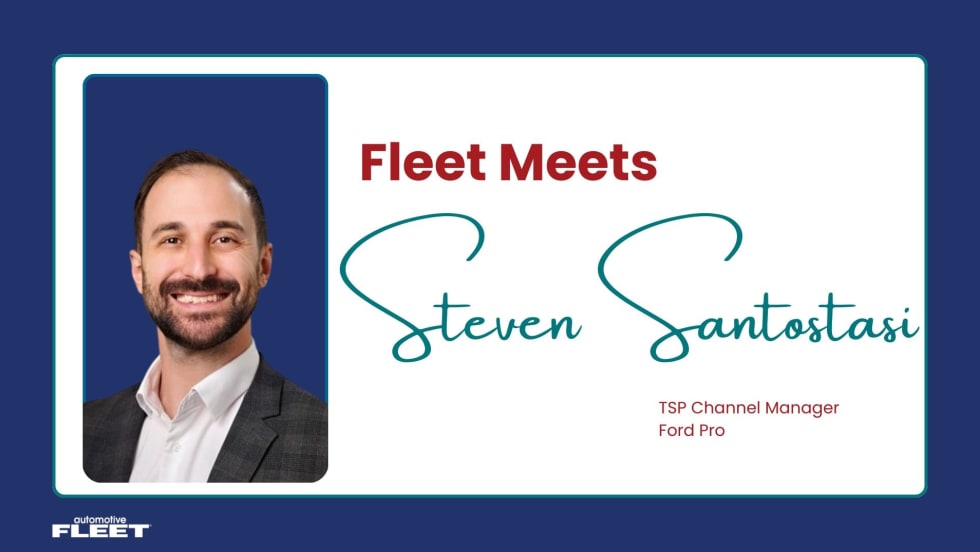
Fleet Meets: Steven Santostasi
This edition of the Fleet Meets series features Steven Santostasi, the current TSP channel manager for Ford Pro.
Read More →
Why Fleet Managers Are Replacing Departmental Vehicles with Shared Motor Pools
Departmentally assigned vehicles often create hidden costs through underutilization, poor visibility, and increased administrative burden. This white paper explores how shared motor pool strategies help fleets reduce costs, improve accountability, and optimize vehicle utilization.
Read More →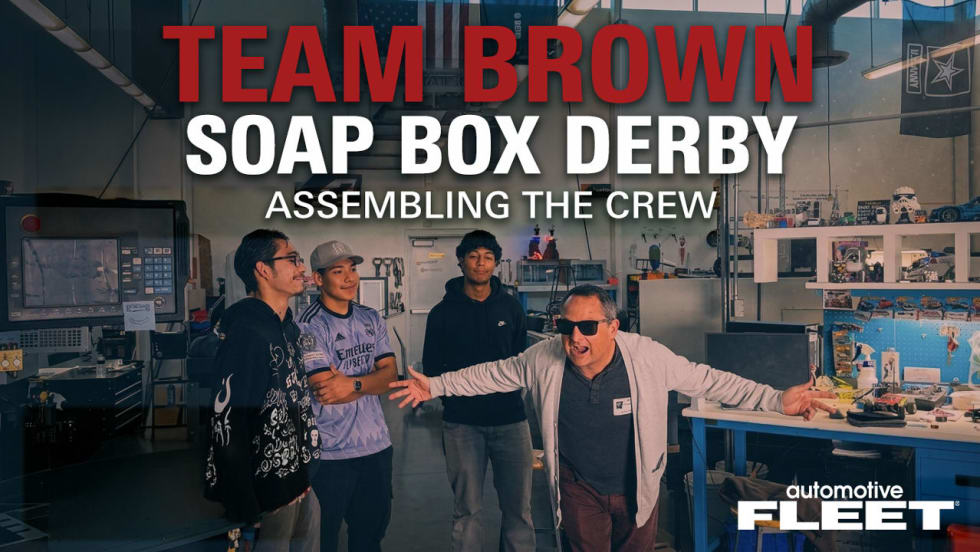
Soap Box Derby Challenge: Assembling the Crew
Meet Gabriel, Matthew, and Angel — the team helping bring this soap box derby build to life.
Read More →