




Safety is Enhanced on Ford E-Series Extended Wagons
For the 2006-model year, Ford has added standard AdvanceTrac with Roll Stability Control to the 12- and 15-passenger extended wagons, enhancing the driver’s ability to maintain control under adverse conditions.
For the 2006-model year, Ford has updated the E-Series Extended Wagon to help drivers maintain safe travel under adverse conditions. The extended wagon, like any vehicle designed to carry heavy loads or a large number of passengers, must be driven differently than a passenger car. Ford has significantly increased the level of safety in the extended passenger wagon by including the AdvanceTrac with Roll Stability Control (RSC) system as standard equipment.
With the Help of Electronics
It all started with pumping the brakes. From the earliest days of the automobile, conventional wisdom has held that by “pumping” the brakes, applying them and releasing them rapidly, better control can be had under difficult conditions.
Electronics takes that several steps further. Not only can the electronic controls pump the brakes faster, on the order of several times per second, the new systems can selectively apply each individual wheel brake, as required to maintain direction of travel.
It must be remembered, though, that even with all these safety enhancements, the laws of physics cannot be overturned, so the driver has to exercise some judgment to begin with.
It Started With ABS
The first of these systems to appear on vehicles was ABS, the Anti-skid Braking System. Since a wheel that is sliding, or skidding, cannot be steered, the ABS system allows the driver to maintain steering control. With this system, electronic sensors at each wheel monitor the rotation of the wheels. If a sensor notes that one wheel has stopped rotating, or is sliding, it quickly pulses the brakes to allow the wheel to continue turning, allowing the driver to control the direction of the vehicle.
Traction control takes this one step further, by sensing if a wheel is spinning, or turning faster than the other wheel on the same axle. By selectively applying a single brake, and even reducing the throttle, the spinning wheel can be slowed and can maintain its grip on the road.
Beyond that, the Electronic Stability Control system can correct under- and over-steer situations. In under-steer, the front of the vehicle tends to slide towards the outside of a curve. In over-steer, the rear of the vehicle tends to slide to the outside of the curve. A yaw sensor, combined with a steering sensor, can selectively brake the appropriate front or rear wheel, and additionally reduce the throttle, so that the vehicle continues in the direction the driver intends. All three of the above systems (ABS, Traction Control, and Electronic Stability Control) make up what Ford calls its AdvanceTrac system.
Roll Stability Control
The final part of the package is Roll Stability Control. A gyroscopic sensor monitors the stability of the vehicle roughly 150 times per second. If it senses a potentially unstable situation, the system automatically engages AdvanceTrac to help keep all four wheels safely on the ground.
In the past, drivers who were able to sense these vehicle motions and react to them quickly usually made their fortunes as racing drivers. Today, although the driver is still expected to drive responsibly, much of the mechanics of reacting to unstable driving conditions is taken over by the vehicle itself. AdvanceTrac with RSC, as installed on the Ford E-Series Extended Wagons, contributes to a safer environment for driver and passengers.
More Safety

NAFA Fleet Safety Symposium to Collocate With 2026 Fleet Forward Conference
The daylong certificate program will precede the Fleet Forward Conference at the Gaylord National Harbor in Maryland.
Read More →
The Distractions You Can’t Turn Off: What Drivers Face Outside the Vehicle
Fleet drivers face constant visual, cognitive, and environmental interruptions the moment they hit the road. From roadside chaos to mental fatigue and digital overload, today’s biggest driving risks often come from outside the vehicle itself.
Read More →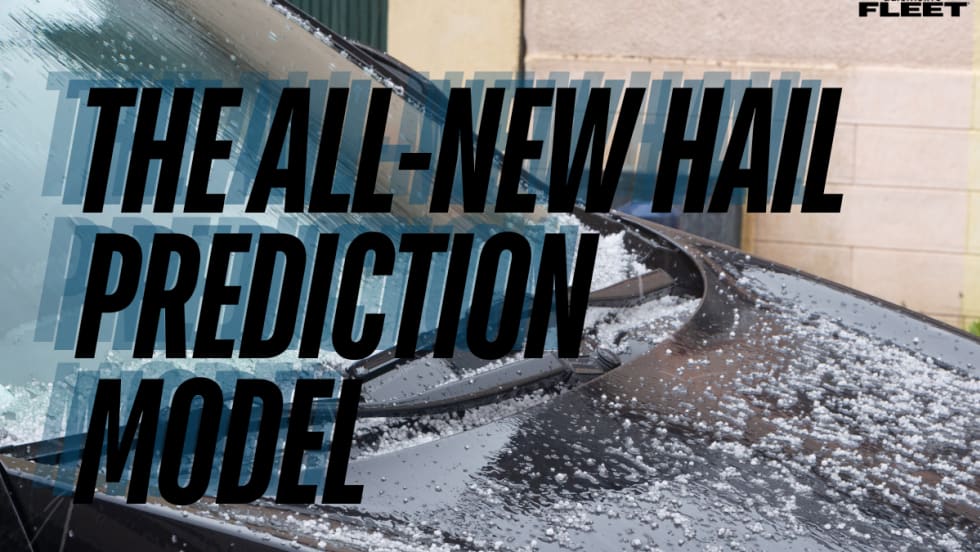
FLASH Weather AI Launches First Deep-Learning Hail Prediction Model With High-Resolution Forecasting
FLASH Weather AI has launched a first-of-its-kind hail prediction model capable of forecasting hail size and arrival time at 1-kilometer resolution up to 55 minutes ahead, giving fleets and insurers critical time to prepare for severe storms.
Read More →
How Coca-Cola United Protects Its Fleet from Growing Legal Risk
As litigation risk rises, vehicles are increasingly targeted. This Coca-Cola bottler shares how it’s reducing exposure through driver training, technology, and a proactive risk management approach.
Read More →
How to Speak the Same Language on Fleet Safety
Drivers, supervisors, and data often speak different safety “languages.” Getting on the same page will drive better results.
Read More →
Fleet Cybersecurity 101: What You Need from Your Technology Vendors
From identity management to third-party certifications, the right technology partner should make security easier to manage. Here are the three building blocks that fleet managers need to stay in control as connected systems scale.
Read More →
Reducing Risk by Eliminating Phone Use Behind the Wheel
Distracted driving remains one of the most persistent risks in fleet operations. New approaches focus on removing mobile device use entirely while adding real-time safety support.
Read More →
Distracted Driving in the Age of Smart Tech – Part 2
As distraction risks evolve, fleets are turning to smarter, more connected technologies to better understand what’s happening behind the wheel. Part 2 explores how these tools are helping identify risky behaviors and improve visibility across operations.
Read More →
Data Rights, Risks, and Responsibilities After a Crash
What fleets capture to improve safety can also expose them in litigation, forcing leaders to rethink how data is managed, stored, and shared.
Read More →
From Distraction to Detection: Strengthening Awareness in Fleet Drivers
Distracted driving is often measured by what we can see—phones in hand, eyes off the road. But what about the distractions we can’t? A recent incident raises a bigger question about awareness, attention, and why subtle risks so often go unnoticed.
Read More →