




Ryder's Commercial Vehicle Sharing Network
Ryder has created a new service that aims to provide revenue for fleets with underutilized assets by creating a new purpose for these often unused vehicles.

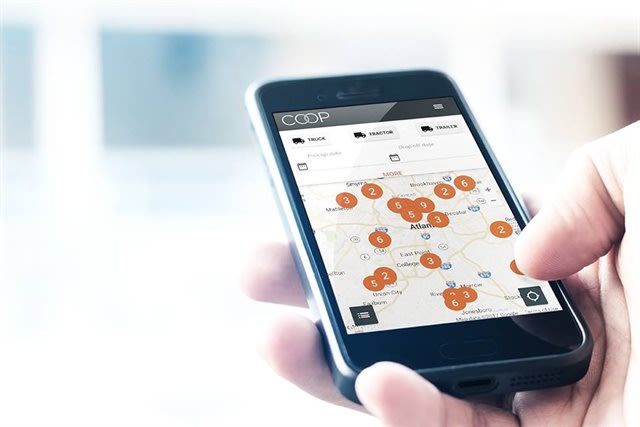
COOP by Ryder is a sharing platform of underused commercial vehicles and equipment. Fleets can rent from each other and make money off of idle assets.
Photo courtesy of Ryder System
Every fleet is different, but a common issue that many might share is owning vehicles that are underutilized, and the financial ramifications of this. Underutilized vehicles are defined as those accumulating fewer than 5,000 miles and/or 500 engine hours per year. And these vehicles are costing companies in terms of registration, depreciation, maintenance, etc., but aren’t bringing in revenue by serving their purpose.
However, Ryder has created a new service that aims to provide revenue for fleets with this issue by creating a new purpose for these often unused vehicles. The service, COOP by Ryder, is an asset-sharing platform for commercial vehicles that allows fleet operators to rent-out underutilized vehicles.
“The asset-sharing concept is something we wanted to work on and it was through a lot of research around commercial fleets in the U.S. and the amount of idle time that’s available on those units,” said Rich Mohr, VP and global product manager for Ryder Truck Rental. “There is a good amount of idle time on those commercial vehicles and the idea was centered on how we could best monetize that idle time for those customers.”
COOP, which just finished up its pilot program in Atlanta, Ga., acts similarly to other sharing economy services, such as Airbnb, where customers can rent or lend their services, which in this case are commercial vehicle assets. Users can connect with and rate each other on the COOP network, via smartphone or internet, to search for local businesses who have complementary needs.
“We asked ourselves, ‘How do we help monetize customers’ idle fleets, and how do we give a better availability of equipment to customers who need equipment for a short-term rental?’” said Mohr.
Beyond vehicles that are traditionally available through rental services like Ryder, fleets are able to rent specific equipment and specialty equipment and assets that might not normally be available elsewhere.
“It allows customers to find equipment closer to them, for a rate that is lower than what the normal market rate is; and when they have something they need that is specialized, they have a source to go to and find equipment that more closely matches their specific need,” said Mohr.
Fleets Test the Sharing Service
Dixien, a manufacturing company that specializes in OEM parts production, was one of the first fleets involved in COOP’s pilot program this year. Alex Garcia, VP of Dixien, said his company’s trucks have been primarily used for transporting between facilities that it owns, and from its plants to suppliers. He said his fleet only has two trucks, which sit a substantial amount of time.
“Even though we are a small player when it comes to transportation, most of our transportation happens with large trucking companies between our facilities and our customers,” said Garcia. “For us to be able to have this platform available is a phenomenal way to offset costs on the transportation we cannot do without, which is going between plants and going between service providers.”
Beyond collaborating with Dixien, Mohr said other companies in the Atlanta area have found the service to be useful, including the Atlanta Opera and Catalyst Carpet Services.
“We’ve had everyone from small business owners that have one or zero trucks in their fleet, all the way to some of the bigger Fortune 500 companies that are on the platform right now, sharing and borrowing trucks,” he said. “It’s been everything from food service, to manufacturing and production, a performing arts company, and different event companies.”
The soft launch of COOP was held in the Atlanta market at end of 2017, as a way to test the platform. The company then ran the pilot program in January to the end of the first quarter of 2018.
How Ryder's New Service Works
COOP by Ryder services operate similarly to a traditional rental service, meaning that there is a per day charge to rent the vehicle on the platform and then there is a variable mileage rate, said Mohr. He also mentioned that the customer who is renting the vehicle has the option to add COOP’s suspended physical damage coverage if they want additional protection coverage on the vehicle, as well as an available maintenance package that provides the borrowers additional coverage on maintenance for potential issues with the vehicle.
“It provides peace of mind for the company that’s lending their vehicle out to another company; if something happens to that vehicle, there’s some coverage if it needs minor repairs or needs to be towed to the customer,” said Mohr. “We wanted to have a protection plan in place that at least got the vehicle back to where it belongs, or to give the customer peace of mind in the case of a minor repair.”
He said the initial matches for the service were challenging to make because they were matching customers that might not have necessarily interacted with each other, but are also unaware that they have complementary needs.
“What we’re finding is, once we make those connections between the two customers and they are close to each other, they are pretty much just doing it on their own now, because they’ve been matched once and they are comfortable with each other,” said Mohr.
Also, because COOP drivers are sharing owned or leased assets, those who are renting the vehicles tend to take better care of the vehicles as a opposed to one acquired through a traditional rental service, he mentioned.
The Impact to Ryder Customers
From a DOT standpoint, users of the service are operating under their DOT, not the DOT of the owner of the truck, Mohr said.
“During our onboarding process, we confirm that the person who is renting the vehicle has a valid DOT number and is in good standing. The vehicle’s DOT number appears on the rental contract, which enables the renter to operate that vehicle with their operating authority for less than 30 days, regardless of what it says on the door of the truck. The contract is also easily accessible through the renter’s mobile device, eliminating the need for paperwork.”
After 30 days, the company has to put a decal over that customer’s logo and put their own DOT number on it.
“For shorter rentals, you can operate under your DOT on the rental agreement,” he said.
Mohr said that the implementation of COOP has opened up Ryder’s overall customer base.
“We have a bunch of customers that we brought in through the COOP platform that had older vehicles and now they are just interested in getting rid of them and leasing from us,” he said. “And they’ll still use the COOP platform with their newer vehicles; so really, it’s opened up the market for us.”
He said that COOP has not negatively impacted Ryder’s traditional rental business because traditional customers stick with this solution, but for shorter term rentals where vehicles are requested for a few days a week, customers have used COOP to connect with other local businesses.
Mohr said the company plans to have a formal rollout of COOP by Ryder to other markets in the U.S. by the end of 2018.
“We’re trying to find a couple of complementary markets that complement the Atlanta market nicely, and we’re aiming to find a couple of tougher markets where we have to deal with some of the friction that we didn’t have to deal with in the state of Georgia, like tolls, for example,” said Mohr.
For more information visit Coop.com
More Operations

Avis Budget Group Deploys Neology Toll Management Technology Across Major Brands
Neology’s neoFleet platform will manage toll transactions and toll-authority operations for vehicles across Avis, Budget, Payless, Budget Truck and Zipcar.
Read More →
Fleet Personal-Use Charges Edge Higher in 2026
Nearly eight in 10 surveyed fleets allow personal use of company vehicles, while just over half of respondents report charging employees for the privilege.
Read More →
The Future of Fleet + What’s Changing Right Now | AF News Recap
Could developments overseas offer a preview of what’s coming for U.S. fleets? This week, we’re looking at the future of AI, autonomy, and electrification, plus Ford Pro’s new certified pre-owned program, smarter vehicle offboarding, and a new way for fleets to manage toll expenses.
Read More →
How to Handle Vehicle Offboarding
What do fleet managers need to do when a driver leaves?
Read More →
Fleet Manager’s Ultimate Playbook: Navigating the New Standard in OEM Connectivity
Rising operating costs, driver safety concerns, and unplanned downtime are putting unprecedented pressure on modern fleets. Discover how fleet managers use embedded OEM connectivity and real-time vehicle data to cut TCO, prevent downtime, and protect drivers without aftermarket telematics hardware.
Read More →
U.S. Bank Adds Verra Mobility Toll Management to Voyager Fleet Platform
The integration allows U.S. Bank Voyager fleet customers to manage toll payments and violations alongside fuel, EV charging and maintenance expenses.
Read More →
ADAS Prevents Crashes. But Repairs Cost More | AF News Recap
ADAS-equipped vehicles may crash less often, but they can cost more when they do. This week, we’re breaking down what that tradeoff means for fleets, plus Subaru’s first Forester Wilderness Hybrid, Nissan’s new e-POWER Rogue, and why Calstart has become Catalyst Mobility.
Read More →
Moventum Fleet Management Names Mark Iorillo Head of Sales
Iorillo brings nearly 20 years of fleet management and sales experience to the role, including previous positions at Element Fleet Management, CEI, Donlen and Ryder.
Read More →
Fleet Has a Talent Pipeline Problem. What Comes Next? | AF News Recap
Where will fleet’s next generation of leaders come from? This week, we’re looking at the industry’s talent pipeline, what certification can add to a fleet career, how to build an award-worthy track record, and the return of Automotive Fleet’s Personal Use Survey.
Read More →
Smith System Launches Driver Risk Management Program
Fleets have more driver data than ever, but identifying risky behavior doesn't necessarily correct it. Smith System's new Driver Risk Management program combines monitoring, training, and follow-up coaching to help fleets connect risk signals with driver intervention.
Read More →