




Roche Expands Hybrid Car Fleet to 242 Units
Ford Escape Hybrid and Toyota Prius vehicles now account for 15 percent of the pharmaceutical company’s sales fleet, with plans to increase the total with each buying cycle.
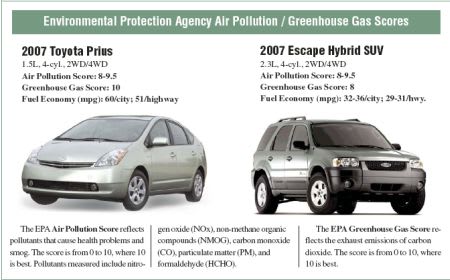
Source: Environmental Protection Agency's Green Vehicle Guide
The Hoffmann-La Roche Inc. (Roche) hybrid-car fleet program now accounts for 15 percent of its pharmaceutical sales fleet — 242 vehicles — and is expected to grow with each semi-annual buying cycle. According to company officials, this current hybrid total, comprising Toyota Prius and Ford Escape gas-electric models, will result in more than 1,000 tons of greenhouse gas emissions reductions and gasoline savings of more than 80,253 gallons each year.
Headquartered in Nutley, N.J., Hoffman-La Roche is the U.S. pharmaceuticals headquarters of the Roche Group, a leading international research-oriented healthcare group with core businesses in pharmaceuticals and diagnostics.
Program Cuts Emissions & Costs
The company supports the development of more fuel efficient vehicles
and recent efforts in Congress to improve vehicle fuel economy standards. With the expanded hybrid program, the Roche fleet is using less gasoline, reducing emissions, and cutting fleet costs, according to Jack Kace, vice president, corporate environmental & safety affairs.
“Roche is a leader among pharmaceutical companies striving to make a difference, and this hybrid car program is a prime example of how all companies can make a contribution,” said Terry F. Yosie, president and CEO, World Environment Center, an independent, not-forprofit, non-advocacy organization based in Washington, D.C.
Roche began its hybrid-car program in July 2004 by replacing 20 conventional gasoline-powered vehicles with Prius and Escape models. The vehicles’ improved fuel efficiency, lower emissions, and positive user performance reviews prompted the company to expand the program. Roche also plans to increase the selection of fuel-efficient vehicles throughout its fleet.
Company Focus on Sustainability
Throughout its history, Roche has been active in instituting environmentally-friendly programs, focusing on energy efficiency and waste reduction programs. In addition, the company sponsors sustainability and energy awareness days to encourage all employees to be environmentally responsible.
The Roche Companies in the U.S. have joined forces with the Environmental Protection Agency (EPA) Climate Leaders Program. This group is a voluntary industry-government partnership that encourages companies to develop long-term comprehensive climate-change strategies and set greenhouse gas (GHG) emissions reduction goals. For more information, access: www.epa.gov/climateleaders.
More Operations

How Fleets Can Recruit and Train Veterans for Technician Roles
Here's how the technician shortage has affected uptime for fleets, and what to do about it.
Read More →
Avis Budget Group Deploys Neology Toll Management Technology Across Major Brands
Neology’s neoFleet platform will manage toll transactions and toll-authority operations for vehicles across Avis, Budget, Payless, Budget Truck and Zipcar.
Read More →
Fleet Personal-Use Charges Edge Higher in 2026
Nearly eight in 10 surveyed fleets allow personal use of company vehicles, while just over half of respondents report charging employees for the privilege.
Read More →
The Future of Fleet + What’s Changing Right Now | AF News Recap
Could developments overseas offer a preview of what’s coming for U.S. fleets? This week, we’re looking at the future of AI, autonomy, and electrification, plus Ford Pro’s new certified pre-owned program, smarter vehicle offboarding, and a new way for fleets to manage toll expenses.
Read More →
How to Handle Vehicle Offboarding
What do fleet managers need to do when a driver leaves?
Read More →
Fleet Manager’s Ultimate Playbook: Navigating the New Standard in OEM Connectivity
Rising operating costs, driver safety concerns, and unplanned downtime are putting unprecedented pressure on modern fleets. Discover how fleet managers use embedded OEM connectivity and real-time vehicle data to cut TCO, prevent downtime, and protect drivers without aftermarket telematics hardware.
Read More →
U.S. Bank Adds Verra Mobility Toll Management to Voyager Fleet Platform
The integration allows U.S. Bank Voyager fleet customers to manage toll payments and violations alongside fuel, EV charging and maintenance expenses.
Read More →
ADAS Prevents Crashes. But Repairs Cost More | AF News Recap
ADAS-equipped vehicles may crash less often, but they can cost more when they do. This week, we’re breaking down what that tradeoff means for fleets, plus Subaru’s first Forester Wilderness Hybrid, Nissan’s new e-POWER Rogue, and why Calstart has become Catalyst Mobility.
Read More →
Moventum Fleet Management Names Mark Iorillo Head of Sales
Iorillo brings nearly 20 years of fleet management and sales experience to the role, including previous positions at Element Fleet Management, CEI, Donlen and Ryder.
Read More →
Fleet Has a Talent Pipeline Problem. What Comes Next? | AF News Recap
Where will fleet’s next generation of leaders come from? This week, we’re looking at the industry’s talent pipeline, what certification can add to a fleet career, how to build an award-worthy track record, and the return of Automotive Fleet’s Personal Use Survey.
Read More →