




Residual Values Forecasted To Decline 1.5% in 2004
While a positive forecast of the national economy supports continuing improvement in resale values, retail new-vehicle incentives remain the wild card in determining the future strength of the wholesale used-vehicle market.
Resale values will continue to slide during the 2004 calendar year, although at a slower pace than the previous two years. Automotive Lease Guide (ALG) anticipates this slower pace will persist, driven by decreases in used-vehicle supply.
The interplay of used-vehicle supply, a wobbly economic recovery, wage growth, and high retail incentives/low net pricing for new vehicles will most likely continue the current price deflation in the resale market over the next few years - although at a slower pace.
Resale values slid downward in 2003, albeit at a much slower pace than the prior two years. Automotive Lease Guide (ALG), a provider of residual value information headquartered in Santa Barbara, Calif., anticipates this trend will continue to subside during the 2004 calendar year, primarily driven by decreases in used-vehicle supply, caused by lower lease penetrations during 2001 and 2002. Positive economic forecasts support a continuation of the incipient improvement in resale values experienced during the second half of 2003, but retail incentives are the wild card in determining the future strength of the resale market. ALG expects incentive spending to continue its torrid pace to keep new-vehicle sales from slipping to lower levels, offsetting any gains that otherwise would be witnessed in the used-vehicle market.
Three key drivers support ALG’s forecast and help explain the performance of resale values during 2002 and 2003. They are:
• Weakening demand due to sluggish economic growth has created a negative pricing environment for new and used vehicles.
• Trying to maintain volume with lackluster demand (push-based strategy) has caused retail incentive spending to increase dramatically. Retail incentives are expected to increase in the short-term until either economic conditions vastly improve or production schedules for new vehicles are significantly reduced.
• Record used-vehicle supplies, combined with a negative pricing environment for new vehicles, created extreme price pressure on the resale market during 2002 and 2003.
As the ratio of new-vehicle prices to price incentives changed over the past 10 years, manufacturers’ pricing power weakened considerably. The negative pricing environment is exacerbated by the sharp increase in retail incentive spending, which began in 2000 and continues to reach record levels every year.
Chart 2 demonstrates the new-car Consumer Price Index change (Bureau of Labor Statistics) compared to retail incentive spending (CNW Market Research) during the past 10 years. The data illustrates auto manufacturers’ lack of pricing power since 1998. The negative pricing environment is exacerbated by the sharp increase in retail incentive spending, which started in 2000 and continues to reach record levels every year. Combined, these effects decrease transaction prices for new models and depress the resale value environment.
Following the initial success of incentives since fourth quarter 2001, current increased incentives have had limited success. From January 2000 through March 2003, incentives have increased by 17 percent annually, while SAAR (seasonally adjusted annual sales rate) has declined about 3 percent per year.
Segments with historically high incentive spending (i.e, mid-size vehicles) incur lower pass through rates than the industry average (blue line). Those with recent incentive increases (e.g., near-luxury models) experience the greatest negative impact on residual values (red line).
Incentives Dominate Residuals
Retail incentives during 2003 continued to rise compared to 2002 levels. These increases come on the heels of a 20-percent, year-over-year upsurge in incentive spending experienced from 2001 to 2002.
ALG has determined that a strong negative correlation exists between residual values and retail incentives, which helps explain the sharp declines in resale values during the past three years. Domestic models relied heavily on incentive spending to maintain market share with a trade off of soft resale values for used models. Japanese manufacturer incentives remained relatively low compared to the rest of the industry. The strong sales for Japanese manufacturers were supported by new-product introductions launched at “value prices” relative to the industry. For example, Toyota’s launch of the redesigned 2004-MY Sienna was accompanied by a 4-percent price reduction compared to the MSRP of the 2003 model. {+PAGEBREAK+}
Incentives Relationship to Sales
The effect of retail incentives on sales continues to deteriorate, as illustrated in Chart 3. After the initial success of zero-percent financing and other incentives since fourth quarter 2001, current increased incentives have had limited success. From January 2000 through March 2003, incentives have increased by 17 percent annually while SAAR (seasonally adjusted annual sales rate) has declined about 3 percent per year.
Retail incentives will have to increase significantly to maintain sales since “demand elasticity” has become less sensitive. This relationship represents a significant risk to new-and used-vehicle pricing and limits the ability of manufacturers to launch new products without incentives. ALG’s present residual forecast anticipates 2004 retail incentives to increase an additional 15-20 percent.
ALG studied the impact of retail incentives by segment in 2002 and found that the pass-through rate of incentives to resale values varies by segment. Chart 4 provides a high-level overview of the significant deltas in pass-through rates on models of various ages in the used-vehicle market.
Outlook for 2004-2005
ALG residuals currently forecast slight deflation (approximately 1.5 percent) will occur in the used-vehicle market over the next few years, a modest adjustment considering the resale performance trend. Forecasted improvement for macroeconomic factors, bullish projections for economic growth, and a decline in the used-vehicle supply support this position.
However, high retail incentive strategies will continue to deteriorate resale performance for many models. The performance of each manufacturer hinges on stimulating demand for products without resorting to price-based competition. ALG’s opinion for each group is based on the specific actions of each group that will ultimately determine their competitiveness in the used market.
ALG forecasts 1.5-percent negative pricing in the industry for 2004.
The high MSRP/high-incentive strategy will be tested as domestic manufacturers plan to launch several new models in the next few years.
Compact SUV, crossover utility vehicle, full-size truck, minivan, and premium luxury values are forecasted to decline at a faster rate than the average due to increased supply and price competition. Near-luxury vehicles will be successful and offer the most potential for increased resale values.
ALG residuals continue to assume price deflation in 2004-2005, based on record used-vehicle supplies, negative pricing, and a relatively weak economic outlook in that time frame.
Residuals should stabilize or improve starting in 2004, based on the 1 million fewer lease originations in 2001 compared with 1999. This 25-percent decline in the 2-to 4-year-old-vehicle supply over the next two years should offset the risk of increased incentive spending.
Wage growth will be a key indicator driving inflation in resale values from a macro standpoint, and retail incentives/net pricing will be the critical driver for residuals in the next few years from an industry-specific standpoint.
ALG forecasts relative improvement in resale values in 2004-2005 as the risk of further deterioration in net pricing is partially offset by lower used-vehicle supply. ALG does not forecast big improvements in the macro national economic environment at this point.
Raj Sundaram is president of Automotive Lease Guide (ALG), a leading provider of residual value information, analytical data products, and software solutions. He also serves as an industry consultant and can be reached at rsundaram@alg.com.
More Operations

The Top 300 Commercial Fleets
The Top 300 Commercial Fleets: See the List
Read More →
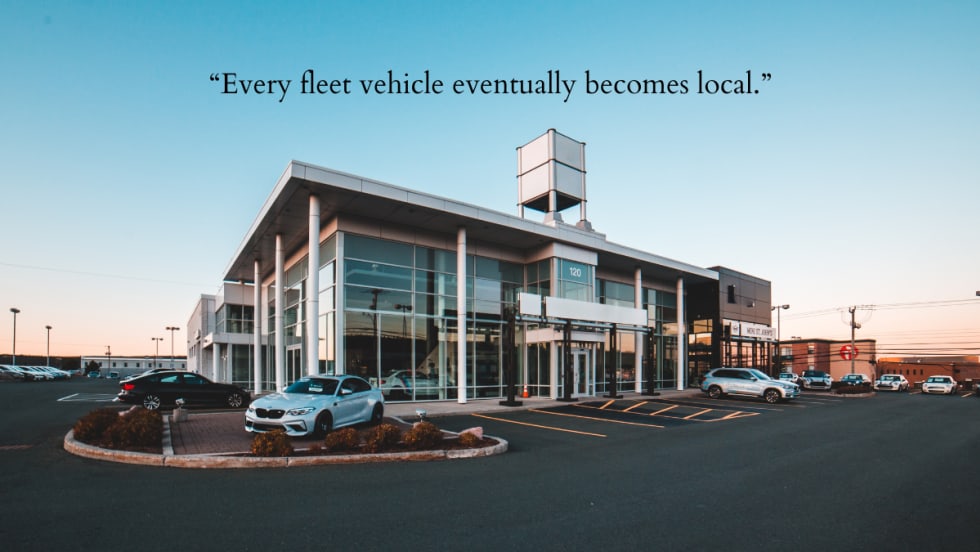
Your Local Dealer Knows More Than You Think
Your local dealer can provide an information advantage that extends well beyond courtesy deliveries.
Read More →


Fleet Meets: Austin Schutte
Here are some industry insights, personal touches, and words of advice from the CEO and Founder of Anew Solutions.
Read More →
Soap Box Derby Challenge: What’s Powering Team Brown
The car is coming together, the students are solving real build problems, and the fleet industry is helping push Team Brown toward the starting line.
Read More →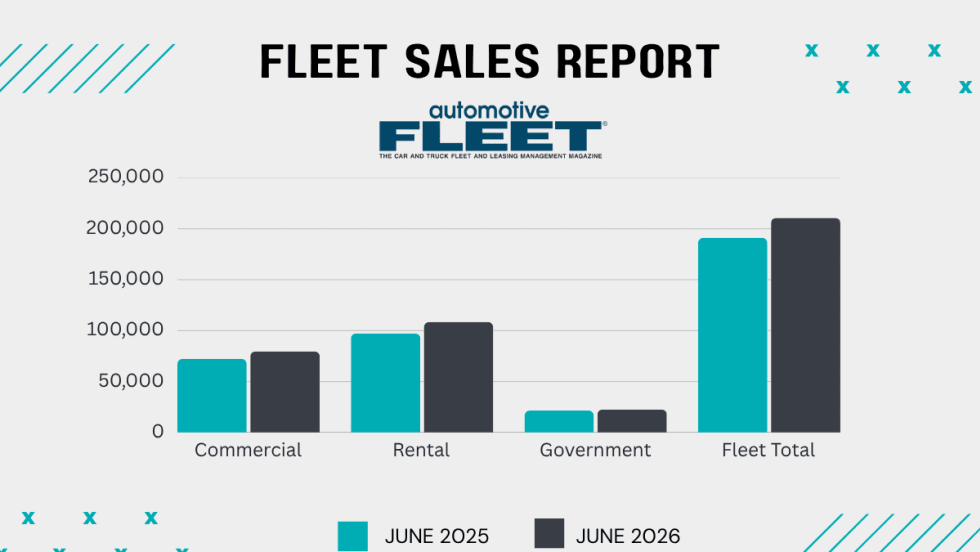
Commercial Fleet Sales Contribute To June, YTD Gains
The fleet sector has boosted its vehicle purchases at a reliable pace in the first half of this year compared with 1H 2025.
Read More →
What Fleet Managers Really Want From Vendors
From customer service frustrations and technology breakdowns to RFQs, change management, and the growing impact of turnover across the industry, this conversation pulls back the curtain on the real operational challenges fleet managers are navigating every day.
Read More →
Fleet Safety Masterclass: Industry Leaders on Storytelling, Strategy & Innovation
In this special masterclass episode, industry leaders break down what it really takes to build safer fleets in today’s increasingly distracted and data-driven world.
Read More →
Integrating Legacy Fleet Systems and Historical Data
In this episode, we bring together fleet and technology leaders to unpack the realities of data integration, system migrations, and the evolving role of AI in fleet management.
Read More →
From Resistance to Results: Change Management Strategies for Fleets
From new technologies and safety programs to evolving regulations, fleets are under constant pressure to adapt. But as Dr. Betz explains, success isn’t about the system you implement—it’s about whether your people actually use it.
Read More →