





Another Story: Higher Labor, Parts Drive Up Fleet Maintenance Costs
Replacing Engines Instead of Buying New Vehicles
In many cases, replacing an old fleet vehicle engine with a rebuilt or remanufactured engine is more cost-effective than buying a new car or truck.
May 1, 1999
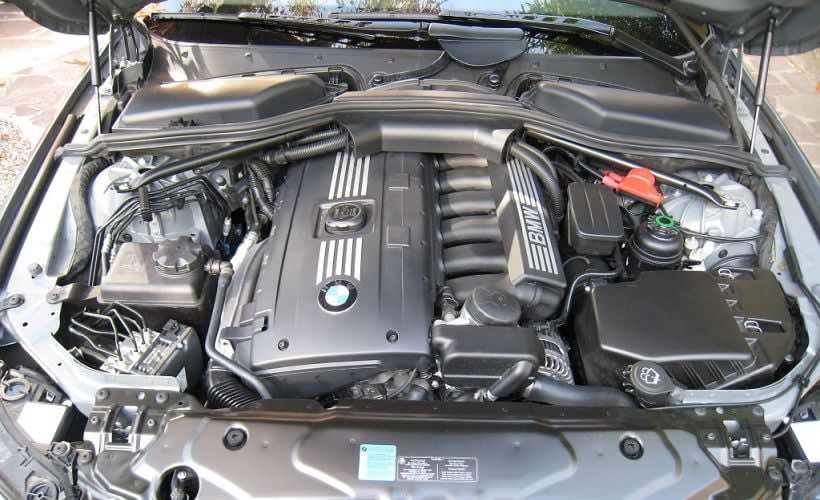
Replacing a fleet vehicle's engine can sometimes be more cost-effective than purchasing a new vehicle.
Photo via E60 Forums/Wikimedia.
6 min to read
In some cases, engine replacement is a viable alternative to acquiring a new car or truck. It can be done for a fraction of the cost, plus you avoid taxes, license fees, and insurance expenses that are incurred in vehicle replacement.
Replacing a used engine can save money and extend the service life of commercial trucks and other fleet vehicles. Here are four factors to consider:
Any vehicle that is otherwise in sound overall mechanical condition and is planned to be in service for several more years is a good candidate for .
Engine replacement offers savings in taxes, license fees, and insurance coverage costs.
Replacements can be done at a set interval or at the time of failure.
Remanufactured engines should last as long as the original engine, effectively doubling the lifespan of the vehicle.
Vehicle replacement cost is among the biggest expenses facing managers of all types of fleets. Engine replacement, however, can save thousands of dollars per vehicle by eliminating the need to buy new cars or trucks. Depending on the size of your fleet, that could amount to enormous annual savings.
In addition, an engine replacement offers savings in taxes, license fees, and insurance expenses that would otherwise be incurred in buying a new vehicle. Also, rather than the four- to seven-year depreciation cycle of a new vehicle, truck or car engine replacements can be depreciated in the same year.
For the purposes of this article, engine replacement is defined as the removal of the original engine and replacement with a new, rebuilt, or remanufactured engine.
When considering engine replacement costs, one factor is the intended lifecycle of the vehicle in question. If the vehicle is planned to be in service for another three to five years and is in sound overall condition, it is a good candidate for engine replacement.
Replacement Intervals: Reactive or Proactive?
When is the right time to replace the engine? One school of thought is the reactive method, which is to replace it at the time of engine failure.
“Typically, we do [engine] replacements when the engine fails,” said Duane Walker, plant manager for Eddins-Walcher Co., a petroleum distributor based in Odessa, Texas.
The company performs eight to nine engine replacements in a typical year for its fleet of approximately 200 vehicles.
The alternative solution is planned replacement at a specific mileage, regardless of whether the vehicle is experiencing significant engine troubles. The proactive method offers other savings in maintenance costs, since the related parts receive less ancillary wear due to engine issues.
“We found that if you are proactive in replacing engines, you won't spend more in the long run, although your initial expense may be more,” said Bob Haddox, director of transportation for Tulsa Public Schools, which routinely replaces engines to extend vehicle service life in its fleet of 600 trucks, buses, cars, and maintenance vehicles.
With planned engine replacement work, it's a good idea to schedule it during slow times of the year, since replacing used engines typically takes mechanics 14 to 22 hours of labor time. This is in addition to the time it takes to order and ship the replacement engine.
Replacement Engines Should Last as Long as the Original
Once a vehicle has undergone a used engine replacement, the newly installed device should be able to last at least as long as the original engine, provided the other systems are all in sound mechanical condition. For example, if you have an engine replaced at 150,000 miles, its replacement should be expected to last for another 150,000 miles if it is properly maintained.
In some cases, remanufactured engines (sometimes called refurbished engines) offer increased performance over new factory engines of the same model and size. Some companies, such as Jasper Engines and Transmissions, a national supplier of rebuilt engines, make modifications that can improve the performance and durability of engines.
Rebuilt or Remanufactured: What's the Difference?
The term “rebuilt engine” refers to any engine that is removed from the original vehicle, repaired, and replaced in that vehicle or any other vehicle. Unfortunately for the consumer, there are no specific standards for what types of repairs are done to a rebuilt engine. Some companies may only do necessary engine repairs, such as replacing damaged pistons or valves; others may make more thorough changes, such as replacing all pistons and valves.
The term “remanufactured engine” refers to a used engine, or “core,” which has been completely overhauled to “like-new” condition, including the replacement of all parts such as valves and pistons, and the removal and reconditioning of all parts. In terms of function, it is the equivalent of a new engine.
“With a remanufactured product, you have the benefit of hindsight,” said Mike Pfau of Jasper Engines. “When these original engines were designed and built, they were designed and built in a certain manner. When they get into service, there may be things that have failed, which did not hold up as well, that experience and history can teach us. So we as manufacturers will look at those areas, and we'll make modifications that will improve the overall performance and durability of the engine.”
Typical modifications include replacing the intake valves with sodium-filled valves; replacing exhaust valves with stellite exhaust valves; putting in a hardened crankshaft; installing hyper-eutectic pistons; installing chrome-moly piston rings; adding a Teflon rear seal; installing chrome-plated valve stems; and installing graphite-coated pistons. The addition of high-performance parts, which are more resistant to heat and friction, increases engine performance and durability. Though these types of remanufactured engines are somewhat more expensive, they offer cost savings in reduced maintenance and vehicle downtime in the long term.
When judging their engine replacement options, fleets have to consider engine quality and durability, and the types of warranties provided, as well as how long the company has been in business. What do its other customers say about the product? What parts does it automatically replace as part of covered engine service, and are there parts that it will not, and why? Do they test them? Those are all criteria that fleet managers need to look for in order to shop for the best value.
When Engine Replacement Isn’t a Good Option
It’s not always cost-effective to replace the engine of your car or truck. One potential problem is the overall age of the vehicle. If you install a new engine on a vehicle with 100,000 miles on it, that doesn’t change the fact that most other parts and components have sustained 100,000 miles of use as well. These aging components include:
HVAC system
Catalytic converter
Headlights
Suspension
Power steering
Transmission
These can be expensive to repair or replace.
Getting rid of your engine troubles doesn’t necessarily mean you’re getting rid of all the vehicle’s troubles. The expenses associated with the various repairs commonly required to keep a well-used car or truck on the road can cancel out the savings obtained from replacing the engine. If the vehicle is getting up there in mileage, it may be wiser, and a cheaper option in the long run, to buy a new car or truck (or a reliable used car or truck). Perform a thorough inspection of the vehicle before you make a decision.
You also need to consider the type of engine in the vehicle. A V8 engine will typically be more costly to replace than a V6, which, in turn, is more expensive than a V4. Sometimes, replacing the engine would cost more than the vehicle is worth. Another consideration to bear in mind is that auto labor costs tend to rise with inflation.
Calculating all the maintenance expenses associated with a vehicle, including those that will likely arise in the future, is essential before you make an appointment with auto mechanics to install a new engine.
Did you find this article informative? Feel free to leave a comment or subscribe to our newsletter.
Subscribe to Our Newsletter
More Maintenance

Sponsored•October 1, 2026
Fleet Manager’s Ultimate Playbook: Navigating the New Standard in OEM Connectivity
Rising operating costs, driver safety concerns, and unplanned downtime are putting unprecedented pressure on modern fleets. Discover how fleet managers use embedded OEM connectivity and real-time vehicle data to cut TCO, prevent downtime, and protect drivers without aftermarket telematics hardware.
Read More →
How Can Fleet Managers Tell Which Repairs Require Closer Review?
Fleetio’s Brianna Perry demonstrates how Service Advisor evaluates maintenance requests, identifies pricing anomalies, and provides the context fleet managers need to focus their attention on potential problems.
Read More →
Why Roadside Assistance Belongs in a Fleet Risk Strategy
Roadside assistance is more than a tow. See how the right partner can protect drivers, uncover fleet trends, and strengthen your risk strategy.
Read More →
Sponsored•August 7, 2026
Hidden in Plain Sight: Fleet Compliance Risks
Fleet compliance isn't just about having policies — it's about consistently enforcing them. This practical guide reveals six hidden compliance risks common in public sector and shared fleet operations and outlines proven strategies to improve visibility, accountability, and audit readiness
Read More →
How Maintenance Costs Compare Across 27 Fleet Vehicles
Vincentric’s three-year, 60,000-mile projections reveal wide differences for both scheduled and unscheduled maintenance among selected vehicle categories. Projected maintenance visits also play a factor.
Read More →
The EV Breakdown Nobody's Talking About: Why Most Electric Vehicle Roadside Calls Aren't Mechanical Failures
Here's why EV breakdowns are widely misunderstood.
Read More →
How Stellantis Plans to Get Ahead of Fleet Downtime
Keeping fleet vehicles on the road has become as important as buying them. Darren Bradshaw of Mopar North America explains how connected vehicle data, AI, and proactive service strategies are helping Stellantis reduce downtime and move closer to predictive maintenance.
Read More →
Merchants Fleet Expands Maintenance Network with Pep Boys
Merchants Fleet has expanded its relationship with Pep Boys, increasing the service provider's role within its national maintenance network. The move is intended to enhance maintenance coordination and support commercial fleets through Pep Boys' nationwide footprint.
Read More →
The Two Biggest Summer Downtime Threats for Fleets
A conversation with a maintenance expert reveals the two most common summer maintenance pains and how to prevent them.
Read More →
From Marine Corps Motor Pool to Managing 460 Fleet Vehicles
Cesar Ayala of O’Connell Landscape Maintenance shares how he transitioned from the Marine Corps to managing a 460-vehicle fleet—and the real-world challenges of maintenance, compliance, and driver management in California.
Read More →