




Reflections on the Vehicle Leasing Industry
This month, John McKean retires as chairman of LMV Leasing, a subsidiary of Xerox Credit Corp, Reflecting upon his 41-year career, McKean shares his observations on the growth of LMV and the vehicle leasing industry.
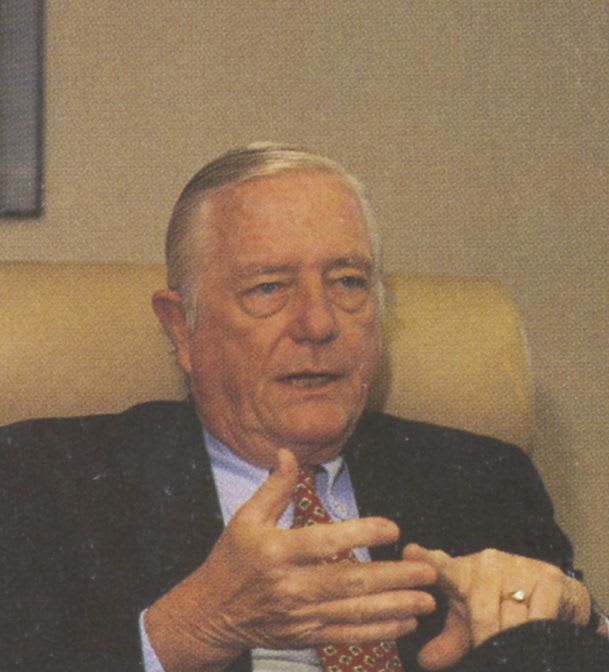
Lease rates are more and more important today, but you still need good service to win customers, says John McKean, who retires as chairman of LMV Leasing this month, following a 41-year career.
"Leasing is a challenging way to make a living, that's for sure," adds McKean, who will slay on as a consultant to LMV, a firm his father founded in 1952.
McKean led LMV into its acquisition by Xerox Credit Corp. in 1983, and then headed the firm with LMV President Andrew Strauss during the rapid growth period that followed. He turned over the day-to-day operation of the company to Strauss three years ago.
McKean says the consolidations that have marked the leasing industry in recent years will continue for the foreseeable future.
"You have to get bigger and better or you have to leave the game." McKean says. "You just can't compete on a national level without good rates, and usually you need size to qualify for those rates."
Since its acquisition by Xerox Credit, LMV has grown from a regional fleet of 7.500 vehicles to a national fleet of more than 40,000 vehicles under lease or management agreements today. About 12,000 of the current fleet are Xerox vehicles.
LMV's Xerox connection gives it much more financial clout than its fleet size would indicate because of Xerox's borrowing power, McKean says.
"We're looking to grow by acquisition if the numbers are right," he says. "Return on equity is the key consideration for everything we do."
Reflecting on his career at LMV, McKean points to the acquisition by Xerox Credit as the pivotal moment.
"Joining Xerox Credit was the smartest business decision I ever made," he says. "It was a perfect match. They wanted a company big enough to service their fleet, and at the same time ready and able to grow. We fit that description and I think we've performed well for them."
Xerox Credit left the McKean/Strauss management team intact and encouraged them to grow the business. LMV's Pittsburgh, PA headquarters has been expanded twice in the last five years and the staff has grown from 25 to more than 150. Ten regional sales offices also have been opened throughout the country during that period.
"We were able to hire some very talented people with lots of energy and drive who have played a major role in our growth," McKean says. "Mike Saxton, vice president of commercial fleet business, and Dave Corso, vice president of finance and administration, are typical of the people we hired."
McKean says LMV's relationship with its parent has always been friendly and beneficial. He cites Xerox Credit Corp. President William Montgomery and Xerox Fleet Business Manager Ron Pink as vital to the success of this relationship.
"Bill Montgomery has taken a strong interest in the vehicle leasing business but he's left most of the personnel and expansion decisions up to us," McKean says. "He's counting on our expertise and our ability to perform," he adds.
"Ron Pink manages one of the largest fleets in the nation, so serving the needs of a fleet that size was certain to be a challenge," McKean adds. "But Ron has really been a team player. He not only uses our services, especially fleet management, to the fullest, but he's been a real advocate for us in the industry."
McKean admits that at the time of the acquisition he had no idea just how important the Xerox relationship would become.
"If we hadn't gone with Xerox we would be a lot smaller today than we were then," he says. "I think there's still a market for the very small leasing companies if they can provide good service. The mid-size companies really have it tough."
The leasing industry was completely different in 1952 when LMV (Leased Motor Vehicles) was started as an outgrowth of the McKean family's Oldsmobile dealership in Pittsburgh. McKean, who grew up in the business working in service, parts, used cars, and sales, took a full-time role in the dealership after graduating from Perm State in 1948.
"Leasing was a fairly new concept back then, but we jumped at the chance to get in when we were offered part of the U.S. Steel fleet," he says. "It was soon apparent that we could buy and sell vehicles better than our customers could on their own, plus we did all of the administrative headaches such as titling and licensing."
McKean was named president of LMV in 1966 and oversaw slow, but steady growth for the next 17 years. He was one of the founding members of the Automotive Fleet and Leasing Association and became its fourth president in 1969.
"We wanted to remain profitable, of course, but growth wasn't of utmost importance in those years," he says. "We had 12 employees and 2,700 units when I took over. The client base was small and we worked on service. Service was very important then and it still is today."
A number of key LMV employees today were already in place or joined the firm shortly after McKean took over. Jay Campbell, director, administrative services; Mary Zoltak, manager of contract administration, and Ray Smith, manager of used vehicle marketing, have grown with the company.
Computerization is the greatest change in the leasing industry over the years, McKean says. The computer, along with overnight delivery and the telefax machine, has made all services faster, more efficient, and more accurate, he adds.
"Fleet management services is where the customer sees the most benefit, compared to where we were 10 or 20 years ago," McKean says. "Maintenance of a fleet is where you can really control costs and save the most money. With the Xerox fleet, for example, we have to approve every major repair. The drivers call us directly and we have the computerized records to know immediately if something is not in order. We save them a ton of money this way."
But it's the people behind the computers and at the other end of the telephone who make the difference, McKean says.
"We had good people then and we have good people now," he says.
"We've hired people who share my commitment to service. That's what I enjoy about this business."
More Operations

Fleet Has a Talent Pipeline Problem. What Comes Next? | AF News Recap
Where will fleet’s next generation of leaders come from? This week, we’re looking at the industry’s talent pipeline, what certification can add to a fleet career, how to build an award-worthy track record, and the return of Automotive Fleet’s Personal Use Survey.
Read More →
Smith System Launches Driver Risk Management Program
Fleets have more driver data than ever, but identifying risky behavior doesn't necessarily correct it. Smith System's new Driver Risk Management program combines monitoring, training, and follow-up coaching to help fleets connect risk signals with driver intervention.
Read More →
Automotive Fleet Opens 2026 Personal Use Survey for Commercial Fleet Managers
Less than two weeks left! Commercial and corporate fleet managers are invited to share how their organizations handle company vehicle personal-use policies, charges, and driver eligibility.
Read More →
From AI Prompts to AI-Generated Safety Songs | AF News Recap
Can better prompts make AI more useful for fleet managers? This week, we’re breaking down smarter fleet analysis, an AI-assisted experiment that turned safety training into music, and what happened to fuel prices in August.
Read More →
How to Write Better AI Prompts for Fleet Analysis
Include these six elements in your fleet prompts to generate more relevant analysis and accurate answers.
Read More →
Fleet Meets: Eric Kilgore
This edition of the Fleet Meets series features one of the industry's best leaders driving multi-market and national operations.
Read More →
Why Reactive Fleet Management Is Becoming Too Expensive to Sustain
Research highlights a growing need for proactive management strategies to address rising costs in fleet operations effectively.
Read More →
What Your Fleet KPIs Aren’t Telling You
Tracking fleet metrics is only useful when the data leads to better decisions. This guide helps fleet leaders assess cost, utilization, and downtime more accurately, identify performance gaps, and prioritize the actions that can improve operational results.
Read More →
Hidden in Plain Sight: Fleet Compliance Risks
Fleet compliance isn't just about having policies — it's about consistently enforcing them. This practical guide reveals six hidden compliance risks common in public sector and shared fleet operations and outlines proven strategies to improve visibility, accountability, and audit readiness
Read More →
Turning Fleet Payment Data into Executive Insights
Does data alone drive results in operations?
Read More →