




Ram ProMaster Reporting for Duty
Prior to its first deliveries in September, the Ram ProMaster received interest from a broad array of fleets, which stems from its flexible design configurations and its ability to be easily upfit.

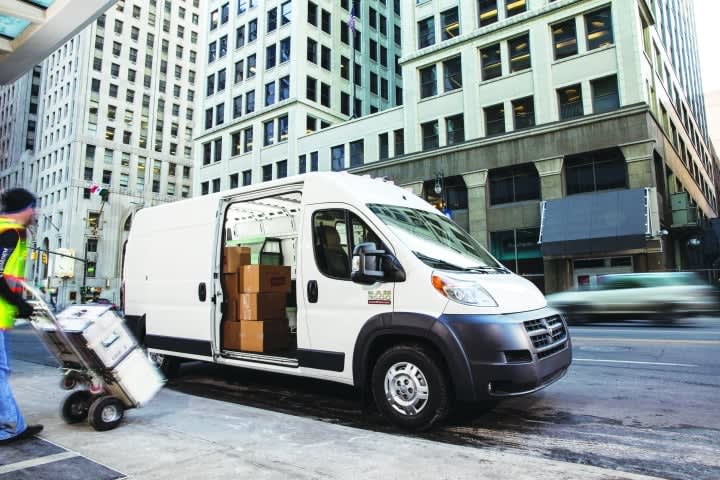
Among its features that have piqued the vocational market, the Ram ProMaster has a side cargo door, a low floor height, and a high roof. Test fleets were impressed by the van's handling, according to Ram.
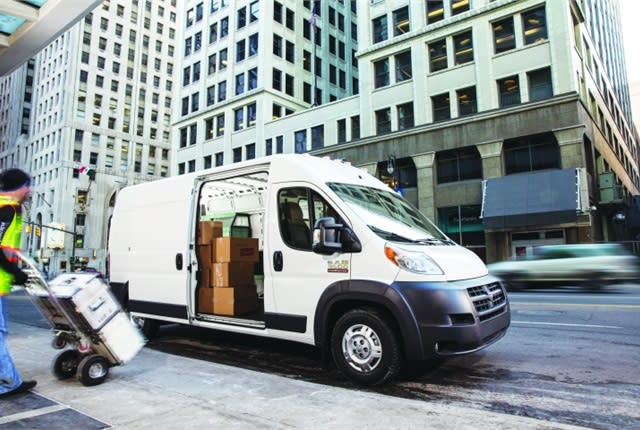
Among its features that have piqued the vocational market, the Ram ProMaster has a side cargo door, a low floor height, and a high roof. Test fleets were impressed by the van's handling, according to Ram.
The Ram ProMaster full-size van has begun arriving in dealer showrooms and is demonstrating that it’s ready for duty.
Prior to its first deliveries in September, the van received interest from a broad array of fleets, which stems from its flexible design configurations and its ability to be easily upfit.
“There has been an interest among a broad spectrum of fleets. This is because of the ProMaster’s versatility and amount of best-in-class features, which really opens it up to the multiple vocations, and that was part of the design,” according to Jim Sassorossi, director, fleet commercial & rental sales for Ram.
While the Ram ProMaster is new for the U.S. market, it is the continuation of a long tradition that began in Europe. Based on Fiat Professional’s Fiat Ducato, the ProMaster has a lineage that stretches back more than 30 years of proven performance in the European and world markets. This gave Ram the ability to test the van prior to its American-version debut.
“We were able to pull some Ducatos over here a year ago and have them in long-term tests, which have gone well,” Sassorossi said.
Engineered With Options in Mind
The Ram ProMaster models that are available are the 1500, 2500, or 3500 Cargo Van; 2500 Window Van; 3500 Chassis Cab; and the 3500 Chassis Cab Cutaway with three wheelbases ranging from 118 inches to 159 inches.
The ProMaster is available with two roof heights: 90 or 101 inches.
Altogether, there are 14 different base configurations of the Ram ProMaster available from the factory.
Sassorossi noted that each van type is suited to a particular target vocation.
For instance, the full-size Cargo Van has seen interest from the telecommunications, food service, vending, parcel, mobility, and commercial rental industries.
The Chassis Cab is particularly suited to the food and beverage industry, including bakery and linen services. It has also seen interest from the commercial rental and small service industries.
The Cutaway version of the Ram ProMaster is particularly cut out for RV and shuttle conversions.
Jeremy Brown, head of Ram’s vocational sales, noted that the feedback he has received from fleets indicates that they are taking a holistic approach to their vehicle needs.
“Predominately, what we’re seeing is that everybody is looking at their business practices and are trying to do more with less, trying to be more efficient. I don’t think you can say that one vocation is lending itself to a particular vehicle or van, because it’s all over the board. The fleets are looking at it individually,” Brown said.
Aiding in the ProMaster’s individual appeal to the vocational market are the improved ergonomics, particularly its low floor height, which measures just 21 inches from the ground, compared to the next closest competitor at 28 inches, according to Sassorossi.
Along with the low floor height, the ProMaster has a high ceiling height and width.
“You think about the cycle time of how many times somebody is going in and out of the van during the day. This gives the ProMaster a pretty significant ergonomic advantage,” Sassorossi said.
Handling is another factor that has piqued the interest of vocational fleets, particularly the parcel fleets that had access to the Ducato models, according to Sassorossi.
“One of the key features — that the ProMaster is a front-wheel drive van — raised a lot of eyebrows. It passed the test and has become a significant ‘why-buy,’ because of what fleets [that used the Ducato] found in the Northern climate — the extra traction in the varied winters. The front-wheel drive is something that their drivers never had access to and was a significant plus,” Sassorossi said.
Another advantage in these days of economizing and upcoming CAFE regulations is the ProMaster’s fuel efficiency. “It surprised the [test fleets],” Sassorossi noted.
Ram also said customers will be favorably impressed with the vehicle's overall mpg figures.
In addition, the van’s front-wheel drive and unibody construction means it’s “significantly lighter,” Sassorossi noted, which increases the maximum payload capacity to 5,145 pounds and its maximum towing capacity to 5,100 pounds.
The ProMaster is available with either a gasoline-fueled 3.6L Pentastar V-6 or a 3.0L I-4 EcoDiesel engine. The Pentastar is paired with a 6-speed automatic transmission, and the EcoDiesel is paired with an electronically controlled 6-speed automated manual transmission.
Driving performance has been another factor winning over fleets, according to Sassorossi.
“The maneuverability, particularly for parcel delivery, being able to navigate tight turns, along with the front-wheel drive, fuel economy, and low step-in height were the 'wow' factors,” he said.
Made for Upfitting
Apart from its flexible configurations and capabilities, the ProMaster is made for upfitting.
Here, too, its design works in its favor, according to Sassorossi. The van’s floor is flat and the side walls are nearly vertical in relation to the floor, giving the ProMaster a “true box design,” he said.
“Our feedback from the upfitters has been extremely positive, for them to design solutions tailored to the customers, they get maximum use of the cargo capacity. A lot of vans get rounded at the top, so you start losing the width between the shelving and the middle. We don’t have any lost space. We have the high ceiling height, allowing most people to stand up and the width between the shelving on both sides is appropriate. And, for the upfitters, they’re used to having to modify and work within the different angles of the different configurations. They’re extremely pleased to be working with the ProMaster design,” Sassorossi added.
According to Brown, Ram has been working with upfitters to get them units, which has sparked their creativity.
“They have been talking with their customers on what their wants and needs are and to tailor the solutions to them. One of the things we’re picking up from the upfitters, in the past it was about volume and putting shelves and bins in, and, now, the upfitters spend a lot of time with their customers working on specific solutions,” Brown said. The use of composite material is something that a number of the upfitters have been using to maximize cargo capacity.
And, it isn’t just the upfitters Brown and his team have been working with. Customers are part of the dialogue as well.
“We’ve been having a lot of dialogue with the customers. As they see the best-in-class features and the versatility they’re reaching out to their upfitters and saying ‘you’re currently providing us solutions today; what configurations can we do with the ProMaster to continually evolve and make a better tool for our drivers,’ ” he said.
There have been some generic packages already developed for the ProMaster, but nothing specific for a particular vocation, according to Brown and Sassorossi.
To aid the upfitting process, virtually all of the primary vehicle systems are packaged forward of the cargo area.
Ram ProMaster customers can work with whomever they want to upfit the vehicle, according to Brown. “The OEM may change, but many times the upfitter does not change. There is already a current relationship with the upfitter,” he said.
Converting the Ram ProMaster into the passenger version of the van will be 100 percent through the upfitter. “The upfitter can work directly with the customer about the best configuration for the fleet, and then from there it also provides having all the volume through the upfitter, it becomes a more viable case for the upfitter to do the design, the engineering, and the quality testing — and all of the testing approvals for the multiple passenger seating configurations they can get into,” Sassorossi said.
More Operations

A buyer's guide to fleet management software in 2027
Buying fleet management software in 2027 means looking beyond features and price. As fleet operations, technology and expectations evolve, this guide explores what today’s fleet professionals should consider when choosing a system that can deliver value now and adapt to what comes next.
Read More →
What Will Shape the Next Era of Fleet Management?
EVs, AI, and autonomous vehicles are reshaping fleet management. Discover what’s ahead—and how fleet leaders can prepare for the next era.
Read More →
How Fleets Can Recruit and Train Veterans for Technician Roles
Here's how the technician shortage has affected uptime for fleets, and what to do about it.
Read More →

Avis Budget Group Deploys Neology Toll Management Technology Across Major Brands
Neology’s neoFleet platform will manage toll transactions and toll-authority operations for vehicles across Avis, Budget, Payless, Budget Truck and Zipcar.
Read More →
Fleet Personal-Use Charges Edge Higher in 2026
Nearly eight in 10 surveyed fleets allow personal use of company vehicles, while just over half of respondents report charging employees for the privilege.
Read More →
The Future of Fleet + What’s Changing Right Now | AF News Recap
Could developments overseas offer a preview of what’s coming for U.S. fleets? This week, we’re looking at the future of AI, autonomy, and electrification, plus Ford Pro’s new certified pre-owned program, smarter vehicle offboarding, and a new way for fleets to manage toll expenses.
Read More →
How to Handle Vehicle Offboarding
What do fleet managers need to do when a driver leaves?
Read More →
Fleet Manager’s Ultimate Playbook: Navigating the New Standard in OEM Connectivity
Rising operating costs, driver safety concerns, and unplanned downtime are putting unprecedented pressure on modern fleets. Discover how fleet managers use embedded OEM connectivity and real-time vehicle data to cut TCO, prevent downtime, and protect drivers without aftermarket telematics hardware.
Read More →
U.S. Bank Adds Verra Mobility Toll Management to Voyager Fleet Platform
The integration allows U.S. Bank Voyager fleet customers to manage toll payments and violations alongside fuel, EV charging and maintenance expenses.
Read More →
ADAS Prevents Crashes. But Repairs Cost More | AF News Recap
ADAS-equipped vehicles may crash less often, but they can cost more when they do. This week, we’re breaking down what that tradeoff means for fleets, plus Subaru’s first Forester Wilderness Hybrid, Nissan’s new e-POWER Rogue, and why Calstart has become Catalyst Mobility.
Read More →