




Ram Offers PTO Options for All Applications
Fleet managers can now utilize Ram Trucks for all power take-off (PTO) driven applications with the inclusion of both right- and left-hand options.
May 9, 2016

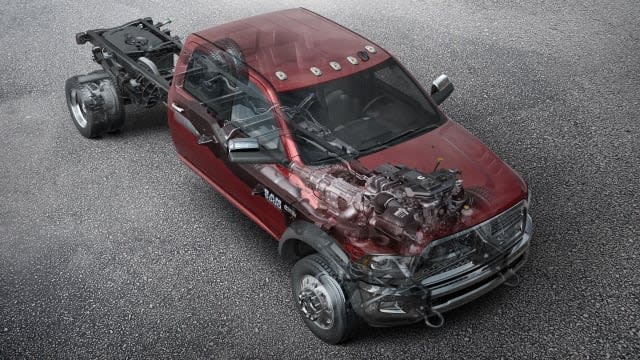
Ram Trucks now offers right- and left-hand power take-off (PTO) options on Ram 3500, 4500, and 5500 Chassis Cab trucks.
Photo courtesy of Ram Trucks.
3 min to read
Ram Trucks is now the only truck manufacturer to offer both right- and left-hand power take-off (PTO) options with a best-in-class 60 hp. Exclusive right-, left-, 4x2, and 4x4 PTO are now available on the 6.4L or 6.7L gasoline and diesel HEMI on Ram 3500, 4500, and 5500 Chassis Cab trucks.
“Since there are hundreds of different applications that can be PTO driven, and some require different space requirements, more PTO offerings allow optimization for efficiency, durability, and cost,” said Chris Borczon, supervisor of the Ram Truck Commercial Vehicle Team.
Up until now, fleet managers had to select a truck based on the PTO options available to power currently purchased devices, such as hoists, generators, and compressors. The main difference between left- and right-hand PTO locations, according to Borczon, are brand specific, especially since many chassis manufacturers only offer one side.
“Specifically, for PTOs that drive equipment on Ram trucks such as big vacuum pumps, generators, or compressors via a driveshaft, left-hand PTO is the only option. But, if you want to mount a big tandem pump, that will be right-hand only,” Borczon said.
Ram is also the only truckmaker to offer Fuel Saver Technology at idle (four-cylinder operation in the 6.4L HEMI), which creates greater efficiencies while on a job site with the ability to run a compressor and generator simultaneously off the PTO.
“The Fuel Saver Technology simply adapts the Hemi’s Multiple Displacement System (MDS) from cars and light trucks. Just as MDS turns off four-cylinders when vehicles do not need all of the V-8 power, in PTO mode, four-cylinders provide enough power for most PTO applications,” Borczon explained. “This provides as much as a 20% improvement in fuel economy while using the PTO.”
Having the ability to run a compressor and generator simultaneously off the PTO has many benefits to a fleet.
“One of the best examples would be a water system repair crew in a big city. Instead of carrying a generator in the bed of the truck (vulnerable to theft) and towing a cumbersome compressor into tight spaces in a downtown business area, a PTO-driven compressor and generator are built into the truck. In addition, there is one engine instead of three to maintain,” Borczon said.
An additional unique feature is a PTO access panel on right-hand applications that allows the PTO to be installed from the top side of the vehicle.
“Just ask any upfitter laying on their back ‘bench pressing’ cast iron PTOs and pumps into position how much better installing from the top is,” Borczon explained.
And, making such changes possible requires a lot of development work and resources to engineer the option in every configuration while maintaining durability.
“Exhaust systems, frame, and other components or the powertrain itself need to be redesigned to accept the differentiation. Ram understands the need going forward and has created a package for any upfitter to adapt multiple systems,” said Nick Cappa, Ram Truck Media Relations at FCA U.S.
In the end, when spec’ing a PTO option, Borczon said, “Ask the experts. Talk to the upfitter who will be installing the PTO, they will know about the PTO requirements to drive the application. And, talk to the people at manufacturer’s Body Builder hotline. They will know which PTO is the best fit for the application you will be running.”
Originally posted on Work Truck Online
Subscribe to Our Newsletter
More Vehicle Research
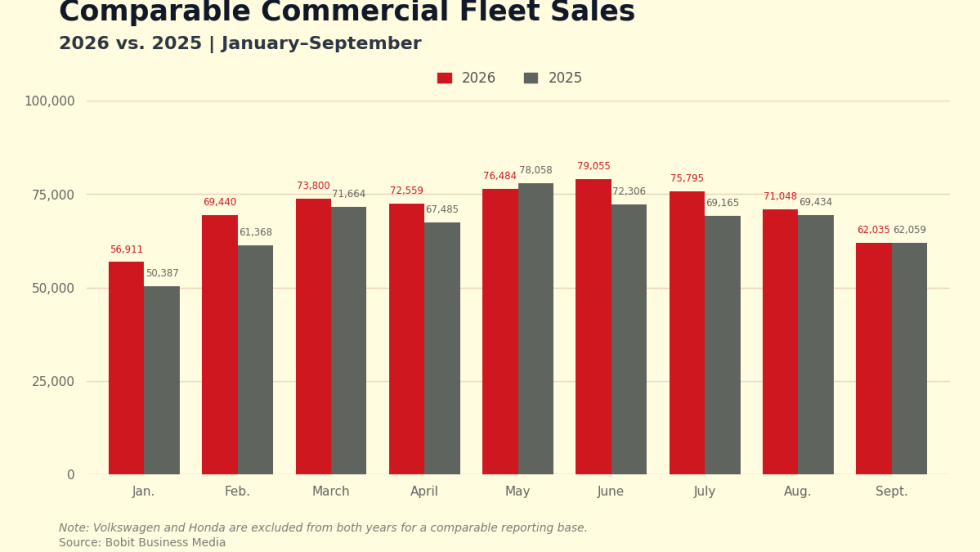
Commercial Fleet Sales Rise 5.8% Through September 2026
September commercial fleet sales were essentially unchanged from a year earlier, slowing year-to-date growth while keeping volume ahead of 2025.
Read More →
Hall of Fame Inductee: John Dmochowsky
The longtime Mondelēz International fleet executive joins the Automotive Fleet Hall of Fame.
Read More →
Hall of Fame Inductee: Lee Miller
After more than four decades at Boehringer Ingelheim, Lee Miller leaves a legacy built on fleet expertise.
Read More →
Hall of Fame Inductee: Mark F. Petersen
From managing fleets of thousands of vehicles to advancing safety and mentoring fellow professionals, Mark F. Petersen made his mark across both the corporate and supplier sides of fleet.
Read More →
When Charger Downtime Becomes a Fleet Availability Problem
As EV deployments move beyond pilot programs, charger reliability can directly affect vehicle readiness, driver productivity and route scheduling.
Read More →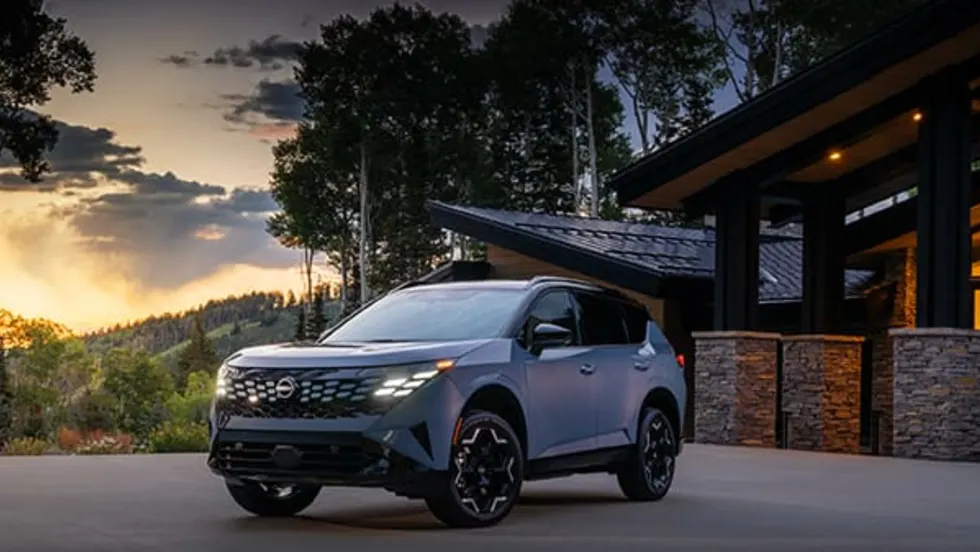
2027 Nissan Rogue Hybrid Adds e-POWER, Standard AWD
The new Rogue Hybrid uses Nissan’s e-POWER system with dual electric motors, offers an estimated 40 mpg and starts at $35,490.
Read More →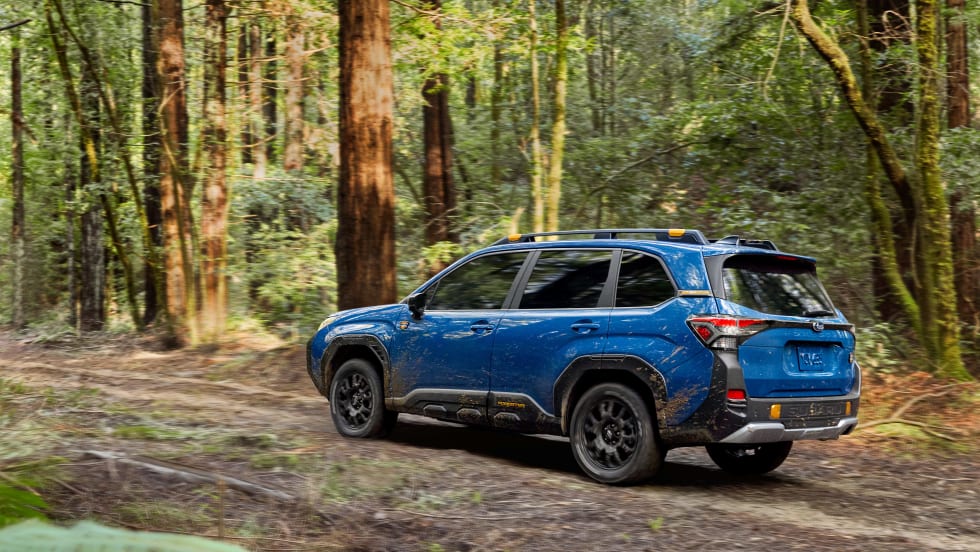
2027 Subaru Forester Adds First Wilderness Hybrid
The 2027 Forester lineup starts at $29,995 and adds a Wilderness Hybrid with 194 combined horsepower and 9.3 inches of ground clearance.
Read More →
EV Realty Names Henrik Holland President as Charging Platform Expands
The former Prologis Mobility and Shell executive will help expand EV Realty’s truck charging business and move its power-first infrastructure model into autonomous vehicle depots and other fleet sectors.
Read More →
Mercedes-Benz Introduces Electric GLC With Up to 350 Miles of Range
The GLC 400 4MATIC Electric features an 800-volt architecture, 330-kW DC fast charging and a 94-kWh battery, along with Mercedes-Benz's new MB.OS operating system.
Read More →
Fleet Has a Talent Pipeline Problem, not a Talent Problem
Where will the next generation of fleet leaders come from, and what does the industry need to do differently to find them?
Read More →