




Public Sector FleetsDeveloping Service Level Agreements with Internal Customer Departments
The majority of public sector fleets do not employ service level agreements between the fleet department and internal customer departments. Although these types of agreements are relatively commonplace between commercial fleets and fleet service providers, only in the past 10 years have they begun to emerge in the public sector.


The majority of public sector fleets do not employ service level agreements between the fleet department and internal customer departments. Although these types of agreements are relatively commonplace between commercial fleets and fleet service providers, only in the past 10 years have they begun to emerge in the public sector. One reason for their emergence among government fleets was a response to the fleet privatization initiatives, in which outsourcing companies made firm performance and cost guarantees to public officials. Those fleets that do employ service level agreements, usually have multiple agreements with different user departments. Service level agreements are most commonly made with fire, solid waste, police, and public works or street maintenance departments.
Servicing the Squeaky Wheel
The first inclination is to initiate a service agreement with your largest customer. However, Jim Wright, president of Fleet Counselor Services, recommends starting with the “squeaky wheel” department. “It is usually not your largest customer, rather a small department complaining about high downtime or cost.”
The first step in implementing a service agreement is identifying end-user issues. “You need to document downtime, cost issues, and customer-perceived lack of performance,” said Wright.
Collecting this information over one completed financial period, typically a month, is recommended. “When collecting this information, always ask the customer department to provide documentation regarding such issues as high cost, poor performance, or higher-than-normal downtime. Ask them to sub-stantiate whatever they can in writing,” said Wright. Conduct a work order analysis to determine the validity of these issues. “More often then not, these allegations are valid,” added Wright.
Rather than reinventing the wheel, seek to acquire similar service agreements from other fleet managers, upon which you can model your agreement. Another alternative is to contact companies such as Fleet Counselor Services, which has a 13-page document that covers all service-related contingencies.
A service agreement is not a one-sided document. “For instance, a customer department may cite high downtime with snow equipment during snowstorms. However, a work order analysis may determine that 30 percent of the repairs performed during snow emergencies are caused by operator abuse,” said Wright. “Based on this information, a service agreement may require the customer department to provide operator training and internal certification on snow equipment.”
Service level agreements should be re-evaluated every budget preparation season. Service level agreements are living documents that evolve over time. “These agreements will change and vary by customer department, because they are driven each year by budget considerations,” said Wright. “In situations where disputes may arise, there also needs to be a binding arbitration clause incorporated in a service level agreement,” added Wright.
Three Mistakes Made by Fleet Managers
Three common mistakes are made in developing a service agreement. The first mistake is when the fleet manager over-promises to the customer department.
The second mistake is not involving your staff in developing service level agreements. A fleet manager should involve his or her staff in service level agreement negotiations throughout the entire process up to the creation of the final document. The fleet department team should be comprised of representatives from the shop floor, parts department supervisor, financial, and obviously the fleet operation management.
“Many service level agreements fail because the fleet manager didn’t involve the day-to-day supervisory management staff that has to meet these performance standards. Sometimes, downtime standards are guaranteed to the customer department that the shop simply can’t deliver,” said Wright.
The third pitfall is creating an issue out of a non-issue. If downtime is not an issue, don’t make it an issue. Don’t make it part of the service level agreement. “When developing a service level agreement, only address those areas where a deficit exists and there is need for improvement,” said Wright.
Benefits of Service Agreements
Are service level agreements worth the time and effort? According to Wright, the main benefits of a service agreement are:
1. It creates a professional business relationship with a customer department that will spread to other departments, such as finance and purchasing.
2. The customer department may not know the “rules of the game” and maybe too embarrassed to ask. By being up-front and open, you can start the communication on a positive note.
3. It assists in identifying cost and performance level prior to the beginning of a new fiscal year.
These are three sound reasons. Let me know if you agree.
More Operations

How Coca-Cola United Protects Its Fleet from Growing Legal Risk
Growing legal exposure can put fleets at risk. Here's one company's approach.
Read More →
Fleet Managers Think They Understand Their Costs. The Data Says Otherwise.
Most fleet managers say they have a strong handle on their costs, but new research from Bobit Business Media tells a different story. A 2026 survey of 190 fleet professionals reveals a widespread "confidence gap" where fragmented systems, disconnected data, and delayed reporting are leaving major blind spots hidden beneath the surface. Find out what the data actually shows.
Read More →
Cameras, Safety and Insurance: From Reactive Claims to Real-Time Prevention (Part 2 of 2)
Part Two: Commercial auto remains one of the most challenging and costly lines of coverage for fleet operators and insurers alike. Continue learning more about how to effectively address these issues from Onur Aksan, Enterprise Business Development Executive, Geotab
Read More →


New Trucks, AI & Summer Downtime | AF News Recap
From new truck updates to AI-powered driver coaching and summer maintenance tips, this week's fleet headlines are all about keeping things moving.
Read More →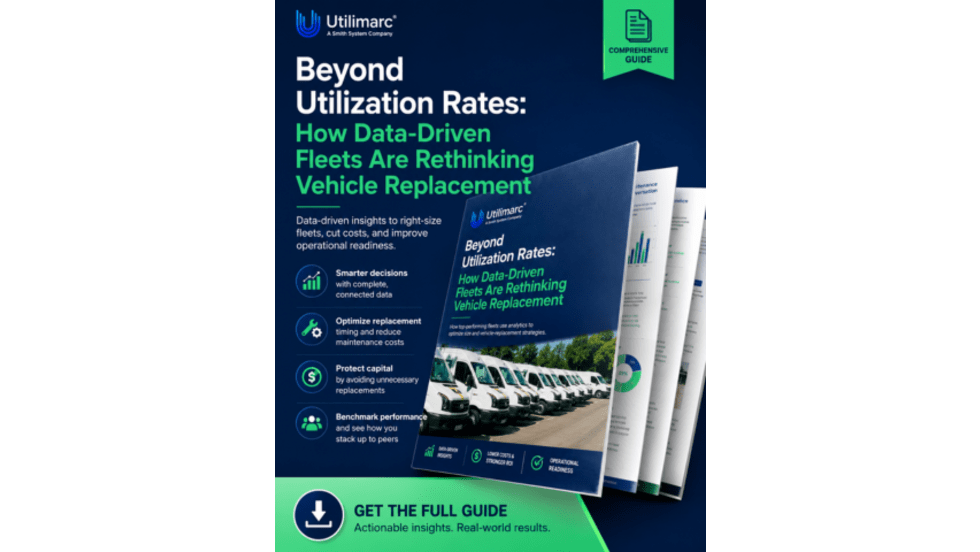
Beyond Utilization Rates: Smarter Fleet Replacement Decisions
Vehicle replacement decisions affect every aspect of fleet performance, from operating costs to asset availability. This guide explores how fleet leaders use integrated data, benchmarking, and lifecycle analytics to determine the right fleet size and optimize replacement timing with greater confidence.
Read More →
Slate Debuts Colorful, Unique EV Models
A recent media and client event, studded with electric vehicles dressed up on platforms, planted a new position for the manufacturer in the wider EV market. Fleets will find cost-saving advantages.
Read More →
Element, Waymo Partner on Autonomous Fleet Operations
The multi-year agreement will support fleet management services for Waymo's autonomous ride-hailing operations, beginning in San Diego.
Read More →
Slate Electric SUV, Pickup Switchable Model Aims For Light-Duty Fleets
Everything about this EV is counterintuitive and understated, making it stand out from the crowd.
Read More →
How to Manage Conflict for Your Fleet Operations
Conflict management is becoming a core leadership skill. Here are five strategies fleet leaders should know.
Read More →
Turning Connected Vehicle Data Into Decisions That Matter
Fleet leaders have more data than ever, but turning that data into clear, actionable decisions remains a challenge. This white paper shows how leading organizations are using connected vehicle data to improve safety, reduce costs, and optimize fleet performance. Learn how to turn insight into action across your fleet.
Read More →